
Qatar Grand Prix Preview: With Titles Settled, the Battles Behind Mercedes Take Over
With Andrea Kimi Antonelli and Mercedes already crowned, the penultimate round at Lusail will shape the order behind them, from Verstappen's runner-up bid to a four-way scrap for third.
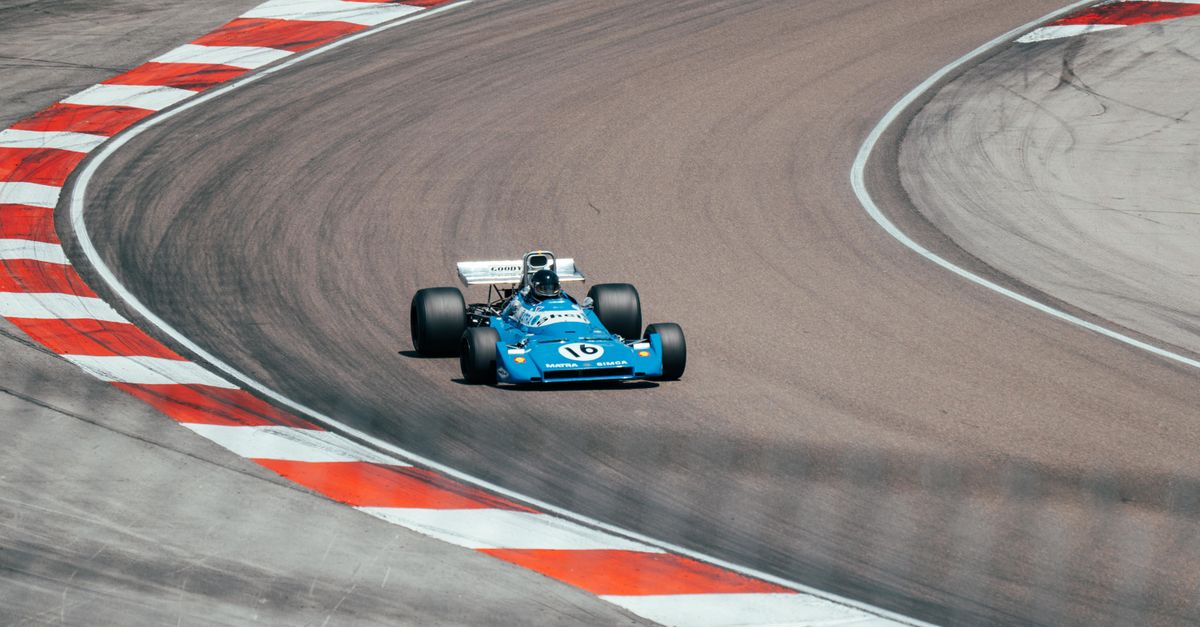
Formula 1 arrives at Lusail International Circuit for Sunday’s Qatar Grand Prix, the 22nd of 23 rounds, with both world championships already decided in Mercedes’ favour. Andrea Kimi Antonelli leads Max Verstappen by 98 points with only 50 left to win, and Mercedes sit 149 points clear of Ferrari with 86 available to any one team. The open questions all concern the order behind them, and several could be answered under the Lusail floodlights before the finale.
Antonelli’s title and what Mercedes still have to play for
The drivers’ title was beyond doubt before Las Vegas. Antonelli went into that race 111 points clear with 75 still on offer, and fourth place on the Strip took him to 402 points. His nine wins make him the dominant figure of the first season under the new regulations, and at 20 he is the youngest champion the sport has produced. Two more victories would take him to 11. That would not change the record books’ verdict on the season, but it would underline how completely Mercedes read the 2026 rules.
The team has won 12 of 21 races. The wrinkle is George Russell. He started second in Las Vegas and finished ninth, collecting two points on a night when Lando Norris took 18. That leaves Russell level with Norris on 264 points and three behind Lewis Hamilton. A driver with three wins of his own is now at real risk of finishing the year fifth, which would sit awkwardly beside the strength of the car he drives.
Lusail: a motorcycle circuit with one long straight
Lusail was built for MotoGP and still feels like it. The 5.419km lap has 16 corners, the race runs to 57 laps, and most of those corners are medium and high-speed sweeps rather than stop-start hairpins. The defining sequence is the run of fast right-handers from Turn 12 to Turn 14, where the cars carry enormous lateral load for several seconds at a time. Aerodynamic efficiency and a stable platform through long, loaded corners matter more here than traction out of slow ones.
The main straight is the exception. It runs for more than a kilometre and ends in the heavy stop for Turn 1, which remains the clearest overtaking opportunity on the lap. Elsewhere, passing is difficult. The corners flow into one another, the racing line is narrow, and dirty air through the quick sections makes it hard to follow closely enough to attack.
That layout poses a particular problem under this year’s rules. With roughly half of the power unit’s output now electrical, energy recovery depends heavily on braking, and Lusail has few genuinely heavy stops. Teams that harvest efficiently through the lap will reach the main straight with more to deploy, both in defence and in the extra deployment available to a chasing driver within a second. Expect energy management to shape the racing as much as outright grip.
Tyres have been the recurring story in Qatar. In 2023 Pirelli found sidewall damage linked to the kerbs and imposed an 18-lap maximum stint, turning the race into a forced three-stopper in punishing heat. Last year a 25-lap limit applied, and when the safety car appeared on lap seven almost the entire field pitted. McLaren kept both cars out and handed the race to Verstappen. The late-November date brings cooler evening temperatures than the brutal October race of 2023, but the long, loaded corners remain hard on the rubber. Track limits through the fast sections have also caught drivers out here in the past.
History favours Verstappen, who has won the last three Qatar Grands Prix. This is also the first visit since 2021 without a sprint, so teams have three practice sessions to dial in a car for a track where grip improves steadily as sand is cleaned from the surface.
Verstappen’s runner-up maths and a four-way fight for third
Verstappen arrives fresh from a lights-to-flag win in Las Vegas, and he can wrap up second place in the championship on Sunday. He has 304 points. Behind him the order is:
| Position | Driver | Points | Gap to Verstappen |
|---|---|---|---|
| 3 | Lewis Hamilton | 267 | 37 |
| 4 | George Russell | 264 | 40 |
| 5 | Lando Norris | 264 | 40 |
| 6 | Charles Leclerc | 250 | 54 |
Leclerc is already out of contention for second, since 54 points is more than the 50 he could score. If Verstappen leaves Qatar more than 25 points clear of Hamilton, Russell and Norris, the runner-up spot is his. Hamilton would have to outscore him by 13 or more on Sunday to keep the fight alive, and Russell and Norris would need a swing of around 15. Second place for Hamilton with Verstappen fifth would not be enough. A Hamilton win with Verstappen seventh would.
Behind Verstappen sits the most competitive fight of the weekend. Hamilton, Russell, Norris and Leclerc are covered by 17 points with 50 still available. Norris has the momentum: he gained 16 points on Russell and 12 on Hamilton in Las Vegas alone, and McLaren looked quick with both cars there. Hamilton, in his second Ferrari season, is ahead of Leclerc on points, which few would have predicted 12 months ago. Leclerc needs a strong weekend to make third realistic, but Ferrari’s pace in fast corners has been patchy, and Lusail will expose any weakness through Turns 12 to 14.
Red Bull against McLaren, and Hadjar’s problem
Ferrari’s second place in the constructors’ standings is close to safe. They lead Red Bull by 77 points, and McLaren, 86 behind, could only draw level with two one-twos while Ferrari failed to score at all. Red Bull would need to outscore Ferrari by at least 34 points on Sunday to take the fight to the finale, and that requires something like a one-two with both Ferraris barely scoring.
The real contest is for third. Red Bull lead McLaren by nine points, down from 17 before Las Vegas. Two-car scoring decides this kind of battle, and Red Bull’s second car is where their bid wobbles. Verstappen has 304 points; Isack Hadjar has 122. In Las Vegas, Hadjar started fourth and finished 15th, while Oscar Piastri drove from 17th on the grid to third.
Piastri has had a hard season. He has 167 points and no wins, and he is 97 points behind his team-mate. Lusail has tended to suit him, though: he won the sprint here in 2023 and finished second in last year’s Grand Prix. If he converts that affinity into a podium alongside Norris, McLaren could overturn a nine-point deficit in a single afternoon.
Hadjar also has pressure from below. Liam Lawson, ninth on 89 points for RB, is 33 behind Hadjar in eighth. That margin is not safe with two races left, and Red Bull’s senior team needs points from Hadjar for reasons that go well beyond his own championship position.
Alpine’s late surge and the midfield money
Constructors’ positions decide each team’s share of the prize fund, so the midfield fights matter more than the points totals suggest. The biggest swing in Las Vegas came between RB and Alpine. RB had both cars on strong grid slots, with Arvid Lindblad fifth and Lawson seventh, and left with nothing after Lindblad retired and Lawson faded to 14th. Pierre Gasly and Franco Colapinto finished fifth and sixth, banking 18 points. A 45-point gap is now 27.
RB still hold the advantage, but Alpine have shown they can score with both cars, and another double points finish in Qatar would put fifth place in genuine doubt for the finale. Within that fight, Lindblad and Colapinto are separated by three points for 11th in the drivers’ standings.
Further back, Haas (31 points), Audi (28) and Williams (16) are disputing seventh. Audi’s Nico Hülkenberg and Gabriel Bortoleto finished 11th and 12th in Las Vegas, just outside the points, while Carlos Sainz charged from 20th to eighth for Williams. At this end of the grid, one well-timed safety car can be worth a place in the table. Aston Martin, on seven points, and Cadillac, still without a score in their debut season, are chasing smaller targets: a first point would mean a great deal to the newcomers.
Six things to watch under the Lusail lights
- The first safety car. Last year’s race turned on who pitted under an early neutralisation. Strategists will have that lesson in mind, especially if stint lengths are tight.
- Energy at the end of the straight. With few heavy braking zones, the cars that harvest efficiently will be the ones able to attack or defend into Turn 1.
- Hadjar against Piastri. The fight for third in the constructors’ table is likely to be decided by the two second drivers rather than by Verstappen or Norris.
- Verstappen’s margin. A finish ahead of Hamilton, Russell and Norris would settle second place with a round to spare.
- Russell’s response. After dropping from second to ninth in Las Vegas, he needs a clean weekend to avoid falling behind Norris.
- Alpine’s two-car form. Another double score would turn RB’s 27-point cushion into a genuine contest for the finale.
The championships belong to Mercedes, but Lusail rewards exactly what McLaren showed in Las Vegas: two cars capable of scoring heavily on a fast, flowing circuit. If Piastri carries that form into Sunday, Red Bull’s hold on third looks the most fragile position in the table, and Hadjar is the driver with the most to lose.