
Mexico City Grand Prix Preview: Antonelli Can Seal the Title at Altitude
Andrea Kimi Antonelli arrives in Mexico City 123 points clear with five rounds left, and only a Russell or Hamilton victory paired with a near-pointless day for him can delay the coronation.
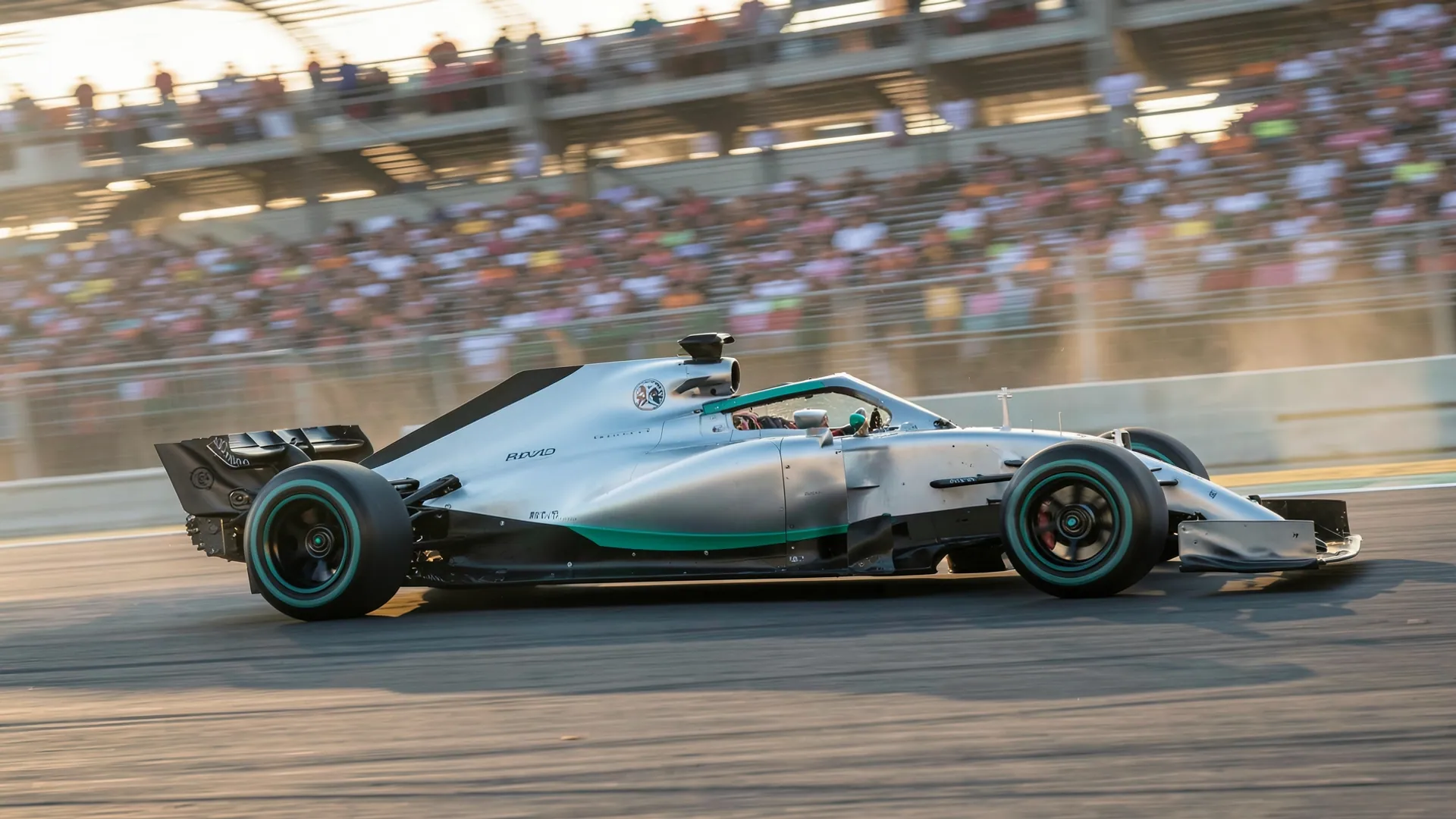
Andrea Kimi Antonelli can become Formula 1 world champion at the Mexico City Grand Prix on Sunday 1 November, arriving at round 19 with a 123-point lead over his Mercedes team-mate George Russell. His victory from pole in Austin was his ninth of the season and pushed the title beyond the mathematical reach of Lando Norris, Max Verstappen and Charles Leclerc. At 20, Antonelli would be the youngest champion in the sport’s history, comfortably younger than Sebastian Vettel was when he won in 2010.
The arithmetic that puts Antonelli on the brink
Five grands prix remain, worth 125 points to a driver who wins them all. Norris (154 behind), Verstappen (129) and Leclerc (132) are already out of contention. Only Russell, 123 points adrift, and Lewis Hamilton, 124 back, can still overhaul Antonelli on paper.
After Sunday, four races and 100 points will remain. A lead of exactly 100 would be enough for Antonelli, because a tie on points is broken on wins. He has nine; Russell could reach eight only by winning every race from here, and Hamilton could reach six. In practice, Antonelli can afford to lose 23 points to Russell and 24 to Hamilton in Mexico. Only a victory moves either rival that far in a single afternoon.
That reduces the permutations to three simple cases:
- If Russell wins, Antonelli needs ninth place (two points) or better.
- If Hamilton wins, Antonelli needs a single point, so 10th place will do.
- If anyone else wins, Antonelli is champion regardless of his own result.
The constructors’ title is further off. Mercedes lead Ferrari by 133 points with 215 available. Settling it on Sunday would need a Mercedes one-two with Ferrari scoring no more than four points, a remote combination given that the Ferraris finished second and fourth in Austin.
Mexico has settled championships before. Hamilton sealed his 2017 title here despite finishing ninth after first-lap contact with Vettel, and clinched again in 2018 with fourth place. The precedent cuts both ways. The run to Turn 1 at this circuit punishes anyone caught in the wrong place, and the only realistic way Antonelli’s rivals can extend the fight is if he is caught in such a scramble.
Thin air and a long drag to Turn 1
The Autódromo Hermanos Rodríguez sits more than 2,200 metres above sea level, and that single fact shapes everything about the weekend. The air is roughly a fifth less dense than at sea level. Wings generate less downforce, so teams run their highest-downforce packages yet end up with roughly the grip they would expect at a low-downforce circuit. Cooling is harder too. Radiators and brakes have less air to work with, and the bodywork tends to be opened up accordingly.
This is the first time the 2026 power units have raced at this altitude, and it is a genuine test of them. The combustion engine and its turbocharger feel the thin air; the battery does not. With the electrical side carrying a far larger share of total output under the new rules, how each manufacturer balances harvesting and deployment over the 71-lap race distance will matter more here than almost anywhere. The main straight, well over a kilometre from the exit of the old Peraltada to Turn 1, is precisely the sort of stretch where an energy-starved car runs out of electrical deployment before the braking zone.
The 4.304km lap breaks into three distinct parts:
- The Turn 1–3 complex, a heavy stop at the end of the main straight that produces most of the overtaking and almost all of the first-lap drama.
- The esses through Turns 7 to 11, a quick sequence that rewards a stable, well-balanced car and exposes one that is nervous on direction changes.
- The stadium section, where the track threads through the Foro Sol grandstands before rejoining the Peraltada exit onto the straight.
The long run to the first corner means pole is less of an asset here than at most venues. In 2021 Verstappen started third and was leading before the first braking point, having gone around the outside of both front-row Mercedes. The slipstream is powerful, and in 2026 a following car within range also has overtake mode’s extra electrical energy to deploy.
The surface is traditionally slippery and lightly used, so grip improves sharply through the weekend. Degradation has usually been modest and one-stop races have been the norm, though graining on a green track can upset the opening stint. Brake temperatures in the thin air are a recurring concern for anyone stuck in traffic.
Four drivers, nine points, one runner-up spot
The title may be close to settled, but the battle behind Antonelli could hardly be tighter:
| Position | Driver | Team | Points | Gap to 2nd |
|---|---|---|---|---|
| 2 | George Russell | Mercedes | 242 | — |
| 3 | Lewis Hamilton | Ferrari | 241 | 1 |
| 4 | Max Verstappen | Red Bull | 236 | 6 |
| 5 | Charles Leclerc | Ferrari | 233 | 9 |
Russell’s position is the most uncomfortable. He has the same car as the runaway leader and three wins of his own, yet he trails Antonelli by 123 points. Eighth from sixth on the grid in Austin was a poor return from Mercedes’ quickest package, and it left him only a point clear of Hamilton. Finishing behind two Ferraris and a Red Bull in the final standings, in a season Mercedes have dominated, would leave an unflattering mark on his record. He needs to start converting his machinery into podiums again.
Ferrari arrive with momentum. Leclerc’s second and Hamilton’s fourth in Austin gave the Scuderia 30 points to Mercedes’ 29, the first sign in some time that the gap is closing. Mexico has also tended to suit Ferrari recently: Carlos Sainz won for the team in 2024 and Leclerc finished second last year. Hamilton has two wins here, in 2016 and 2019, and is the only driver besides Russell who can still stop Antonelli clinching. That would require him to win, which he has managed only once this season.
Verstappen is the most successful driver in this event’s history, with five victories at the venue. Third in Austin from second on the grid confirmed that Red Bull can run at the front on its day. A sixth Mexico win would give him real hope of finishing second overall in a year when that once seemed unlikely.
Level on 355: Red Bull, McLaren and a home crowd for Pérez
The most finely balanced fight in either championship is for third in the constructors’ table. Red Bull and McLaren are tied on 355 points. Red Bull outscored McLaren 23 to 16 in Austin, with Verstappen third and Isack Hadjar sixth, erasing a seven-point deficit in a single weekend.
Hadjar’s contribution deserves recognition. Third on the grid in Austin was a statement, and Red Bull’s case for third place rests on his ability to convert grid positions like that into steady points. McLaren need Oscar Piastri to do the same. He is seventh in the standings with 144 points and no wins, 67 behind Norris, and seventh place in Austin was another quiet afternoon. Norris won here from pole last year. If McLaren are to stay level with or ahead of Red Bull, both cars need to be in the top six.
Further back, RB lead Alpine by 33 points in the race for fifth (102 to 69). Liam Lawson’s ninth in Austin kept that margin healthy, and rookie Arvid Lindblad has 38 points to his name. Alpine have relied heavily on Pierre Gasly, whose single point for 10th in Austin barely moved the gap.
Then there is Sergio Pérez, back at his home race in Cadillac colours. His third place here in 2021 remains one of the great moments of recent Mexican motorsport, but his circumstances now are very different. Cadillac are the only team without a point, and Austin brought a lapped 19th for Pérez and a retirement for Valtteri Bottas. A top-10 finish would be a significant result for the new team. A clean, reliable weekend in front of the most passionate crowd on the calendar is the more realistic aim, and it would still be worth something.
Sainz returns to the scene of his 2024 win in very different machinery. Williams have just 12 points and finished 17th and 18th in Austin. Aston Martin are in a worse position still, on seven points.
Flashpoints from Turn 1 to the brake ducts
- The run to Turn 1. Antonelli’s simplest route to the title is a clean first lap, and this is the most hazardous opening corner on the calendar. Any contact involving the leader brings the permutations into play.
- Energy management on the main straight. Watch for cars running short of deployment before the braking zone, particularly in race trim. The manufacturer that harvests best at altitude could hold a race-long advantage.
- Russell’s response. A win is the minimum he needs to keep his title hopes alive. Anything less still matters in a four-way fight for second.
- Hamilton’s Mexico record. Two wins here and two titles sealed here. Now he has the chance to delay someone else’s celebration.
- Hadjar against Piastri. The tie between Red Bull and McLaren may well come down to which second driver delivers.
- Brake and cooling problems. Thin air makes overheating more likely, and a slow car in traffic can lose places through no fault of its driver.
The most likely outcome is that Antonelli leaves Mexico City as champion. Russell or Hamilton would need to win while he has the worst weekend of his season, a combination that has rarely looked plausible this year. The race for second is far less predictable. Ferrari’s form in Austin and Verstappen’s record here suggest Russell will have to finish on the podium on Sunday to keep his runner-up place.