
Sky Deutschland's Qatar Boycott Puts F1's Broadcast Partners and Calendar Under Scrutiny
Sky Deutschland will not send a crew to the Qatar Grand Prix, a rare public step by a major rights holder that tests how far Formula 1's broadcasters can influence its calendar.
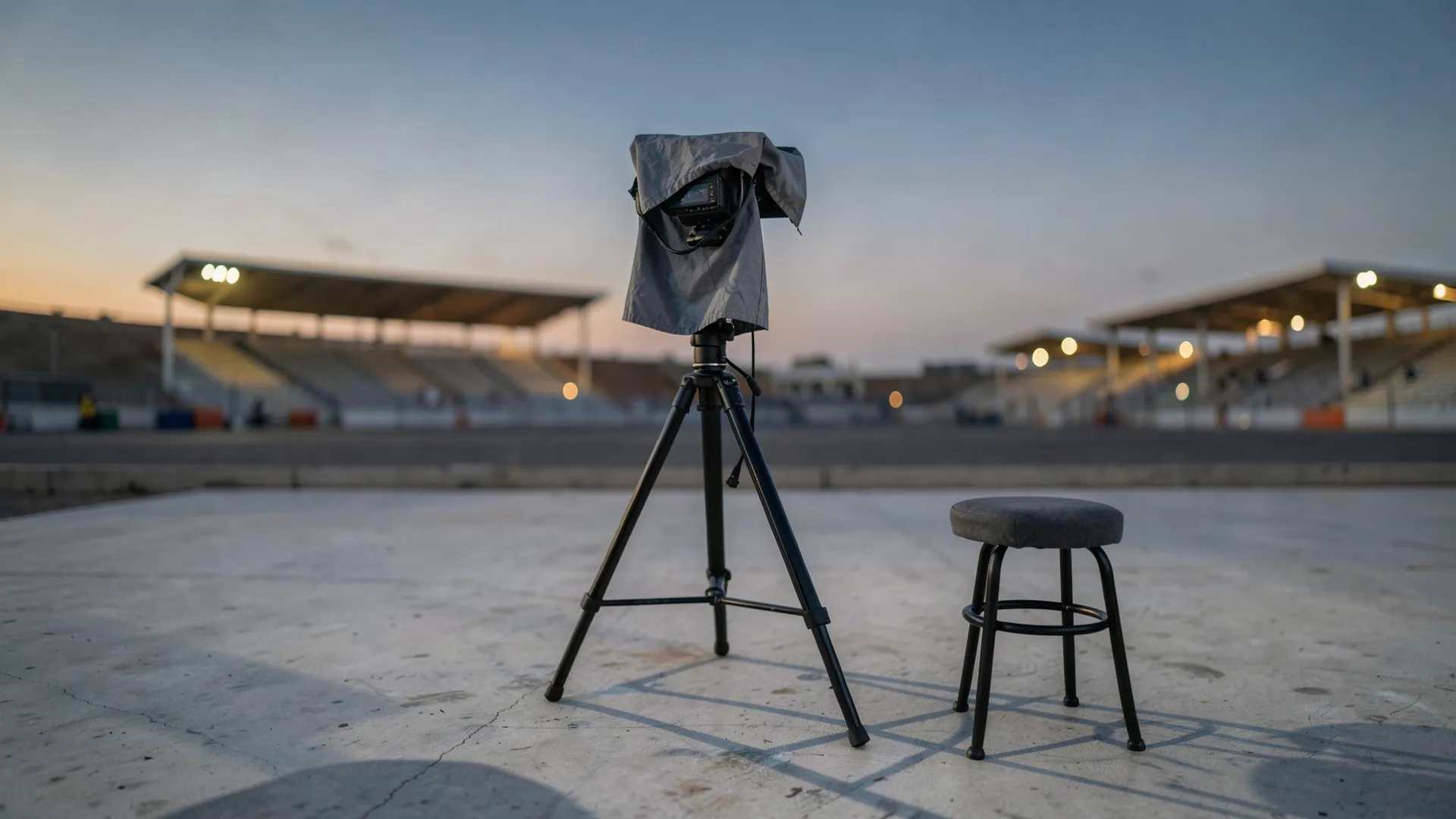
Sky Deutschland has decided not to send a television crew to the Qatar Grand Prix, the race that follows this weekend’s round in Las Vegas. GPfans reported the decision and described it as a boycott. Rights holders grumble about schedules, travel and cost all the time, but almost always in private. A major broadcaster visibly staying away from a specific venue is something Formula 1 has rarely had to deal with.
What a missing crew changes, and what it doesn’t
The decision needs to be read precisely. Declining to send a crew is not the same as dropping the race. Formula 1 produces the world feed centrally, so every rights holder receives the same race pictures whether or not its own people are in the paddock. A broadcaster without staff on site can still show the race, with commentary and analysis delivered from a studio at home.
What viewers lose is everything around the race. There will be no pit-lane reporter catching a driver after a difficult qualifying session, no team principal interviewed for a German audience, and no paddock walk or grid build-up shaped for that market. Those are the parts of coverage that make a broadcaster’s product its own, and the parts rights holders pay a premium to produce.
That is why the gesture carries weight beyond its practical effect. Teams, sponsors and promoters notice who turns up. A paddock without one of the sport’s long-standing European rights holders is a visible absence, and it will be reported as such in Germany and beyond.
A settled title makes it an easier call
The 2026 standings make Qatar an unusually low-stakes weekend for a broadcaster to miss.
Andrea Kimi Antonelli leads the drivers’ championship on 390 points, 111 clear of Max Verstappen with three rounds to run. Three grand prix wins are worth 75 points. Even if every remaining weekend carried a sprint, the most anyone could add is 99. Antonelli is already champion, and the season’s central story has been told.
Mercedes are nearly there in the constructors’ championship as well. Their 652 points give them a 142-point lead over Ferrari, built on 12 wins: nine from Antonelli and three from George Russell.
The competition that remains sits below the top. After Brazil, the fight for runner-up looks like this:
| Position | Driver | Team | Points | Gap to 2nd |
|---|---|---|---|---|
| 2 | Max Verstappen | Red Bull | 279 | – |
| 3 | George Russell | Mercedes | 262 | 17 |
| 4 | Lewis Hamilton | Ferrari | 261 | 18 |
| 5 | Charles Leclerc | Ferrari | 249 | 30 |
| 6 | Lando Norris | McLaren | 246 | 33 |
Five drivers covered by 33 points makes for good television. Verstappen’s drive from 21st on the grid to second at Interlagos, behind Norris, showed the battle still has spark. Red Bull, on 415 points, and McLaren, on 398, are also contesting third in the constructors’ table.
For a German audience, though, the hooks are thin. Mercedes have already done the heavy lifting. Audi’s first season as a works team has yielded 28 points and eighth place in the constructors’ standings. Nico Hülkenberg, the only German on the grid, converted fourth on the grid in Brazil into a lapped 10th place.
None of this tells us why Sky Deutschland made its decision. It does explain why the cost is lower now than it would have been in a live title decider. That matters when judging how much pressure the move applies. A stand taken when the stakes are highest says more than one taken when they are lowest, and Formula 1’s commercial team will know the difference.
Qatar’s uneasy place on the calendar
Qatar has never sat comfortably in Formula 1. It joined the calendar in 2021 as a late replacement during the pandemic years. It sat out 2022 while the country hosted the football World Cup, then returned in 2023 on a 10-year agreement that runs to 2032. Lewis Hamilton won the inaugural race at Lusail. At that same event he wore a rainbow-themed helmet, a pointed reference to the scrutiny Gulf hosts face over human rights.
The 2023 weekend added a sporting controversy to the political one. Concerns over tyre damage from the kerbs led to mandatory limits on stint lengths, effectively turning the race into a sequence of compulsory stops. Extreme heat and humidity left drivers in visible distress. Logan Sargeant retired after feeling unwell, and Esteban Ocon said he had been sick in his car. The FIA later moved towards rules to help drivers cope with extreme-heat races, a tacit admission that the event had exposed a gap in the regulations.
The calendar geography adds its own strain. The late-season run takes the sport from São Paulo to Las Vegas and then to the Gulf within a matter of weeks. That is a punishing sequence for the teams, and for the broadcasters, engineers and production staff who follow them. Formula 1 has made efforts to group races regionally in recent years, but the end of the season still involves long hauls in quick succession.
A broadcaster can have practical reasons for keeping people at home, including cost, crew fatigue and the editorial value of a decided championship. But Qatar is not a neutral venue. Whatever reasons are given, a public decision to stay away from this race will be read against everything above. Sky Deutschland will have known that.
Two sets of paying customers
The deeper significance is structural. Formula 1’s commercial model depends on two groups of partners whose interests do not always align.
The first is the race promoters. Gulf venues pay hosting fees at the top end of the market, and they sign long contracts that give the sport financial certainty. The second is the broadcasters, who pay heavily for media rights and turn the races into content for subscribers and viewers. The sport needs both. For most of the past decade, the calendar has been shaped far more by what promoters will pay than by what broadcasters would prefer.
Broadcasters have generally accepted this. Their leverage comes at renewal time, through the price they offer and the terms they negotiate, not through the paddock gate. That is what makes a visible absence notable. It moves a commercial disagreement into public view, where other partners, sponsors and fans can see it.
Precedent suggests caution about how far it can go. In 2011 the Bahrain Grand Prix was cancelled amid unrest, but that decision followed a crisis on the ground, not pressure from broadcasters. The missile strike near the Jeddah circuit in 2022 prompted urgent talks among drivers and teams, yet the race went ahead. Formula 1 has repeatedly shown it will absorb criticism of its host choices rather than revisit signed contracts. With Qatar committed to 2032, nobody should expect one broadcaster’s travel plans to shift that.
Why Formula 1 should not wave this away
The easy response from the sport would be to treat this as a one-off. It is one rights holder, one weekend and a race whose championship significance has already gone. The world feed will go out as normal, and German viewers will still see the race.
That would be a mistake. Rights fees are the other half of the sport’s revenue. If a major European broadcaster is prepared to show publicly that some venues are worth less to it, that position will not stay confined to one late-season weekend. It will shape how future rights deals are valued. Formula 1 has spent years telling promoters that its audience is worth paying for. Broadcasters are the ones who deliver that audience, and they are entitled to say which events they think it values.
The test is not the weekend in Lusail itself. It is whether Sky Deutschland repeats the decision, whether any other rights holder follows, and whether the 2027 calendar shows any sign that Formula 1 is listening. If Qatar passes as a single empty space in the paddock, the sport will have been proved right to shrug. If it becomes a pattern, the balance between those who pay to host races and those who pay to show them will have started to shift. Formula 1 would be wise to address that before its next round of broadcast negotiations, not during it.