
McEvoy Says He Lost F1 Accreditation Over Leclerc Criticism, Raising Press Freedom Questions
Jonathan McEvoy says his media pass has been withdrawn for the rest of 2026 after he criticised Charles Leclerc, a claim that demands a transparent answer from whoever made the decision.
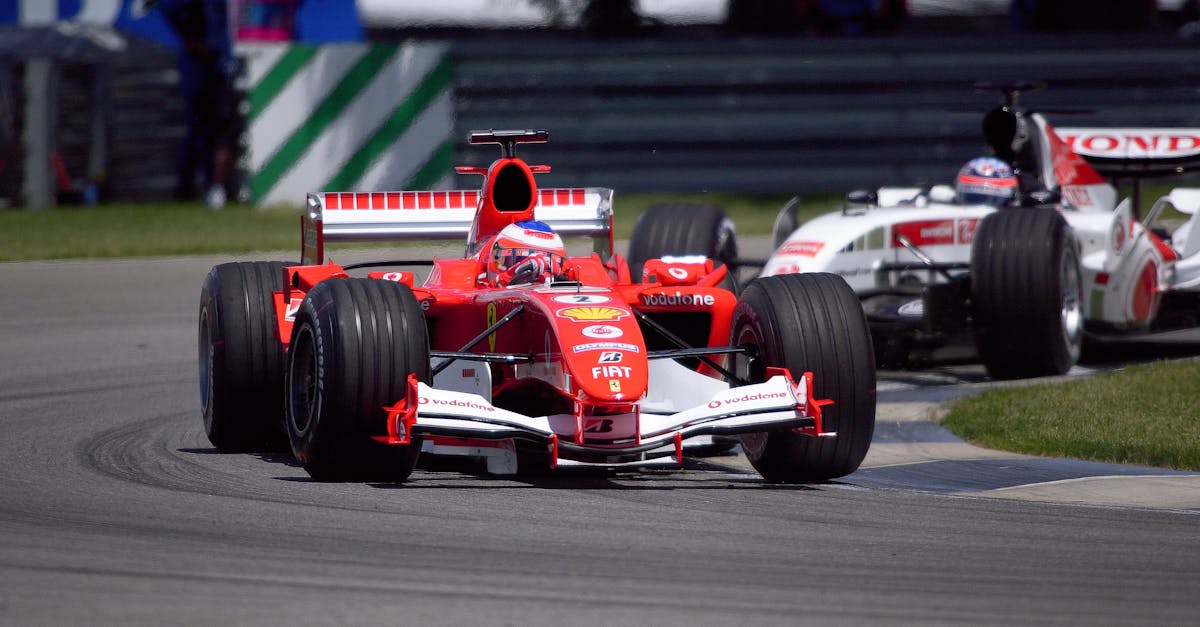
Jonathan McEvoy, a long-serving Formula 1 journalist, has written that his media accreditation has been revoked for the remainder of the 2026 season, and he believes the reason is his criticism of Charles Leclerc. He set out the claim in a pointed column, reported by GPfans. It lands with three rounds of the championship still to run, beginning with Las Vegas on 22 November.
So far the story rests on one man’s account of his own treatment, and it should be read that way. But the account is specific enough, and the stakes high enough, that it cannot be waved away as a reporter’s grievance. If a pass can be removed because a driver or team disliked what was written about them, every critical line in every paddock publication is written under a shadow.
What McEvoy is alleging, and what he is not
The core of the complaint is narrow and serious. McEvoy says he has lost his accreditation for the rest of the year and links that loss directly to his coverage of Leclerc. That is a claim about cause and effect, and it is the part that matters.
There are legitimate reasons for withdrawing a media pass. Accreditation comes with conditions covering conduct in the paddock, behaviour towards staff and drivers, the use of restricted areas, and adherence to embargoes and filming rules. A journalist who breaches those conditions can expect consequences, as can anyone else working at a Grand Prix. Nobody seriously argues that a press pass should be unconditional.
What separates a disciplinary decision from a punitive one is the reason given. A pass withdrawn for something a journalist did is a matter of process. A pass withdrawn for something a journalist wrote is a matter of principle, and an uncomfortable one for a sport that sells itself on transparency and drama in equal measure.
McEvoy’s column places his case firmly in the second category. That is why whoever signed off the decision now owes the sport a clear, public explanation. If there is a conduct-based reason, it should be stated. If there is not, the decision should be reversed before the cars run on the Strip.
How access works, and why it can be used as a lever
For readers who have never stood in a paddock media centre, it helps to understand what accreditation actually buys. Formula 1 media passes are administered centrally through the FIA’s accreditation system, and a season pass is what allows a reporter into the paddock, the press room, the drivers’ media sessions and the team hospitality units where most of the useful conversations happen.
Without it, a journalist covering the championship is reduced to watching the same feed as everyone else and relying on transcripts. The reporting that makes F1 journalism worth reading (the overheard conversation outside a motorhome, the follow-up question after a debrief, the engineer who explains on Sunday evening why the strategy went wrong) depends on being physically present.
That is precisely what makes accreditation such an effective lever. A pass is never formally a reward for favourable coverage, but access has always been rationed informally. Teams decide who gets the extended sit-down interview and who gets the 90-second slot in the media pen. Drivers choose which outlets they grant time to outside the mandatory sessions. Press officers remember which writers were fair and which were not.
Most of that is the ordinary friction between subjects and those who scrutinise them. Removing the pass altogether is a different order of sanction. It goes beyond making a critical reporter’s job harder: it removes them from the building. Applied for the reasons McEvoy alleges, it would turn a credentialing system designed to manage logistics and safety into an editorial filter.
The structural shift of the past decade makes this more pressing. Teams and drivers now publish huge volumes of their own content through official channels, documentaries and personal platforms. They have less need of independent media than ever to reach fans, and correspondingly more incentive to resent it when coverage is unflattering. Independent journalists are one of the few remaining checks on that self-curated narrative, which is why the terms on which they are admitted matter.
Leclerc’s season is a legitimate subject for criticism
The context deserves spelling out, because it would be easy to frame any criticism of Leclerc as gratuitous. It is not. His 2026 season invites hard questions, and asking them is the job.
Leclerc sits fifth in the drivers’ championship on 249 points, 141 behind Andrea Kimi Antonelli, with a single win to his name. He is 12 points behind his team-mate, Lewis Hamilton, who also has one victory. Ferrari are second in the constructors’ standings on 510 points, but Mercedes have run away with the title race, taking 12 wins to Ferrari’s two and building a lead of 142 points. That is a disappointing return for a team that started the new regulatory era with genuine ambitions.
Brazil offered no relief. Leclerc started 14th and finished eighth, collecting four points, while Lando Norris converted pole into victory and Max Verstappen came from 21st on the grid to second. Hamilton, starting 20th, finished ninth and was lapped. Neither Ferrari was a factor at a circuit where both drivers have historically gone well.
| Driver | Team | Points | Wins | Gap to leader |
|---|---|---|---|---|
| Andrea Kimi Antonelli | Mercedes | 390 | 9 | — |
| Lewis Hamilton | Ferrari | 261 | 1 | 129 |
| Charles Leclerc | Ferrari | 249 | 1 | 141 |
When a driver regarded as one of the fastest of his generation is trailing a team-mate in his forties with three rounds left, and when his team has won twice in 20 rounds, columnists will ask whether the problem lies with the car, the operation or the driver. Some will conclude it lies partly with the driver. That judgement may be wrong, harsh or unfair. It is still entirely within the bounds of what sports journalism exists to do.
Leclerc’s fans may dislike that coverage, and Leclerc himself is entitled to dispute it, ignore it or answer it in the press room. What neither he nor anyone around him should be able to do is make it disappear by making the writer disappear.
The precedent F1 cannot afford to set
The broader risk here is not to McEvoy. Individual reporters lose and regain access throughout their careers, and he will keep writing whether or not he is in Las Vegas. The risk is to everyone else in the press room who reads his column and recalculates.
A chilling effect does not require a policy. It requires only a plausible example. If journalists come to believe that a sharp column about a star driver could cost them their pass, sharp columns will quietly become rarer. Criticism will be hedged, softened or left to those who do not need access to do their work. Readers will not notice a single dramatic change; they will simply be told a little less, a little less directly, every weekend.
That would be a poor outcome for Formula 1 itself. The sport’s commercial growth has been built on the idea that its personalities and rivalries are real, and that the tension fans see is not manufactured. Independent, critical reporting is part of what makes that claim credible. A championship that tolerates only approving coverage starts to look like one with something to hide, even when it has nothing to hide at all.
There is a fairness question for Leclerc, too. If McEvoy’s account is wrong, Leclerc is being publicly associated with a decision he may have had no part in. A transparent statement of the actual grounds would protect him as much as it would protect the press.
What should happen before Las Vegas
The fix is not complicated. Media accreditation should come with published conditions, a stated reason whenever it is withdrawn, and an independent route of appeal that does not run through the people whose coverage is in question. Those are the basic features of any credible credentialing system, and the governing body’s process should be held to them.
In the immediate term, the burden sits with whoever made this decision to explain it. With Antonelli 111 points clear of Verstappen and only Las Vegas and two further rounds left, there is no competitive pressure that justifies silence. If the grounds are about conduct, say so. If they are about content, restore the pass.
The cleanest outcome would be McEvoy at his desk in the Las Vegas media centre on 22 November, writing whatever he likes about Leclerc and Ferrari. If his seat is empty, every journalist in that room will understand the message, and the sport will be the poorer for it.