
Verstappen's Back-of-Grid Start Turns Interlagos Fight for Second Into Recovery Race
With Max Verstappen starting last and Lewis Hamilton, Charles Leclerc and George Russell also penalised, São Paulo turns the 16-point fight for second into a test of recovery drives.
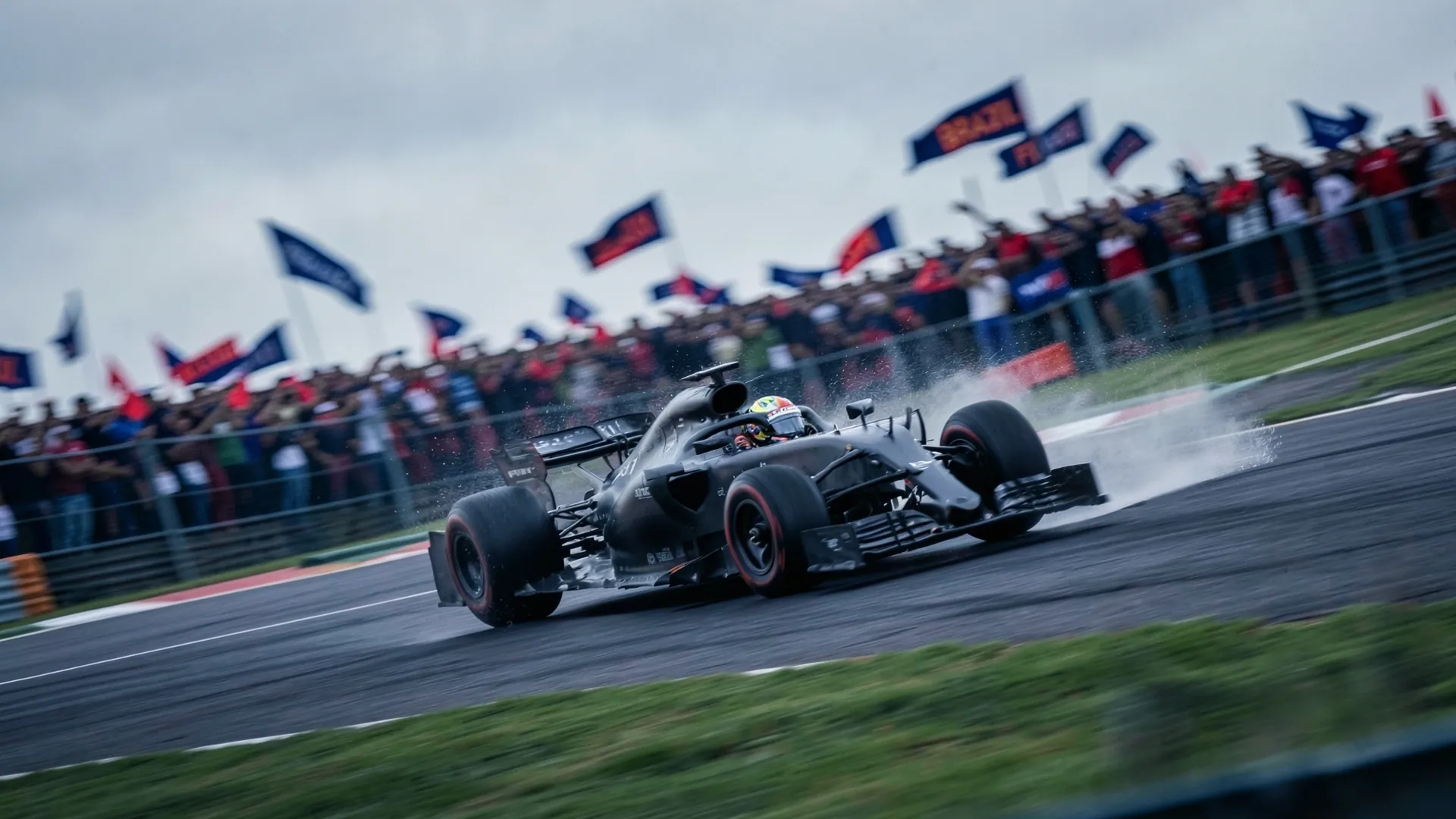
Max Verstappen will start Sunday’s Brazilian Grand Prix from the back of the grid after Red Bull fitted new power unit components, team principal Laurent Mekies has confirmed. Lewis Hamilton and Charles Leclerc will also take grid penalties for power unit changes at Interlagos, and George Russell was already facing one. Only 16 points separate those four drivers in the fight to finish runner-up to champion Andrea Kimi Antonelli. Round 20 has therefore become a race where Saturday’s order will matter less than how well each of them recovers on Sunday.
A week that reshuffled second place
The Mexico City Grand Prix on 1 November rearranged the order behind Antonelli. Before that race, Russell held second on 242 points, one ahead of Hamilton, with Verstappen on 236 and Leclerc on 233. Verstappen then won from fifth on the grid, his third victory of the season. Hamilton converted pole into second, Leclerc finished fourth, and Russell slipped from second on the grid to sixth at the flag.
The standings now look like this:
| Pos | Driver | Team | Points | Gap to 2nd |
|---|---|---|---|---|
| 2 | Max Verstappen | Red Bull | 261 | – |
| 3 | Lewis Hamilton | Ferrari | 259 | 2 |
| 4 | George Russell | Mercedes | 250 | 11 |
| 5 | Charles Leclerc | Ferrari | 245 | 16 |
| 6 | Lando Norris | McLaren | 221 | 40 |
Antonelli sits on 380 points with nine wins, and the title is his. Second place is the only drivers’ prize left, and four rounds remain to settle it. That leaves little time for any of the four to recover from a poor afternoon. But it is also long enough that a single bad result here will not decide the outcome on its own.
Norris is the outsider. At 40 points behind Verstappen, he needs to outscore him by more than 10 points a race, on average, across the remaining four rounds. That is unlikely, but a weekend in which four of his rivals start out of position is exactly the kind of opportunity he needs.
Why Red Bull chose Interlagos for its penalty
The rules are simple. Each driver has a fixed allocation of each major power unit element for the season. Use more than that and the driver drops down the grid. Change enough elements at once and he is sent straight to the back.
The back-of-grid sanction works as a cap, and that shapes the strategy. Once a team knows a driver will exceed his allocation, there is little extra cost in fitting several new elements at the same time. The driver starts last whether he has one extra part or a full set. The team then has a stock of fresh, unstressed components for the final rounds, so it does not have to return to the penalty later at a less convenient circuit.
The choice of venue follows the same reasoning. Interlagos is one of the better places on the calendar to start from the back. The lap is short, at a little over four kilometres, and the race runs to 71 laps, so there is time to work forward. The long climb from Junção to the start-finish line feeds a strong overtaking opportunity into the Senna S, and Descida do Lago offers another. The weather in São Paulo in November is often changeable, and safety cars are common, which can close up a field that has spread out. A driver starting 20th can reach the points here without needing everyone else to have problems.
Mexico City had made the same point a week earlier, though not for Red Bull. Liam Lawson started the RB from 22nd and finished seventh, collecting six points. Overtaking in the 2026 cars is possible, and a well-planned recovery drive is a realistic way to score rather than simply a way to limit losses.
Verstappen and Hamilton have done this here before
The precedents at this circuit are encouraging for both leading drivers.
Verstappen won the 2024 São Paulo Grand Prix from 17th on the grid, after a power unit penalty pushed him back from an already poor qualifying position. He won comfortably in heavy rain, and it remains one of the best drives of his career. A year later, he started from the pit lane after another power unit change and still finished on the podium. Few drivers have recovered from deep in the field at Interlagos as often as he has.
Hamilton’s record here is just as strong. In 2021, while fighting Verstappen for the title, he took a five-place grid drop for a new engine and was also sent to the back of the sprint grid after a technical disqualification. He still won the Grand Prix. That weekend is often cited as the best example of a fresh power unit and a determined driver overcoming a grid penalty.
Neither result guarantees anything this weekend. A wet race is a very different problem from a dry one, and the 2026 power units and aerodynamics change how cars pass and defend. Still, those two drivers know how to manage this situation at this circuit better than anyone else in the field.
There is also a practical benefit for Verstappen. Because he is starting last regardless, his qualifying result will not affect his grid position. Hamilton, Leclerc and Russell face grid drops whose effect depends on where they qualify: a strong lap on Saturday can soften their penalty, and a weak one can make it much worse. Verstappen knows where he will start, so Red Bull can concentrate on long-run pace and strategy instead of qualifying. The others still have to qualify well to limit the damage.
Ferrari safe, Red Bull and McLaren exposed
The constructors’ championship has its own consequences.
Mercedes lead on 630 points, 126 clear of Ferrari, with four rounds remaining. Ferrari will start the race with both cars out of position, but their second place looks secure. Red Bull are 122 points further back on 382.
The closer fight is for third. Red Bull lead McLaren by 17 points, 382 to 365. Mexico showed how quickly that gap can change. Verstappen’s win and Isack Hadjar’s ninth place earned Red Bull 27 points. Norris’s fifth was McLaren’s only score, because Oscar Piastri finished 13th.
With Verstappen starting last, McLaren have a real chance to gain ground at Interlagos. If both McLarens qualify well and avoid the problems the penalised cars face in the opening laps, they can take a large share of the points.
The midfield should also take note. A grid with this many front-runners out of position usually leaves points available for drivers who would normally finish just outside them. Lawson’s seventh place in Mexico lifted RB to 108 points, fifth in the table. Gabriel Bortoleto’s eighth gave Audi four points, and Ryo Hirakawa’s tenth added one for Haas. Teams near the bottom of the table should see Sunday as a rare opportunity.
Why the freshest engine may decide second place
The penalties do not remove the four drivers from the fight. They push the decisive racing into the first stint on Sunday. Each of them will be working through the field at a different pace and from a different starting point. Each will also have to judge how much risk to take in traffic, knowing that a crash would cost far more than the penalty itself.
Verstappen’s sanction is the heaviest, yet his position is arguably the strongest. He is serving it at the circuit best suited to recovery, he holds a two-point lead, and he has the best record in this situation of anyone in the group. Hamilton and Leclerc have more control over their grid positions, but only if they qualify well. Russell dropped from second to fourth in the standings in Mexico, which showed how quickly a strong qualifying position can become a modest result.
My view is that Verstappen will leave São Paulo still second, and he should then be favourite to finish the season there. If he finishes in the top five from last place, he will head into the final three rounds with new components and a lead. That would leave his rivals with less time and fewer obvious ways to take the place from him. Any rival who still needs another fresh element before the season ends will have to take it at a circuit less suited to recovery than Interlagos.