
Ferrari's Nightmare Monza: Vasseur Opens Investigation into Hamilton-Leclerc Incident
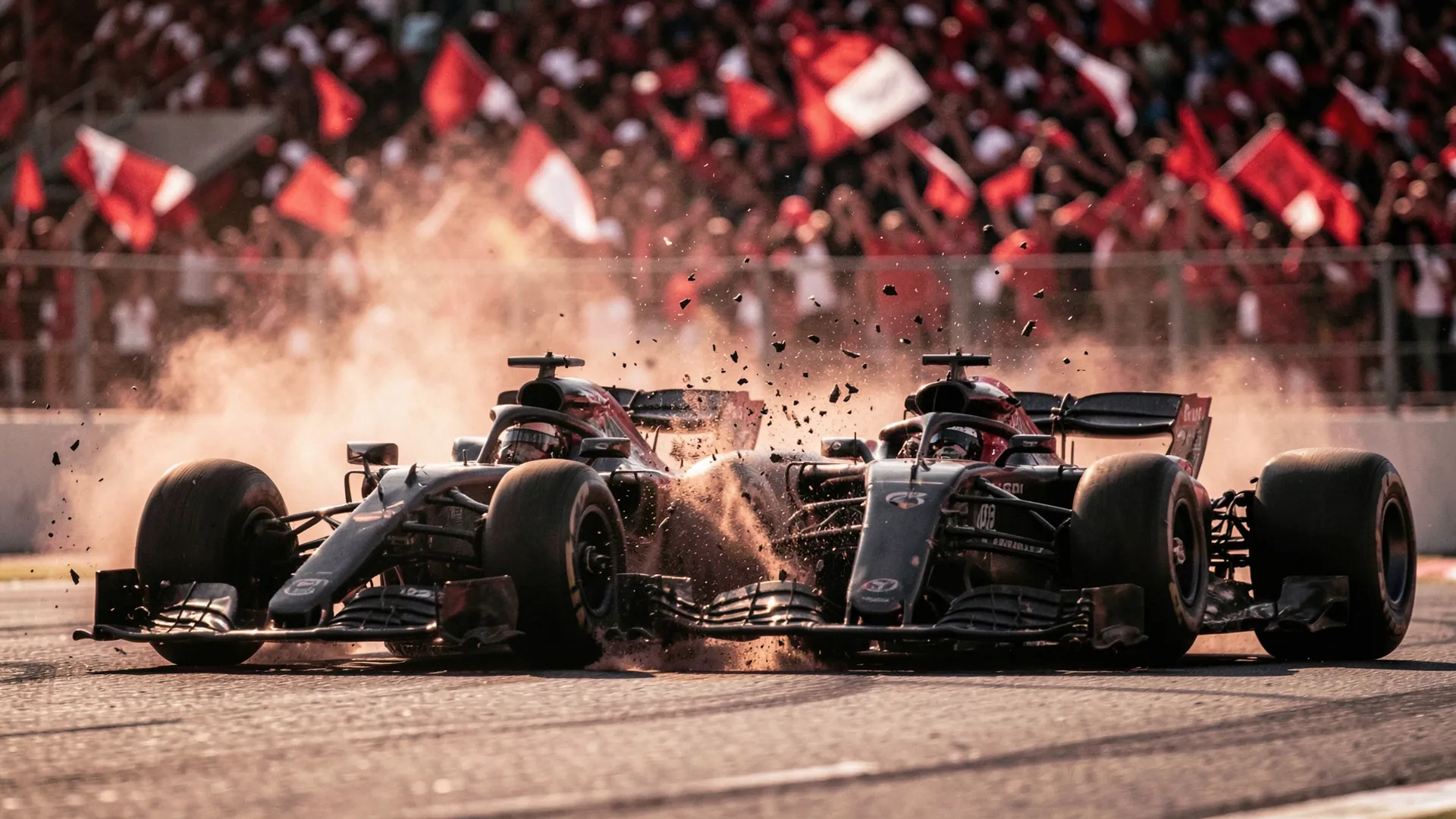
There is a particular flavour of embarrassment reserved for a team that damages itself in front of its own fans, and Ferrari served it up in full at Monza. A home race that was supposed to be a celebration — the tifosi packed into the grandstands, the scarlet cars carrying the weight of expectation that only Maranello can generate — instead produced a collision between Lewis Hamilton and Charles Leclerc that Fred Vasseur has already labelled unacceptable. The team principal’s decision to confirm a formal inquest tells you everything about how seriously this is being taken internally, and why it should be.
Why Vasseur chose the word unacceptable
Details of the exact sequence remain limited to what has been reported, but the substance of it is clear enough: Ferrari’s two drivers came together during the Italian Grand Prix weekend, in a scenario significant enough that Vasseur felt compelled to address it publicly and unusually bluntly. Team principals are generally masters of the diplomatic non-answer when asked about intra-team frictions — the standard playbook is to downplay, contextualise, and promise a private conversation. Vasseur instead reached for the word “unacceptable,” which is about as strong a public rebuke as a team boss can issue without naming a driver outright as culpable.
That choice of language matters. It signals that this was not a racing incident of the shrug-and-move-on variety, but something Vasseur believes fell short of the standard Ferrari expects from a driver pairing that is supposed to be racing the opposition, not each other. The confirmation of a post-race inquest — effectively an internal review process to establish what happened and why — is the mechanism by which Ferrari will try to draw a line under it, but the fact it’s needed at all is the story.
Lost points and a fragile pairing
Ferrari’s championship position makes this more than an isolated embarrassment. Every point dropped to a self-inflicted collision is a point lost to Red Bull and McLaren in a constructors’ fight that has been unforgiving of exactly this kind of unforced error. Monza is not just any round on the calendar for Ferrari — it is the team’s home race, run in front of the most passionate and demanding fanbase in the sport, at a venue where the Scuderia’s every move is scrutinised with a level of emotional investment no other team’s supporters quite match. To have that weekend defined by the two cars colliding with each other is about as damaging a version of this story as Ferrari could have written for itself.
There is also the matter of what it does to the driver dynamic. Hamilton arrived at Ferrari as one of the most decorated drivers in the sport’s history, brought in specifically to accelerate a championship push alongside a Leclerc who has spent years as the team’s talismanic lead driver without the title to show for it. That pairing was always going to require careful management — two drivers with legitimate claims to team priority, both fully capable of winning if the car allows it. An incident between them, in public, at Monza of all places, is precisely the kind of episode that can harden into resentment if it isn’t handled with real transparency and, if necessary, real consequence.
A test of Vasseur’s calmer Maranello
Ferrari’s history with intra-team conflict is not exactly short. This is a team whose driver-pairing dramas have periodically overshadowed its on-track competitiveness, and whose fanbase and media environment amplify every flashpoint far beyond what an equivalent incident at, say, Williams or Haas would generate. Vasseur has spent his tenure trying to instil a calmer, more process-driven culture at Maranello — less soap opera, more engineering discipline. An incident like this, and the public inquest that follows it, is a direct test of whether that cultural shift is real or merely aspirational.
It’s also worth placing this within the broader pattern of how title-calibre teams handle driver conflict. The most successful modern outfits — Red Bull with Verstappen and Perez in earlier seasons, Mercedes through the Hamilton-Rosberg years — have shown that unresolved tension between team-mates doesn’t stay contained to a single weekend. It leaks into strategy calls, into garage atmosphere, into how freely a team can ask one driver to support the other when the championship math demands it. Ferrari, still building the trust required to ask exactly that of Hamilton and Leclerc, can ill afford a public breach that makes either driver feel undermined.
The inquest must deliver real consequences
Vasseur was right to call this what it was rather than reach for the usual softening language, and that honesty is, in itself, a small point in his favour — a team that can’t be honest with itself about its mistakes rarely fixes them. But the real test isn’t the strength of the post-race statement; it’s what the inquest actually produces. If it results in a clear, fairly applied explanation of fault and a genuine recalibration of how Hamilton and Leclerc are managed relative to each other, Ferrari can plausibly draw a line under Monza and move on. If it becomes another example of a difficult conversation deferred in the name of keeping the peace, the cost won’t just be measured in points lost on one September afternoon — it will be measured in how much longer it takes this team to build the internal trust a genuine championship campaign requires. On the balance of what’s known, Ferrari’s words have been the right ones. Its actions now need to match them.