
F1 Commits to Qatar and Abu Dhabi Finale as Imola Fallback Lapses
Formula 1 has dropped its Imola fallback, so the final two rounds run in Qatar and Abu Dhabi or not at all, a defensible gamble whose risk lies below the settled title fights.
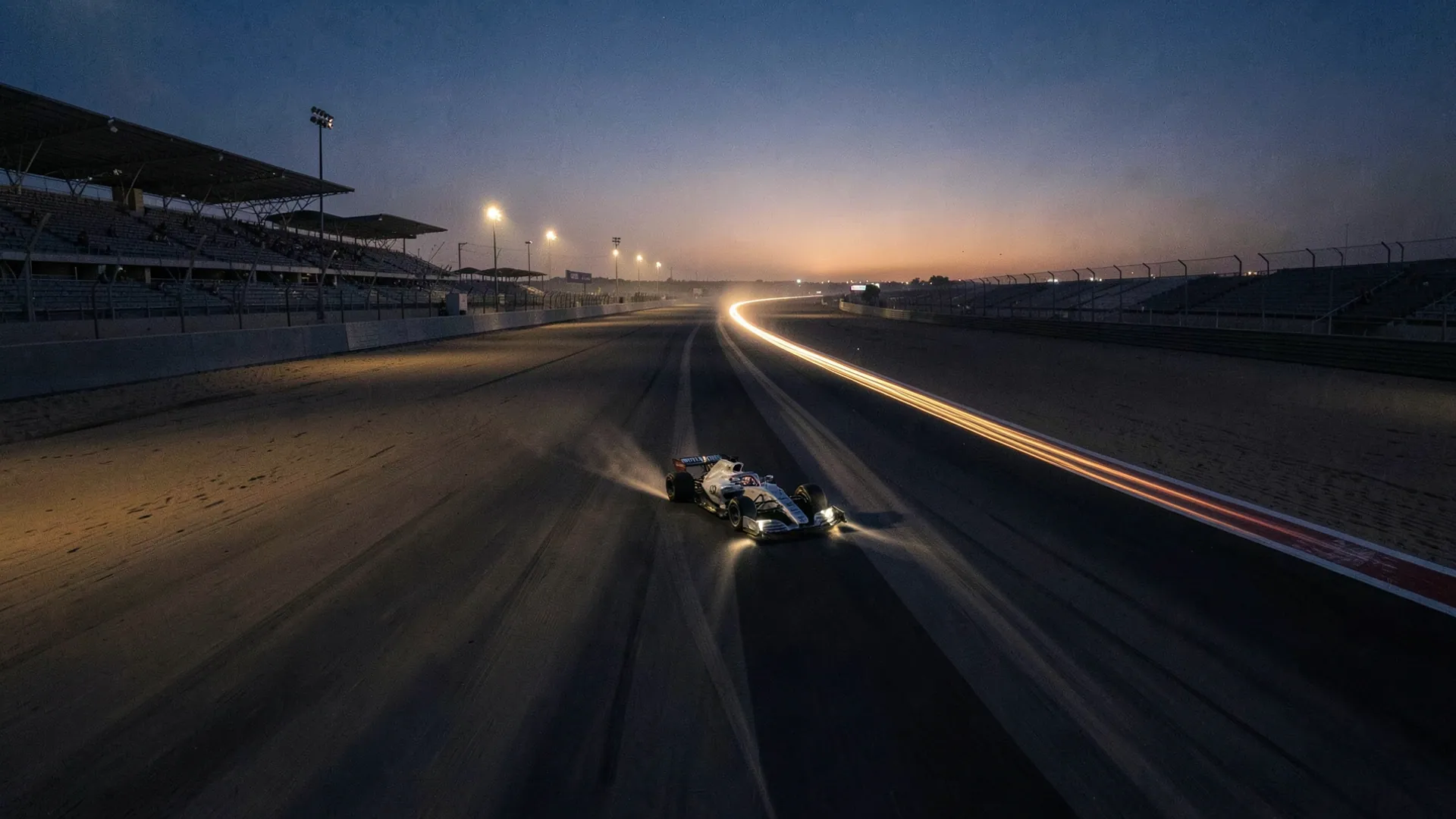
Formula 1 has let the deadline for a back-up race at Imola pass, committing the final two rounds of the 2026 season to Qatar and Abu Dhabi with no alternative venue in reserve. Autosport and RaceFans report that both races will go ahead as planned unless the Iran war escalates dramatically. If it does, the races will be cancelled rather than relocated. The FIA president has confirmed that the sport is proceeding on that basis.
The decision removes the last piece of contingency from a calendar that now runs to Las Vegas on 22 November and then to the Gulf. It is a reasonable call. It also leaves the sport with a single, blunt option if circumstances change, and that deserves more scrutiny than it has received.
Why the Imola option had a shelf life
A standby Grand Prix is not a switch that can be flicked at a fortnight’s notice. Imola dropped off the calendar after 2025. Bringing it back would have meant recruiting marshals and medical crews, securing permits from local authorities, selling tickets, booking hotels and building a broadcast operation, all for an event that might never happen. Every week the option stayed open cost the circuit and its backers money, and asked a venue to prepare for a race it could not promise its own public.
The time of year also counted against it. Northern Italy in late November or early December brings short days, low temperatures and a real chance of heavy rain. Cold track surfaces make tyre warm-up difficult, and Pirelli would have been choosing compounds for conditions far removed from anything it had planned for. Imola’s own recent history is a warning here: the 2023 race was called off days before it was due to run, after severe flooding hit Emilia-Romagna.
Freight was a further problem. The equipment leaving Las Vegas is routed for the Gulf. Diverting it to Europe at short notice would have meant reworking a logistics chain that is already among the longest of the year. A fallback that could only have been triggered weeks in advance was always going to need a firm yes or no, and F1 has chosen no.
Antonelli’s crown is already safe
The most damaging scenario, a title decided by a cancellation, is no longer possible. Andrea Kimi Antonelli has 390 points and nine wins, a lead of 111 over Max Verstappen. A perfect weekend, including victory in a sprint, yields at most 33 points. Across the three remaining rounds that comes to 99. Antonelli’s lead is beyond anyone’s reach, whether the season ends in Abu Dhabi or Las Vegas.
The constructors’ championship is in a similar position. Mercedes lead Ferrari by 142 points, 652 to 510. Ferrari one-twos in all three remaining Grands Prix would bring 129, still short of that deficit. Whatever happens in the Gulf, the 2026 champions are effectively known.
That matters to how the sport’s decision should be judged. Had Verstappen still been in range after his drive from 21st on the grid to second in Brazil, the risk of a title being frozen by geopolitics would have been far harder to defend. As it is, F1 has gambled with the margins of its season rather than its headline.
The fights a cancellation would freeze
Those margins are not trivial. Below the champions, the standings are crowded, and several of these battles carry real financial weight.
| Battle | Positions | Current gap |
|---|---|---|
| Drivers’ runner-up | Verstappen 279, Russell 262, Hamilton 261, Leclerc 249, Norris 246 | 33 points cover second to sixth |
| Constructors’ third | Red Bull 415, McLaren 398 | 17 points |
| Constructors’ seventh | Haas 31, Audi 28 | Three points |
| Constructors’ ninth | Williams 12, Aston Martin 7 | Five points |
The fight for second in the drivers’ standings is now the most open contest of the year. George Russell and Lewis Hamilton are separated by a single point. Lando Norris, who won from pole at Interlagos, sits 33 points behind Verstappen with three races to go. In a normal run-in, any of the five could finish anywhere from second to sixth. If the Middle East rounds fell away, Las Vegas would settle the order on its own.
The constructors’ table carries more weight still. Prize money is distributed by championship position, and each place is worth millions to the teams concerned. Red Bull and McLaren are fighting for third. Haas and Audi are three points apart in a battle that will shape budgets and, for Audi, the first-year verdict on its works project. Williams lead Aston Martin by five points for ninth, and Cadillac are still waiting for their first point. For these teams, two lost races mean two lost chances to change their position.
None of this is a reason to hold races in an unsafe place. It is a reason to be clear about what is at stake when F1 says “or not at all”.
Bahrain 2011, Jeddah 2022 and the limits of precedent
F1 has faced this kind of decision before, and its record is mixed. In 2011 the Bahrain Grand Prix was postponed amid unrest in the kingdom and eventually cancelled after months of uncertainty that served no one well. In 2022 a missile strike hit an oil depot near the Jeddah circuit during practice. Drivers and team principals met late into the night before agreeing to race. The event went ahead without incident, but the process looked improvised, and several drivers later made clear that they had felt pressured.
The 2020 season showed the opposite skill. F1 rebuilt an entire calendar during the pandemic, and Imola returned that year as a stopgap. That rebuild took months of planning, though, not the fortnight between rounds at the end of a season. The lesson from all three cases is that the hardest part of a crisis is the short-notice call, and who makes it.
Jeddah is the closer parallel. By scrapping the Imola fallback, F1 has made a late cancellation the only alternative to racing. That is cleaner than a scramble to relocate, but it raises the chance of another night of crisis meetings in the paddock with the race weekend already under way.
The case for published triggers
The decision is the right one. A fallback that could never be activated in time was not a real plan, and keeping it alive would have cost Imola and the sport money while offering only false reassurance. Committing to Qatar and Abu Dhabi, with cancellation as the honest alternative, is more coherent than pretending a cold November race in Italy could be organised at will.
What F1 and the FIA have not done is say what “dramatic escalation” means in practice. The risk at these events is rarely the circuit itself. It lies in moving thousands of people and hundreds of tonnes of freight through airspace and airports that can close at short notice. Most teams are based in Britain, with others in Italy, Switzerland and the United States, and each answers to its own government’s travel advice and its own insurers. A set of published thresholds, covering airspace closures, official travel advisories and the views of the governing body’s security advisers, would give teams and fans a clear basis for the decision.
Clarity matters for credibility too. The Gulf is home to some of the sport’s largest commercial partners and race promoters. That is no reason to doubt the decision, but it is a reason to make sure any final call is visibly driven by security advice rather than contracts.
Until such criteria exist, the sensible approach for the teams is to treat Las Vegas on 22 November as a race that could close the season. Red Bull and McLaren, Haas and Audi, and Williams and Aston Martin should all plan their weekends on the assumption that the points scored on the Strip might be the last ones available. If the Gulf races go ahead, nothing is lost. If they do not, the teams that prepared for that possibility will finish the year in a better position than those that relied on two more rounds.