
Fenway Sports Group Circles Cadillac as TWG Weighs Selling Down Its F1 Stake
Reports that Liverpool FC's owners are eyeing a majority stake in Cadillac, as TWG Global considers selling shares, put the still-pointless newcomer's ownership under scrutiny before General Motors' own power unit has raced.
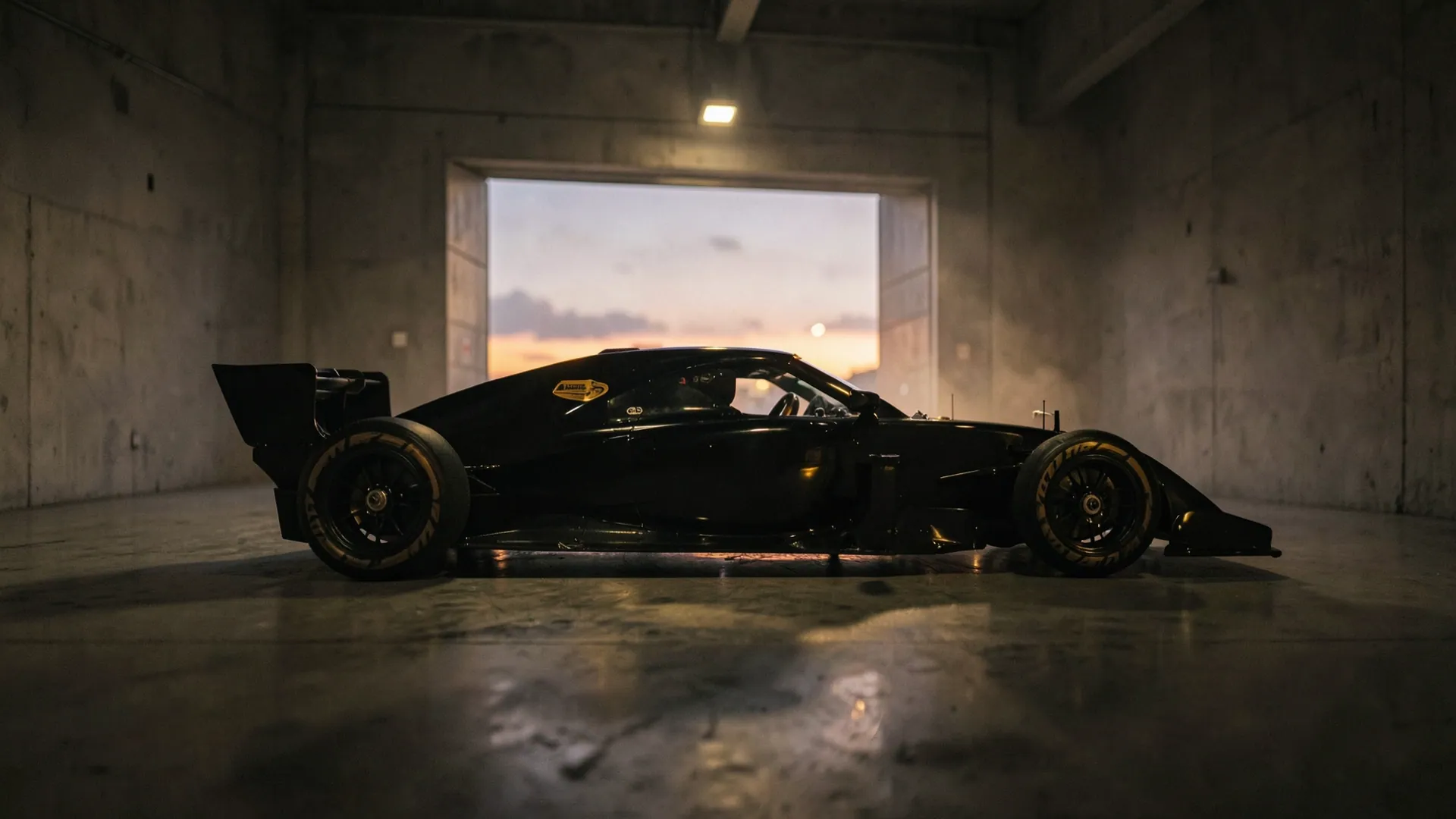
Fenway Sports Group, owner of Liverpool FC and the Boston Red Sox, has emerged as a potential buyer of a majority stake in the Cadillac Formula 1 team, according to Autosport and Crash.net. The interest comes amid reports that Mark Walter’s TWG Global, which holds the majority of the team, is looking to sell down part of its shareholding. Nothing has been confirmed by any party. The timing is awkward all the same: Cadillac arrives in São Paulo this weekend as the only team on the grid without a point after 19 rounds.
What a TWG sell-down would actually mean
It helps to be clear about the structure. Cadillac’s entry was the product of a long and bruising campaign that began as Andretti Global’s bid. The FIA approved it in 2023, and Formula One Management rejected it in early 2024. It was then rebuilt around TWG’s money and General Motors’ brand and engineering commitment. Michael Andretti stepped back from the project before the entry was finally approved in 2025. By then, the team was effectively a partnership between a financial owner and a carmaker, with Graeme Lowdon running it day to day.
That matters because “selling shares” can describe very different outcomes. A partial sell-down by an early investor is ordinary corporate behaviour. TWG paid heavily to get through the door, including the anti-dilution fee demanded by the existing teams, which was widely reported to be in the region of $450 million. Franchise values across the grid have climbed sharply since the Liberty Media era turned F1 into a scarce, closed-league asset. Crystallising some of that value, or sharing the cost of a loss-making build phase with a new partner, is rational.
A change of majority ownership is a different matter. It means a different principal deciding budgets, hiring and strategy at the precise moment the team is still building its foundations. The reports refer specifically to Fenway’s interest in a majority stake. If that is accurate, this is not a quiet refinancing. It would be a handover of the steering wheel.
Why Fenway fits, and why it gives pause
On paper, Fenway is a credible owner. It knows American motorsport through its long-standing involvement with the Roush NASCAR operation, now RFK Racing. It understands global sports media rights, which is where much of F1’s commercial value now sits. And it has experience of running a heritage brand in a European competition under an American ownership model, which is roughly what an American F1 team with global ambitions needs.
The fit makes sense beyond the spreadsheet, too. F1’s growth in the United States has been driven by the same audience Fenway already sells to. A Boston-based sports group owning a Cadillac-branded team sits comfortably within the marketing story F1 has told about its American expansion since Miami and Las Vegas joined the calendar.
The caution lies in Fenway’s reputation as a disciplined, value-conscious operator rather than a limitless spender. That approach has served it well in football and baseball, where clever recruitment and analytics can beat raw payroll. Formula 1 under the cost cap rewards discipline too, but a new team’s problem is rarely spending above the cap. It is reaching it, and then spending that money well across a facility, a workforce and a supply chain that do not yet exist at full strength. Long-established midfield teams took years to close that gap. Any owner of Cadillac has to accept several years of heavy investment with little sporting return. Whether Fenway, or anyone else, has priced that in matters more than the name on the cheque.
Nineteen rounds without a point
The sporting context sharpens all of this. After 19 of 23 rounds, Cadillac is last in the constructors’ championship on zero points. Aston Martin is 10th on seven and Williams ninth on 12, so the gap to the teams immediately above is small in raw numbers. Mercedes, by contrast, has 630 points and 12 wins. The table makes the scale of Cadillac’s task plain.
| Constructors’ championship | Points |
|---|---|
| 8. Audi | 27 |
| 9. Williams | 12 |
| 10. Aston Martin | 7 |
| 11. Cadillac | 0 |
Mexico City summed up the season. Valtteri Bottas started 21st and retired. Sergio Pérez started 20th and finished 16th, ahead of only Pierre Gasly among the classified runners. Liam Lawson, who started 22nd for RB, came through to seventh and took six points. That is the difference between a car that can make progress from the back and one that cannot. With 15 cars taking the flag ahead of Pérez, Cadillac never looked like scoring.
A pointless debut season is not a disgrace in itself. Lotus Racing, Virgin and HRT all failed to score in 2010. More recently, though, Haas scored on its debut in 2016, built on a deep technical partnership with Ferrari, and that has become the modern benchmark. Cadillac also runs Ferrari power and signed the experienced pairing of Pérez and Bottas precisely to accelerate development, so it will be measured against that standard. Four rounds remain. A single top-10 finish would end the scoreless run, and one strong result could lift Cadillac off the bottom of a table where the margins in the lower reaches are this thin. Neither the prize-money implications nor the morale boost is trivial.
Results alone do not explain an ownership move, however. A new team was never likely to be a points machine in its first year, and any serious investor knew that. If TWG is selling, the reasons are more likely to be financial and strategic than a reaction to Pérez finishing 16th in Mexico. But a winless, pointless season weakens a seller’s negotiating position. Buyers paying for potential will point to the results table when discussing price.
When ownership changes help, and when they hurt
Formula 1’s recent history offers both warnings and encouragement.
The warnings come from the 2010 intake. HRT, Caterham and Marussia were underfunded from the outset, and ownership churn followed performance failure until all three disappeared. Their problem was not a change of owner but the absence of any owner with deep enough pockets to fund the climb.
The encouragement comes from teams that changed hands and emerged stronger:
- Force India to Racing Point to Aston Martin: Lawrence Stroll’s consortium rescued the team from administration in 2018, then invested in a new factory and wind tunnel.
- Williams: Dorilton Capital’s 2020 takeover replaced a family business struggling to fund modern F1 with an owner willing to rebuild infrastructure, albeit slowly.
- Sauber: Longbow Finance stabilised the team in 2016 and ultimately paved the way for Audi.
In each case, the new owner brought more capital and a longer time horizon than the old one. That is the test Cadillac’s situation should be judged against. A Fenway majority would be good news if it adds capacity alongside GM and TWG’s remaining interest. It would be a concern if it signals an early owner heading for the exit, with a successor brought in to manage costs rather than to build.
GM’s commitment is the variable that matters most
The most important party in this story is neither the buyer nor the seller: it is General Motors. The Cadillac project’s long-term credibility rests on GM delivering its own power unit later in the decade, turning a customer team into a works operation. That programme is a multi-year, multi-hundred-million-dollar commitment, and it needs a stable chassis partner on the other side of the garage.
If GM’s position is unaffected by any shift in the financial ownership, the team’s direction is intact and a new shareholder becomes a question of governance rather than survival. If the sell-down reflects a wider cooling of enthusiasm, the works-team plan becomes far harder to sustain.
Cadillac’s owners, current and prospective, would do well to end the uncertainty quickly. Speculation of this kind hurts recruitment above all, and a new team still hiring senior engineers can least afford it. Ambitious candidates weigh stability above almost everything else.
This is a moment of risk rather than crisis. F1 franchises are now valuable enough that a well-capitalised buyer such as Fenway would be paying for a long-term asset, not a distressed one. But the deal, if it happens, will be judged on one thing: whether Cadillac emerges with more money and patience behind it than it had a year ago. The most telling signal over the coming weeks will not be the size of the stake. It will be whether General Motors stands publicly beside whoever ends up holding it.