
Cadillac's Costly Lesson: What the Herta Fine Means for F1's Rookie Team
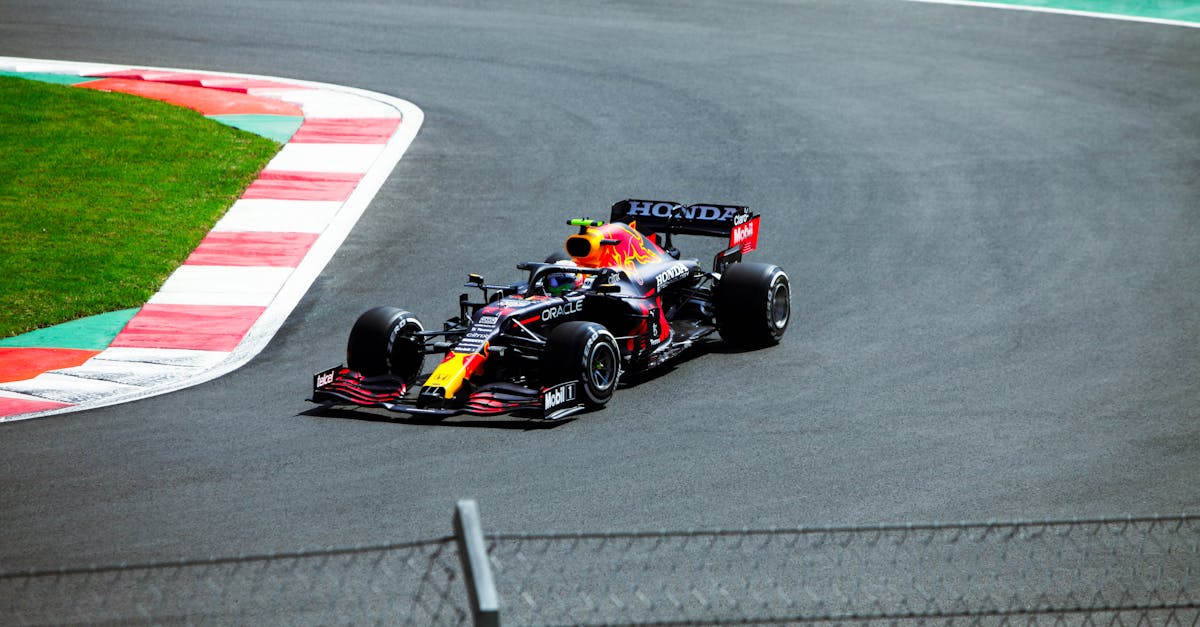
Colton Herta’s Free Practice 1 stoppage at Monza was, in isolation, the kind of minor mechanical or procedural hiccup that happens to every team on the grid at some point in a season. What makes it newsworthy is who it happened to. Cadillac, F1’s newest constructor and still finding its feet at the sport’s top table, has now been handed a heavy fine by the FIA stewards — and with it, a pointed reminder that the rulebook does not flex for inexperience.
A routine stoppage, an unusual penalty
The incident itself was straightforward enough on the surface: Herta brought his car to a halt on track during FP1 at the Italian Grand Prix, triggering an FIA investigation into the circumstances of the stoppage. Stewards’ inquiries of this nature are routine — any car parked somewhere other than the pit lane invites scrutiny, both for the safety implications of recovering it and for whether the team followed the correct procedures in the moments before and after the stop. What is not routine is the outcome. Rather than a written warning or a token penalty, Cadillac has been hit with what’s being described as a heavy fine, and the FIA’s messaging around the decision has explicitly framed it as a signal to the wider grid that enforcement is tightening.
That framing matters as much as the fine itself. Stewards’ decisions are rarely just about the specific breach in front of them; they set precedent, and precedent is a language every team on the grid reads closely. When the FIA chooses to make an example, it usually wants the paddock to notice — and this one was clearly built to be noticed.
No grading on a curve for newcomers
For an established outfit with a decade or more of accumulated institutional knowledge — the muscle memory of exactly how to handle a stranded car, who calls it in, what the marshalling posts need to hear, how quickly the pit wall communicates with race control — this sort of incident might barely register beyond an internal debrief. For Cadillac, it lands differently. New teams don’t yet have those reflexes baked in. Processes that a team like Mercedes or Red Bull can execute almost on autopilot have to be built from scratch, refined through exactly this kind of real-world stress test, often under a stopwatch and with the FIA watching.
That’s precisely why this fine carries more weight than its size alone suggests. It tells Cadillac — and every future entrant watching from the wings — that the FIA is not inclined to grade rookie teams on a curve. Safety-adjacent procedures around stopped cars are non-negotiable regardless of how many grands prix a constructor has under its belt. There’s a defensible logic to that stance: a marshal recovering a car doesn’t care whether the team behind it is in its first season or its fiftieth, and the risks of a poorly handled stoppage don’t diminish because the outfit involved is still learning the ropes. If anything, the FIA arguably has more reason to be strict early, before shortcuts or casual habits have a chance to take root.
Debut-season growing pains, from Haas to Manor
History offers a useful lens here. Every team that has entered Formula 1 in the modern era — Haas, the ill-fated HRT and Manor operations, even Red Bull-backed Toro Rosso in its infancy — has gone through a period where the gap between grand ambitions and operational fluency shows up in exactly these small, unglamorous moments. Fines and reprimands in a debut season are less a sign of incompetence than a normal part of the calibration process, the friction of translating a race team’s plan into flawless execution under FIA scrutiny.
What’s notable this time is the tone of the FIA’s own messaging alongside the penalty. Warnings of stronger enforcement going forward suggest the governing body sees Cadillac’s situation as an opportunity to draw a wider line — not just disciplining one team, but setting expectations for a grid that, with Cadillac’s arrival, has just grown for the first time in years. Other prospective entrants watching Cadillac’s teething problems will take note that the runway for excuses is short.
How Cadillac answers Monza’s warning
There’s a balance to be struck in how we judge this. On one hand, it would be unreasonable to expect Cadillac to arrive with the seamless operational polish of a team that has been on the grid for two decades; teething problems are inevitable, and a fine of this nature is arguably a cheaper lesson learned in August than a costlier one learned in a title fight years down the line. On the other, the FIA is right not to hand out leniency simply because a team is new. Safety and procedural compliance are exactly the areas where standards should never be negotiable, and Cadillac’s rivals — who’ve paid their own dues over the years — would have every right to feel aggrieved by a two-tier approach to enforcement.
The real test now is how Cadillac responds. A team that treats this as a genuine operational review — tightening its stopped-car protocols, sharpening communication with race control — will look back on Monza as a useful, if expensive, growing pain. A team that treats it as bad luck risks finding out that the FIA’s patience with rookie status has a shorter shelf life than it might have hoped.