
Marko Brands Horner's Red Bull Engine Claims a 'Collection of Untruths'
Helmut Marko has publicly rejected Christian Horner's account of the Red Bull Ford Powertrains project, reopening a bitter dispute over who deserves credit for an engine that has already won races.
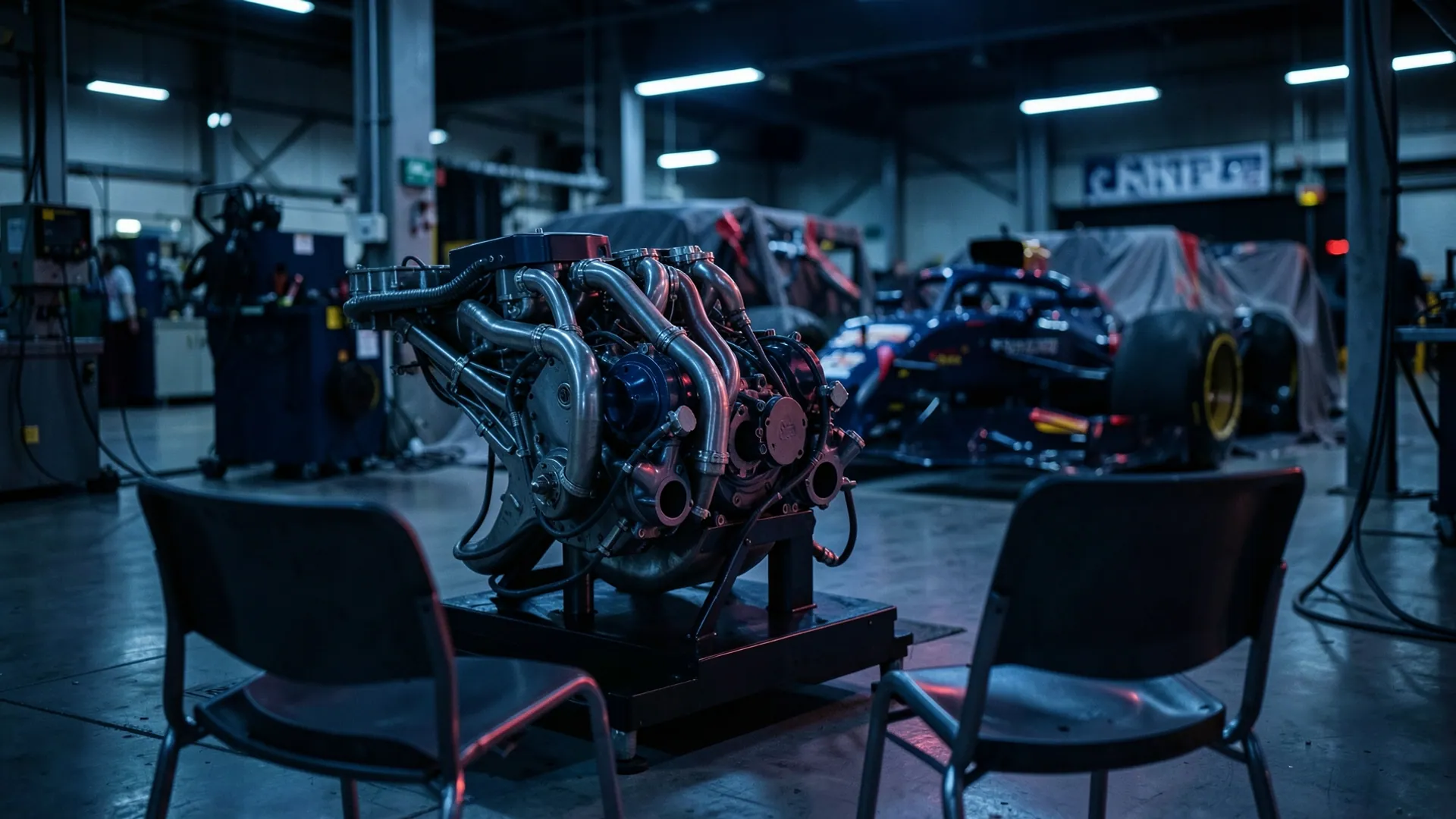
Helmut Marko has dismissed Christian Horner’s version of how Red Bull came to build its own engine as “a collection of untruths”. His rebuttal follows Horner’s claim that the company’s shareholders phoned him to say thank you when the Red Bull Ford Powertrains unit won its first Grand Prix. The exchange has played out through interviews rather than face to face, and it reopens one of the more personal arguments in recent Formula 1: who built the engine that now powers four cars on the grid. It also lands with Max Verstappen fresh from victory in Singapore and Red Bull seven points short of McLaren in the fight for third in the constructors’ championship.
A thank-you call, retold in public
Horner’s account, reported by Autosport and Motorsport.com, is simple. When the Milton Keynes engine took its maiden victory, the shareholders called to thank him for the project. That call matters because of who received it. Horner had led the team since its debut season in 2005, but he was removed as team principal in July 2025, months before the engine he had championed turned a wheel in competition. Laurent Mekies took over, and the first season of Red Bull’s own power unit has been run without the man who stood on stage to announce it.
Seen that way, Horner’s story is about more than a pleasant phone call. He is staking out authorship. He is saying that the people who own the company still regard the engine as his achievement, even though he was not there to see it win.
Marko’s response was short and unambiguous. He did not soften it with diplomatic qualifications or suggest a misunderstanding. He called it a collection of untruths, which is about as direct as a senior figure gets about a colleague of two decades. Coming from one half of a partnership that ran Red Bull’s racing operation through eight drivers’ titles, the bluntness is telling.
Who really built Red Bull Powertrains
The honest answer is that the engine has several parents, and both men can point to a genuine contribution.
The project was born of a crisis. When Honda announced in October 2020 that it would leave F1 at the end of 2021, Red Bull faced unappealing options: return to a customer deal with a rival manufacturer, or find a way to keep the Honda hardware alive itself. It chose the second route, lobbying successfully for a freeze on power unit development from 2022, which made it financially viable to take over and run the Honda design in-house. Red Bull Powertrains was established in 2021, with a new facility on the Milton Keynes campus.
Horner was the most visible advocate of that strategy and the executive under whom the operation was assembled. The recruitment drive that took engineers from Mercedes’ engine base at Brixworth, including Ben Hodgkinson as technical director, happened on his watch. So did the partnership with Ford, announced in New York in February 2023. When Red Bull talked about becoming a full works team, Horner did the talking.
Marko’s claim to the project runs through a different door. He was the architect of the Honda relationship from 2018 onwards, and the goodwill built there shaped everything that followed: Honda’s continued support for Red Bull through 2025 and the orderly transfer of knowledge that gave the fledgling powertrain division a base to work from. Above both men sat Dietrich Mateschitz, who approved the investment before his death in October 2022. Nothing on this scale happened at Red Bull without his signature.
So the dispute turns less on facts that can be checked than on emphasis. Horner tells the story as a team principal who built an engine company. Marko tells it, implicitly, as one in which the groundwork was laid elsewhere and the decisive calls were made higher up. Both versions leave someone out.
What two wins say about a first-year engine
Nobody fights over credit for a failure, and this row exists because the engine has worked better than many expected.
The 2026 regulations were always going to favour the established manufacturers, and Mercedes has duly set the standard. It has won 11 of the 17 rounds, and Andrea Kimi Antonelli leads the drivers’ championship on 340 points with eight wins, 102 clear of team-mate George Russell. Red Bull has won twice, both times with Verstappen, most recently from pole in Singapore on 11 October.
The comparison that flatters Red Bull is with the other new or returning engine programmes:
| Engine | Teams | Constructors’ points |
|---|---|---|
| Red Bull Ford | Red Bull, RB F1 Team | 332 + 100 = 432 |
| Audi | Audi | 23 |
| Honda | Aston Martin | 7 |
Audi, a manufacturer with vast resources and long experience elsewhere in motorsport, has 23 points. Honda, the company whose expertise Red Bull’s programme grew out of, has scored seven with Aston Martin. Against that, a first-year engine supplier has two victories, and its two teams sit fourth and fifth in the constructors’ table.
Nor is the engine purely a Verstappen story. Isack Hadjar climbed from 22nd on the grid to score a point in Singapore and has 97 points this season. RB F1 Team’s Liam Lawson took seventh in the same race and has 75. A power unit that lets drivers recover that kind of ground is a competitive one.
It is not, however, the benchmark. Verstappen is fourth in the standings on 221 points, 119 behind Antonelli with six rounds remaining, so the title is beyond him in any realistic sense. Second place is not: he trails Russell by 17 points and Lewis Hamilton by eight. Red Bull’s 332 points leave it seven behind McLaren’s 339. Those are the fights that will define how this first season is remembered, and they are close enough that the engine’s reputation is still being written.
The shareholder fault line Horner keeps touching
The most pointed word in Horner’s account is “shareholders”. Red Bull’s ownership is split between the Yoovidhya family in Thailand, which holds the majority stake, and the Mateschitz family in Austria. During the turbulence of 2024, when Horner faced an internal investigation that ultimately cleared him, the political lines inside the company were widely understood to run along that divide. Horner was seen as having strong backing from the Thai side, while Marko was aligned with the Austrian camp and with the Verstappen family.
That history is why a story about a phone call carries so much weight. To say that the shareholders thanked him is to suggest that the owners endorse his version of events. Marko’s rebuttal can be read as a refusal to let that suggestion stand unchallenged, whatever the precise details of the call.
This is a familiar pattern in F1 when senior figures part company. The departed executive tells the story of what they built, and those who remain push back on the framing. What makes the Red Bull version unusually sharp is that the two men worked side by side for so long. They presided together over Sebastian Vettel’s four titles and Verstappen’s four, yet they cannot agree on the origin story of the project meant to secure the team’s next era.
For the team itself, the row is a distraction it does not need but can probably absorb. Mekies’ job is to beat McLaren to third and give Verstappen the car to overhaul Russell and Hamilton. Nothing said in an interview will change the power unit’s output at the Circuit of the Americas.
Austin will frame the argument better than either man can
Round 18, the United States Grand Prix in Austin on 25 October, is Ford’s home race, and the timing is awkward for anyone hoping the story fades. A strong weekend there will be marketed as proof that the American partnership was a masterstroke. Horner’s supporters will hear an echo of his announcement in New York more than three and a half years ago, while Marko’s will point out that the engineers who delivered it are still in Milton Keynes and Horner is not.
My view is that neither man’s version deserves to win outright. Horner did more than anyone to turn Honda’s departure into a works engine programme with a Detroit badge on it. Marko’s long cultivation of Honda gave that programme a foundation, and Mateschitz’s approval gave it the money. Calling Horner’s account a collection of untruths overstates the case. Implying sole authorship through a shareholders’ phone call overstates it too.
The more useful verdict will come from the stopwatch. If Red Bull finishes ahead of McLaren and Verstappen takes second in the championship, the engine’s first season will rank among the best debuts by a new manufacturer in the hybrid era, and the credit row will look like two men squabbling over a success that belongs to a factory. If Red Bull fades over the final six rounds, the argument will curdle into something worse: a fight over who failed to prepare the engine for its second year.