
Hadjar's Baku Comeback: What Red Bull Gains by Reversing the Lawson Swap
Examines the driver line-up change as Isack Hadjar returns from wrist injury and Liam Lawson steps back to Racing Bulls.
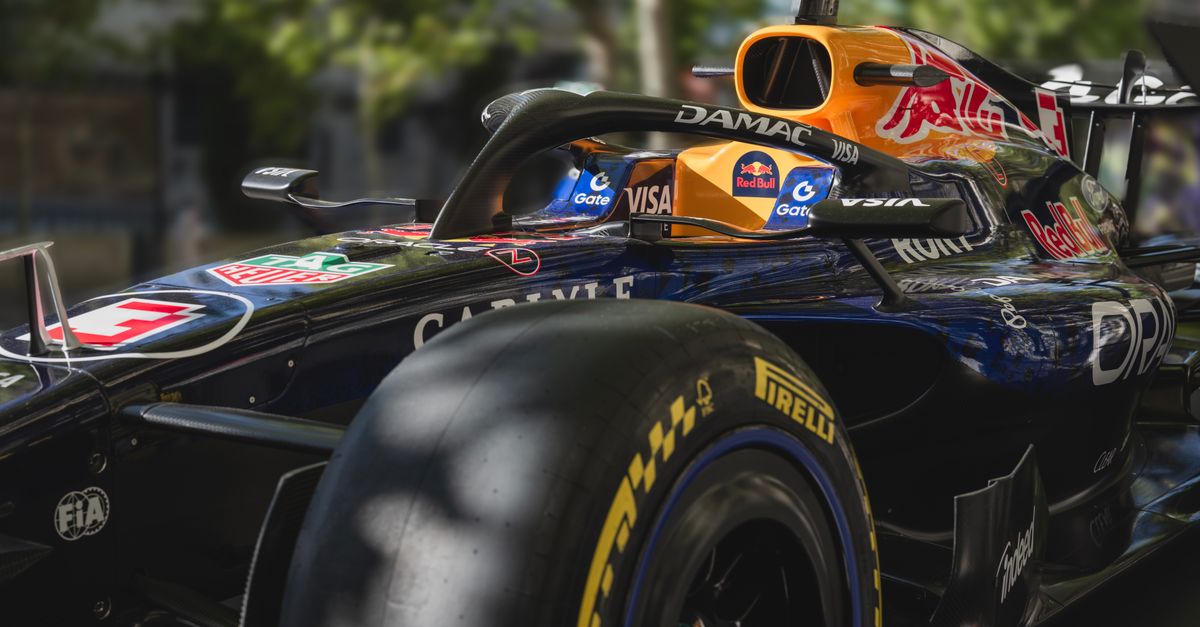
Red Bull’s decision to reinstate Isack Hadjar for this weekend’s Azerbaijan Grand Prix, with Liam Lawson stepping back to Racing Bulls, is on the surface a straightforward matter of injury management. Hadjar picked up a wrist problem in training over the summer, missed the last three rounds, and now returns once cleared. But nothing involving a Red Bull-to-Racing Bulls seat swap is ever purely administrative — the team’s junior ladder has become notorious for treating cockpits as interchangeable, and any reshuffle, however temporary or medically justified, invites scrutiny of what it signals about driver standing within the wider Red Bull ecosystem.
What’s Actually Happening
The facts, as confirmed by Red Bull, are relatively clean. Hadjar sustained a wrist injury in pre-season-adjacent training over the summer, sat out three consecutive grands prix, and has now been passed fit to return at Baku. Lawson, who was drafted in from Racing Bulls to cover the absence, reverts to his previous role once Hadjar is back in the senior car. It’s a like-for-like reversal rather than a performance-based demotion dressed up as a rotation, and Red Bull have been explicit that the change is tied to Hadjar’s recovery timeline rather than any judgement on Lawson’s stand-in stints.
That distinction matters enormously in how this should be read. Red Bull’s junior programme has a well-earned reputation for ruthlessness when it comes to underperformance, but this instance is different in kind: it’s a driver returning to a seat he already held, not a driver being parachuted into one he’s fighting to keep. Lawson’s return to Racing Bulls isn’t a demotion in the conventional sense — it’s the restoration of the status quo that existed before Hadjar’s injury forced Red Bull’s hand in the first place.
Why It Matters for Hadjar
Three missed rounds is a significant chunk of a season for any driver, but it’s especially costly for one still establishing himself at Formula 1’s top level. Momentum in this sport is fragile — rhythm with a car, a team’s operational cadence, qualifying instincts on unfamiliar tracks — and all of it erodes quickly once a driver is sidelined. Hadjar returns not to a blank slate but to a Red Bull environment where comparisons, internal and external, never stop being drawn. Every session this weekend will be parsed for signs of rust or, conversely, signs that the underlying pace that earned him the seat in the first place remains intact.
Baku itself is a demanding circuit to return to. It’s a street track that punishes lapses in confidence more harshly than most: long, high-speed straights bookended by heavy braking zones, and a final sector so tight that the smallest misjudgement puts a car into the wall. It’s not an obvious venue for easing back into competition after a physical injury, particularly one involving the wrist — a joint under constant load through kerbs, braking forces and steering corrections. Red Bull presumably wouldn’t have cleared Hadjar to race if there were genuine fitness doubts, but the demands of Baku will still be a stern first test of how completely he’s recovered.
The Wider Context
Red Bull’s use of Racing Bulls as both a feeder and a safety valve is by now a familiar pattern, and this episode fits within it even if the trigger this time is medical rather than performance-related. The junior team has repeatedly absorbed drivers stepping down from the senior outfit and, at other moments, provided cover when the senior team has needed it — Lawson’s own trajectory this year, moving between the two garages, is itself testament to how fluid Red Bull is willing to be with its driver assignments when circumstances demand it. Other manufacturers tend to ring-fence their line-ups more rigidly; Red Bull’s structure, by contrast, treats its two teams almost as a single talent pool with two liveries, and while that flexibility can look chaotic from the outside, it does give the organisation options that rivals simply don’t have when injury or underperformance strikes.
It’s worth noting, too, that this is a relatively benign use of that flexibility. Where previous Red Bull driver changes have often carried an air of crisis management or hasty correction, this one is procedural — an injury, a substitute, a return once fit. There’s no reshuffling of contracts or repositioning of a career under duress here, which is a refreshing contrast to how these situations have sometimes played out at Milton Keynes in the recent past.
GP Headlines’ Take
This is a sensible, low-drama use of Red Bull’s dual-team structure, and it deserves to be read as exactly that rather than as another instalment in the junior programme’s reputation for churn. Lawson did what was asked of him as cover and returns to Racing Bulls with his standing intact; Hadjar gets his seat back on medical grounds rather than having had to fight for it against a rival occupying it in his absence. The genuine intrigue this weekend isn’t the mechanics of the swap — it’s whether Hadjar can shake off three races of ring rust on one of the calendar’s least forgiving circuits and pick up where his rookie campaign left off before the injury intervened.