
Former Fuel Flow Meter Supplier Sentronics Takes F1's Sensor Provider to Court in Texas
Sentronics claims the fuel flow sensors fitted to every car on the grid infringe its patent, a dispute that will not stop Austin but touches the instrument Formula 1's power unit rules depend on most.
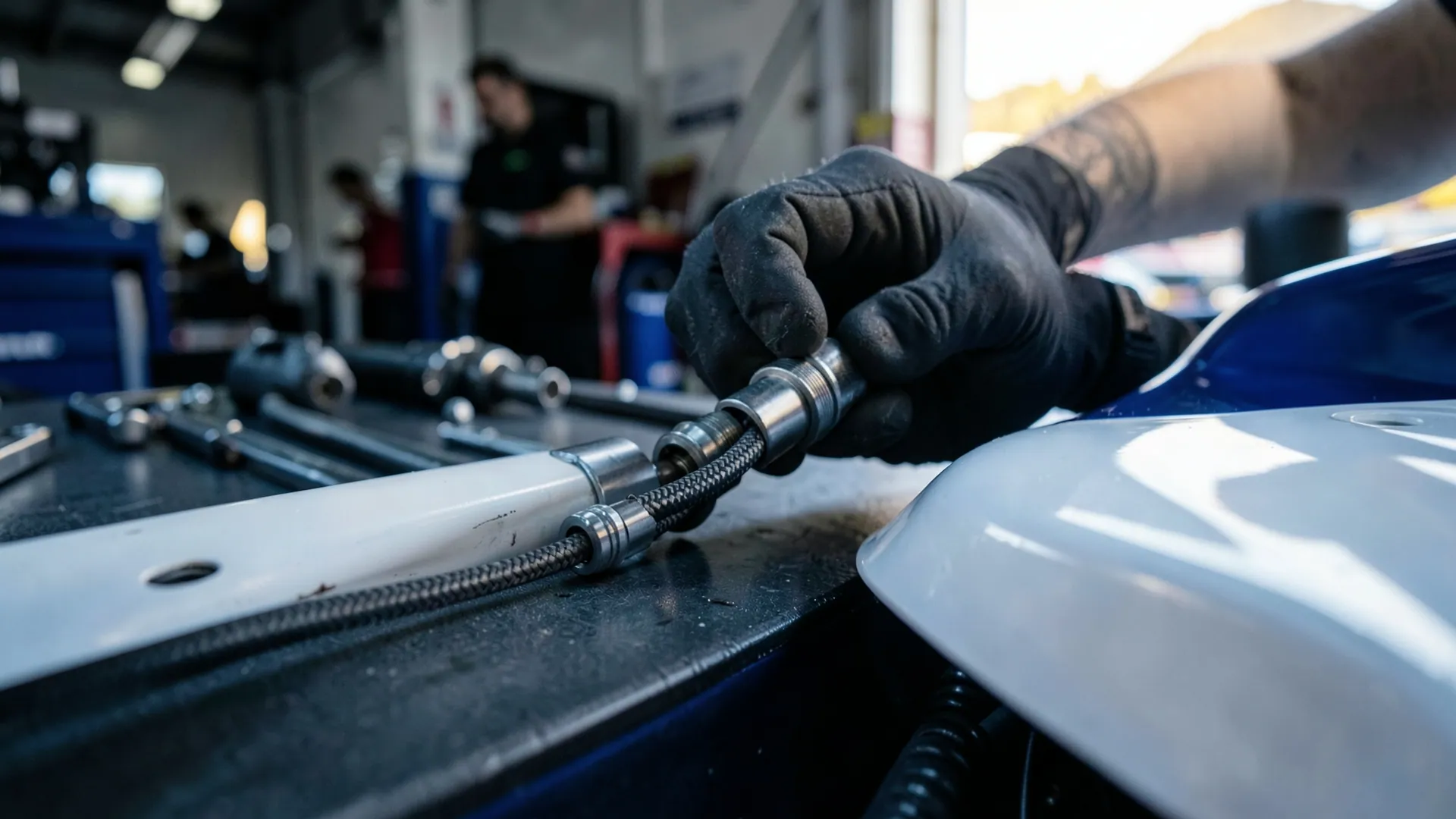
Sentronics Holdings Ltd, the company that formerly supplied Formula 1’s fuel flow meters, has filed a patent infringement lawsuit in Texas against the firm that replaced it, claiming that the sensors now fitted to every car in the championship infringe a Sentronics patent. The case lands in the week the paddock arrives at the Circuit of the Americas for Sunday’s United States Grand Prix, the 18th of 23 rounds.
On its face, this is a commercial dispute between two engineering suppliers. But the product in question is the device the FIA relies on to police the single most important number in a modern power unit. That makes the suit more than a footnote, even if its practical effect on this weekend’s race will almost certainly be nil.
A patent claim aimed at the whole grid
As reported by Motorsport.com and RacingNews365, the action is directed at the current supplier, not at the FIA or at any of the 11 teams. Sentronics, described by RacingNews365 as a former parts supplier to both the governing body and the teams, says the technology inside today’s sensors is covered by its intellectual property.
What gives the story its weight is the scope. Fuel flow meters are not a component teams choose or design. They are a standard part, specified and homologated by the FIA and fitted to every car, so any finding against the supplier concerns all 22 entries at once. There is no scenario in which one team gains or loses relative to another because of this case. Whatever happens, it happens to the sport collectively.
The setting is no accident either. Texas has long been one of the most popular venues in the United States for patent plaintiffs, thanks to its experienced patent judges and a reputation for moving cases along. Filing there, in the week Formula 1’s commercial and technical leadership descends on Austin, guarantees attention. Whether that attention translates into leverage is another matter.
Why this sensor carries so much weight
A supplier dispute matters here because of what the fuel flow meter actually does. Since the hybrid era began in 2014, power has been governed less by engine capacity than by how much fuel an engine is allowed to burn per hour. The meter sits in the fuel system between tank and engine, sampling the flow at high frequency and reporting it to the FIA. If a manufacturer could beat the limit, even briefly, it would gain power its rivals cannot legally access.
That principle is sharper still in 2026. The new power unit regulations lean far more heavily on electrical deployment and run on sustainable fuels, and the rules control the energy flowing into the engine rather than simply its mass. Accurate, tamper-proof measurement is the foundation of power unit parity in a formula where manufacturers have only just finished their first homologation cycle.
The sport has learned the hard way what happens when trust in the meter wobbles. At the 2014 Australian Grand Prix, Daniel Ricciardo was disqualified from second place on his Red Bull debut after the FIA ruled that his car had exceeded the fuel flow limit. Red Bull argued that the sensor was unreliable and that its own model was more accurate; the Court of Appeal rejected that defence and confirmed the FIA’s homologated sensor as the reference. That ruling still underpins the system today.
Five years later came the far murkier Ferrari episode. Rivals questioned how the 2019 Ferrari engine produced its straight-line speed, technical directives on fuel flow measurement followed, and the FIA mandated a second, encrypted sensor for 2020. The governing body then announced a confidential settlement with Ferrari in February 2020, a resolution that satisfied almost nobody and prompted a joint statement of protest from seven teams. The lesson was that the meter’s credibility is a shared asset, and any doubt about it tends to spread well beyond the original question.
What a court can realistically change
A patent case has clear limits. Sentronics is not alleging that the current sensors are inaccurate, unreliable or open to manipulation. An infringement claim argues that a product uses protected technology without permission. If anything, it implies the sensors work, and work in a way the claimant regards as its own.
That distinction matters for anyone tempted to link the suit to the integrity of results. A team unhappy with a fuel flow reading in Austin or anywhere else would gain nothing from pointing at this case. The stewards’ authority rests on the FIA’s regulations and its homologated equipment, as the Ricciardo appeal established, not on who holds the underlying patent.
The plausible outcomes are commercial. American patent litigation is slow, often running for many months or years. Where infringement is proven, the usual remedy is damages or an ongoing royalty. Injunctions halting the sale or use of a product have been harder to obtain since the Supreme Court’s 2006 decision in eBay v MercExchange. A court ordering sensors to be stripped from Formula 1 cars mid-season would be an extraordinary step, and nothing in the reporting suggests that is imminent. Many disputes of this type end in a licensing agreement or a settlement long before trial.
The genuine exposure is longer term. If the current supplier were found liable and the cost or legal uncertainty became unmanageable, the FIA could eventually face a supply problem with a component it cannot do without. Replacing a homologated measurement device is not a quick job. It requires validation across every manufacturer’s fuel system and enough confidence from teams that the new numbers match the old ones. That is a headache for the governing body’s procurement department, not a threat to this year’s championship.
A dominant season raises the stakes for trust
The timing would matter less in a closer year. Instead, the first season of the new power unit formula has been dominated by Mercedes, which has won 11 of the 17 Grands Prix. Andrea Kimi Antonelli leads the drivers’ championship on 340 points, 102 clear of team-mate George Russell with six rounds remaining, and Mercedes sits 134 points ahead of Ferrari in the constructors’ table, 578 to 444.
Antonelli’s title march slowed slightly in Singapore, where Max Verstappen converted pole into victory ahead of Charles Leclerc, with Antonelli third. Russell recovered only to ninth from 19th on the grid, so the gap at the top actually grew. With 150 Grand Prix points still available, Antonelli is not yet champion, but the trend is unmistakable.
When one manufacturer controls a new formula this comprehensively, the instruments that police it come under closer scrutiny. Nothing in this case points to any irregularity by Mercedes or anyone else, and it would be unfair to suggest otherwise. The point is simply that Formula 1’s equilibrium depends on every manufacturer believing the meter is neutral and beyond reproach. A legal fight over who owns the technology inside it is not the backdrop the FIA would have chosen.
The FIA’s job is to make this boring
The governing body’s response should be a quiet one, but it does need to respond. It should be able to tell teams, privately if not publicly, that its supply is secure for the rest of 2026 and beyond, and that a contingency exists should the litigation turn against its supplier. Future tenders for critical standard parts should require robust indemnities and clear evidence of freedom to operate, so the sport is never exposed to a dispute between its contractors.
Expect the cars to take the start in Austin on Sunday with their sensors untouched and the case barely mentioned in the garages. The more likely outcome is a negotiated settlement well before any courtroom verdict. The real test will come when the FIA next puts this contract out to tender: whether it ensures that Formula 1’s most sensitive measuring device carries no legal baggage at all.