
BBC's 32-Year Hold on F1 Radio Threatened by Possible talkSPORT Bid
A possible talkSPORT bid for Formula 1's UK radio rights could end the BBC's 32-year tenure and underlines how much commercial value the sport's British audio coverage now carries.
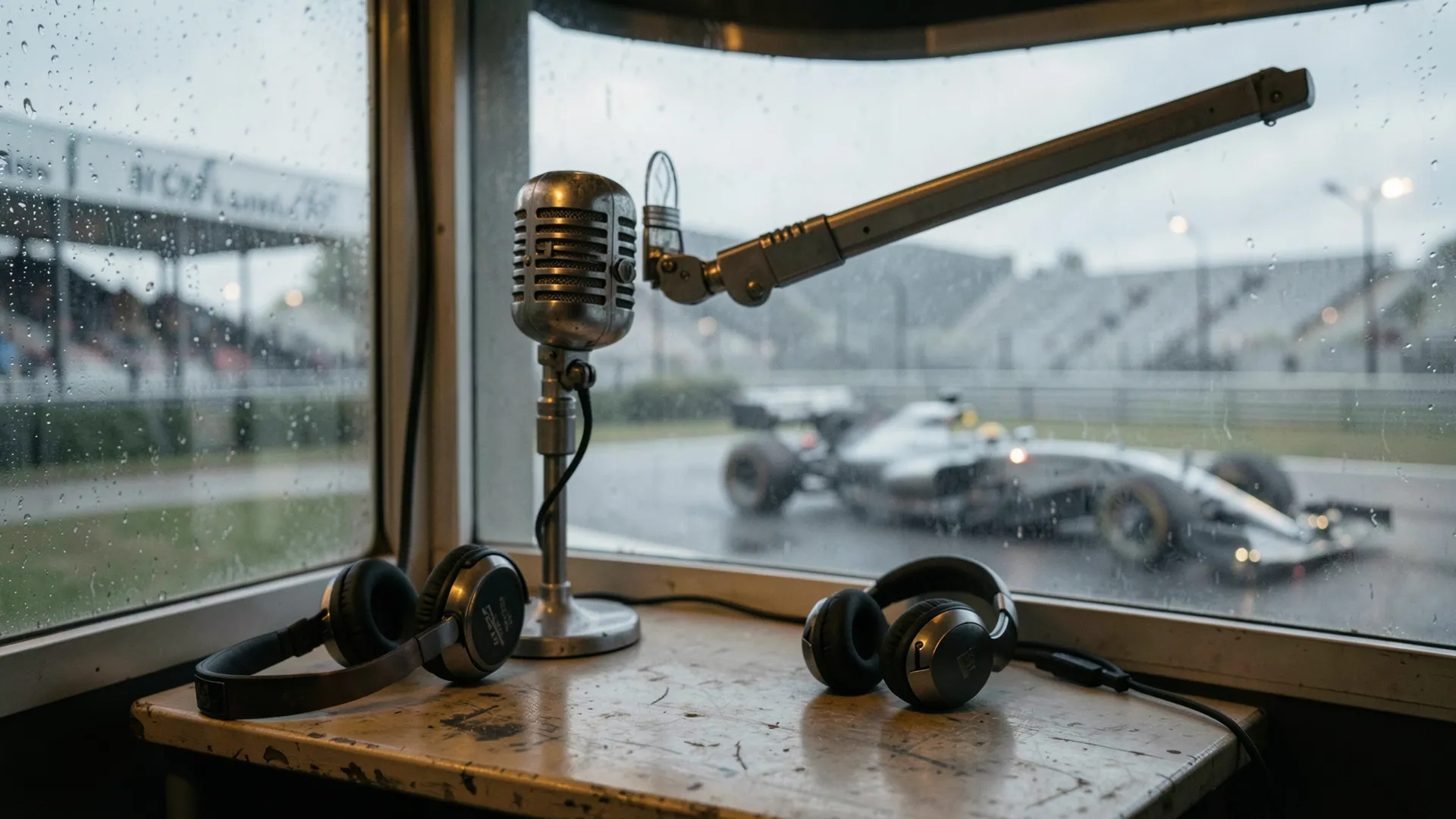
The commercial station talkSPORT is considering a bid for Formula 1’s UK radio rights, a move that could end the BBC’s 32-year run as the sport’s home on British radio. Liam Fisher, who heads the station, told The Telegraph that F1 would be a natural fit for talkSPORT. No bid has been confirmed. Even so, the interest tells you a good deal about where the sport’s value in Britain now sits.
A station built on taking rights from the BBC
The BBC should not be surprised. The station made its name in football, and its defining commercial move was breaking the corporation’s hold on Premier League radio commentary. It bought packages that had once been the BBC’s by default, and it proved that a commercial broadcaster could carry live top-flight sport without losing listeners. The BBC kept its share, but the old assumption that the national broadcaster simply owned the audio rights to Britain’s biggest sports was gone.
Formula 1 suits that model better than many sports do. A Grand Prix weekend gives a station three days of material: practice, qualifying, the race, and the arguments that fill the gaps between them. A phone-in station feeds on argument. A Friday crash, a disputed penalty or a strategy call that goes wrong can carry hours of output. A 23-round calendar delivers that from March to December.
The economics are different on each side. BBC Radio 5 Live is funded by the licence fee and treats F1 as part of a public-service sports offer. Its rival, owned by News UK, earns its money from advertising and sponsorship. For talkSPORT, F1 would be a product to sell. Every weekend would need audience figures that justify the rights fee, and the coverage would be built around commercial breaks and sponsor slots. That is no criticism. It is simply how the station works, and it shapes how a race would sound.
Why the audio rights now carry a price
The best way to read this story is through the sport’s British television history, because radio is the last part of the UK rights package still run on the old terms.
In 2012 the BBC’s exclusive free-to-air television deal gave way to a split with Sky Sports. The BBC left television coverage altogether after 2015, and Channel 4 took the free-to-air share. From 2019 Sky held live coverage exclusively, with Channel 4 left to show highlights. At each stage Formula One Management chose revenue over reach, and at each stage the BBC was either outbid or chose not to compete.
That sequence explains why radio has become valuable. With live television behind a paywall, BBC radio commentary has become the main free way for a British fan to follow a race as it happens. A commuter, a fan without a Sky subscription, or someone in a car on a Sunday afternoon reaches F1 through 5 Live or not at all. In practice, an audio deal sold as a secondary package has become the sport’s free-to-air front door in one of its most important markets.
Rights holders notice when an asset is under-priced. Liberty Media has run F1 since 2017 on the principle that every market and every format should be sold for what it can earn. A competitive radio tender would give Liberty a way to put a number on something that has largely been left on inherited terms. A bid from talkSPORT, even one that fails, would set that number.
The listener’s position differs from that of the television viewer, and it matters to the argument. A move from the BBC to Sky meant fans had to pay. A move from the BBC to talkSPORT would not. Radio stays free whoever holds it. The trade-off would be in tone, depth and time on air: adverts against uninterrupted commentary, and a phone-in culture against the BBC’s more measured analysis.
A season shaped for British listeners
The timing of talkSPORT’s interest is not hard to understand. The 2026 championship has given British audiences plenty to talk about, even though the title itself is drifting towards Italy.
Andrea Kimi Antonelli leads the drivers’ standings on 340 points with eight wins. With six rounds left he is 102 points clear of his Mercedes team-mate George Russell. That margin is not yet decisive, because 150 points remain from the Grands Prix alone, but it leaves Antonelli needing only a steady run home. Behind him, the fight for second is far tighter, and it is heavily British:
| Position | Driver | Team | Points |
|---|---|---|---|
| 2 | George Russell | Mercedes | 238 |
| 3 | Lewis Hamilton | Ferrari | 229 |
| 4 | Max Verstappen | Red Bull | 221 |
| 5 | Charles Leclerc | Ferrari | 215 |
| 6 | Lando Norris | McLaren | 201 |
Three British drivers sit in the top six, and only 17 points cover Russell, Hamilton and Verstappen. Singapore showed how quickly that order can change. Verstappen converted pole into victory. Russell recovered from 19th on the grid to ninth for two points. Hamilton started third and finished sixth, while Leclerc took second for Ferrari. A station looking for six weekends of debate could hardly ask for more. Hamilton in Ferrari red is a story in itself, and so is Russell trying to protect second place while his team-mate runs away with the title.
The constructors’ table adds to the picture. Mercedes are on 578 points, 134 clear of Ferrari, in the first season of new regulations. A works team based in Brackley and Brixworth is dominating, and that makes for good domestic copy. Oliver Bearman’s season at Haas gives younger listeners a British driver to follow further down the order.
Next weekend’s United States Grand Prix in Austin points to another commercial angle. Races in the Americas run in the British evening, when radio audiences behave differently and advertisers pay accordingly. A commercial broadcaster would value those slots differently from a public one.
What the BBC stands to lose, and what F1 should weigh
The BBC’s case rests on more than history. Its radio coverage has been one of the steadiest threads in British F1 broadcasting. It has survived every television upheaval of the past 15 years, and for many fans it is the voice of the sport on a Sunday. It has also been a training ground. Several commentators and pundits now prominent in the sport’s media first built their reputations in the 5 Live box. Losing the rights would cut that route off.
The corporation’s difficulty is money. Its sports budget is under steady pressure, and it has already shown with television that it will not chase F1 at any price. If talkSPORT makes a serious offer, the BBC must decide whether F1 radio is central to its sports output or something it can let go. Its record suggests it will compete up to a point and then stop.
For F1, the choice is less simple than taking the highest bid. The Sky deal brought in money but reduced the sport’s casual audience in Britain, and the free-to-air highlights have only partly filled that gap. Radio is one of the few remaining ways a newcomer can find the sport without paying. Handing it to a commercial station would not close that door. It would, however, change how the sport sounds to the people F1 most needs to win over: those not yet committed enough to subscribe.
The Premier League offers the clearest precedent, and probably the best answer. Splitting the audio rights into packages let talkSPORT in without forcing the BBC out. Listeners gained a choice of style, the league earned more, and neither broadcaster was left with nothing. F1 could do the same. It could sell lead commentary to one broadcaster and offer a second package for build-up, highlights or digital audio, so that the competition raises the price without cutting reach.
Two broadcasters or one
My judgement is that talkSPORT’s interest is serious, and that it is good for the sport. A rights holder that has never faced real competition for its radio deal has had little reason to rethink it. The BBC now has to make its case on quality rather than tradition, and on that measure it has a strong case.
The outcome to watch is not a straight swap. It is whether F1 takes the Premier League route and creates a shared market. If it does, both stations will be on air when future champions are crowned, and the BBC will keep its place at a higher cost. If F1 sells radio the way it sold television, the BBC will be outbid and the 32-year run will end. Given Liberty’s record, the BBC should prepare for a contest it cannot win on price alone.