
Russell's Interlagos Grid Penalty Raises Fresh Questions Over Mercedes Reliability
George Russell will drop five places in Brazil after taking his sixth combustion engine of 2026, a setback that leaves his fight for second exposed and puts Mercedes' durability under scrutiny.
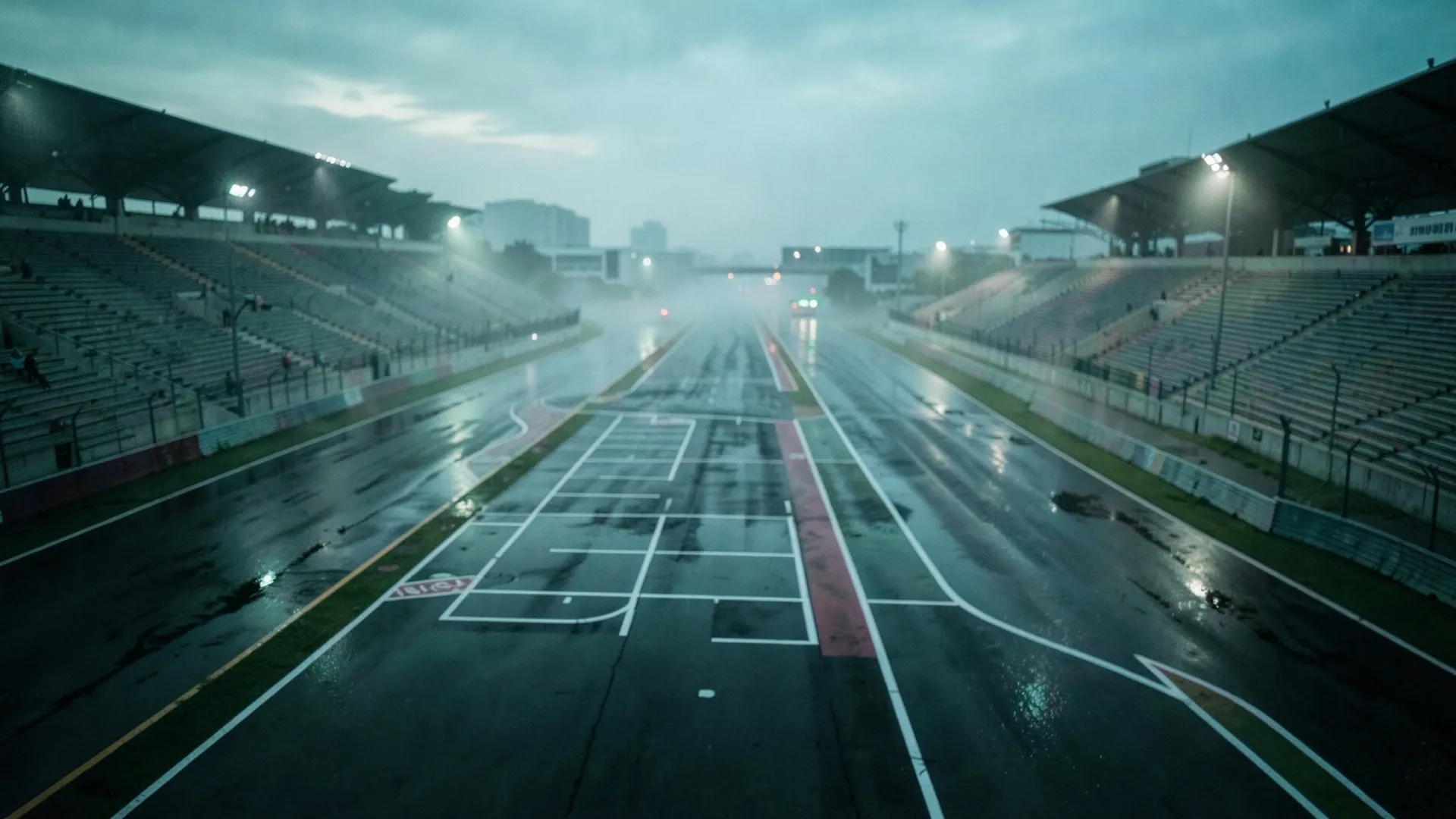
George Russell will lose five places on the grid for Sunday’s Brazilian Grand Prix after Mercedes fitted his sixth internal combustion engine of the season. Autosport and Motorsport.com both link the change to a pair of power unit-related problems earlier in the year, which have eaten into his allocation. With four rounds left and only 16 points separating second from fifth in the drivers’ standings, Russell can ill afford to start the weekend at a disadvantage.
Five places in a four-way scrap
Andrea Kimi Antonelli’s 119-point lead has made the title question almost academic. The contest behind him is anything but. Here is how the chasing pack stands going into Round 20:
| Pos | Driver | Team | Points | Gap to 2nd |
|---|---|---|---|---|
| 2 | Max Verstappen | Red Bull | 261 | – |
| 3 | Lewis Hamilton | Ferrari | 259 | 2 |
| 4 | George Russell | Mercedes | 250 | 11 |
| 5 | Charles Leclerc | Ferrari | 245 | 16 |
Russell sits 11 points behind Verstappen, nine behind Hamilton and only five clear of Leclerc. That is less than the difference between winning a Grand Prix and finishing second. A clean weekend at Interlagos could put him into second. A messy one could drop him to fifth.
His recent form is not encouraging. In Mexico City he started on the front row and finished sixth, losing four places over the race while Verstappen won from fifth on the grid and Hamilton converted pole into second. That result cost Russell 17 points to the Red Bull driver in one afternoon, and it is the main reason he arrives in São Paulo chasing the group rather than leading it. Leclerc’s fourth place, from third on the grid, brought him to within five points.
The grid penalty adds to that pressure. Every place Russell gives up at the start must be won back on track, while Verstappen, Hamilton and Leclerc all begin from wherever their qualifying pace puts them. In a group this tightly packed, the starting position is often the result.
How Russell’s engine allocation ran out of margin
The more troubling question for Mercedes is why Russell has reached this point at all. Both outlets describe a brace of power unit issues earlier in the season. Each such failure does more than cost a race result. It can take an engine out of the rotation completely, or force a team to run older units for longer than planned. Once a driver has lost even one element early in the year, the team is managing a deficit for the rest of the season. Mercedes has now run out of room to manage it.
This matters more in 2026 than in most years. The new power unit regulations brought a far greater reliance on electrical energy and a fully redesigned combustion engine, and every manufacturer has been learning how its hardware ages under real race loads. Mercedes went into the season with a reputation, built through the turbo-hybrid era, for producing the benchmark engine. Its 12 wins from 19 rounds suggest the performance is there. Russell’s sixth combustion engine suggests the durability has not always matched it.
That needs some perspective. Nothing in the standings points to a systemic failure. Antonelli has nine wins, has kept scoring heavily and leads the championship by a margin no rival can realistically close. Mercedes leads the constructors’ championship by 126 points over Ferrari. That does not describe a team with a fragile car. But a works manufacturer is judged on both of its cars, and one driver having to take a penalty while the fight for second is still live is a warning sign.
The concern also reaches beyond Brackley and Brixworth. Mercedes supplies power units to McLaren, Williams and Alpine, so any weakness in a component family is shared by eight cars, not two. Customer teams will want reassurance that the problems which hit Russell earlier in the year were specific failures that have since been addressed, and not a sign of wider fatigue in a design still in its first season.
Why Interlagos is the right place to take the hit
If a penalty is unavoidable, Interlagos is one of the better places to serve it. The lap is short and anti-clockwise. Its long climb from Junção onto the pit straight sends cars into the Senna S at the end of a sustained full-throttle run, which gives drivers a clear passing chance every lap. A second straight down to Descida do Lago adds another. Few circuits on the calendar offer a driver starting out of position so many realistic chances to recover.
Recent history supports that. In 2021 Hamilton served a five-place engine penalty for the race in São Paulo, having already started the sprint from the back after a technical disqualification, and won anyway. That drive revived a championship that had appeared to be slipping away. In 2024 Verstappen qualified 12th, dropped to 17th with a five-place engine penalty, and won a wet race in one of the finest drives of his career. Both cases show that a penalty at this circuit is a handicap, not a sentence.
Mercedes’ timing also makes sense. Taking a fresh combustion engine now gives Russell a newer unit for the remaining rounds, rather than nursing a tired one to the finish and risking a failure that would cost far more than five places. A retirement scores nothing. A recovery drive from the midfield at Interlagos might still produce a podium.
The counter-argument is that Russell has not always been at his best when racing through traffic this season. Mexico, where he went backwards from second, is the most recent example. A recovery drive also requires tyre management, clean overtakes and a strategy that does not leave him stuck behind a slower car on the wrong compound. Lawson’s seventh place from 22nd on the grid in Mexico shows what is possible on a track that allows passing. It also shows that recovery drives depend on circumstances lining up as much as on pace.
Second place for Russell, a clean finish for Mercedes
Russell is not fighting for the title, and Mercedes’ constructors’ lead is secure enough that one compromised Sunday will not threaten it. The stakes are more personal than that, but they are real. Finishing second in the championship would be the best result of Russell’s career and would confirm him as a genuine force alongside a team-mate who has dominated the year. Finishing fifth, behind both Ferraris and Verstappen in a car that has won 12 races, would raise uncomfortable questions about how much of Mercedes’ superiority he has actually turned into points.
For the team, the goal is to get through the final four rounds without another power unit drama on either car. Antonelli’s title campaign is close to complete, and nobody at Mercedes wants it decided by a failure rather than a celebration. Nor will the engine department want to enter the winter with a reliability question hanging over a design that customers depend on as well.
The likely outcome in Brazil is that Russell, with a fresh engine and a circuit that rewards overtaking, recovers to the edge of the podium but loses ground to whichever of Verstappen and Hamilton starts at the front. That would leave him needing the final three rounds to go his way. The bigger test for Mercedes comes over the winter: proving that the problems which used up Russell’s allocation were teething issues of a new formula, not a weakness that will follow its engine into 2027.