
Why F1's 2030 Rules Announcement Stalled, and Who Really Holds the Power
Formula 1's planned unveiling of its 2030 regulations has stalled, exposing a power struggle between the FIA, the commercial rights holder and manufacturers made wary by Mercedes' runaway 2026 season.
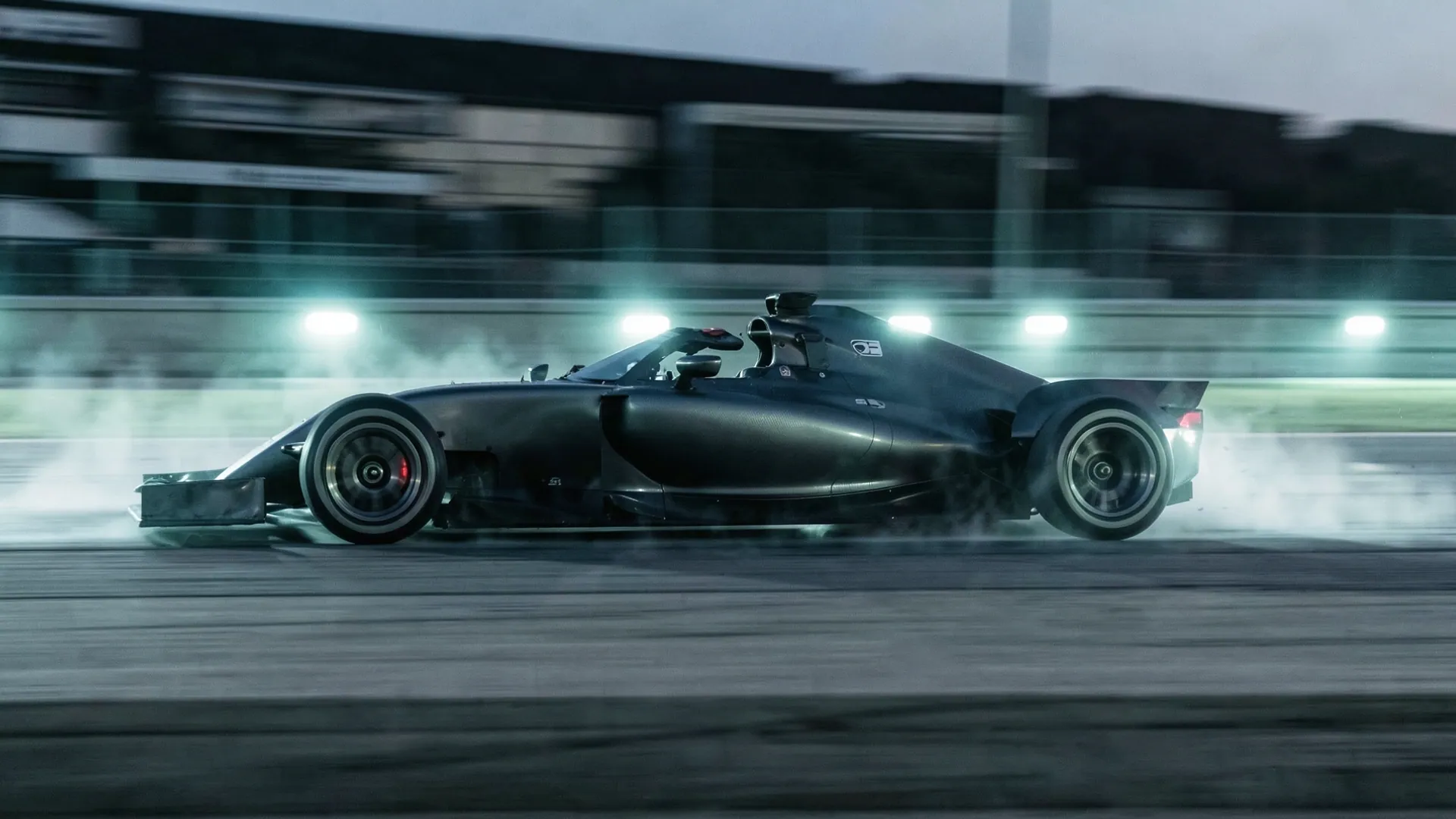
Formula 1’s planned unveiling of its 2030 technical regulations has stalled, with three rounds of the 2026 season still to run. The sport’s rule-makers have been unable to present an agreed framework for the next generation of cars and power units. The delay comes as Mercedes completes one of the most emphatic seasons of the hybrid era, and the timing is no coincidence. Every party with a vote has spent 2026 watching what happens when one manufacturer reads a new rulebook better than everyone else.
A rulebook nobody was ready to sign
In Formula 1, a regulations announcement marks the end of a process. The FIA drafts the technical rules. The F1 Commission, which brings together the FIA, Formula One Management and all the teams, debates and votes on them. The World Motor Sport Council then ratifies the result. Power unit rules follow a parallel track with the engine manufacturers, because the people building the engines need years of notice. The current formula, introduced this season, was approved in 2022, more than three years before a car turned a wheel under it.
A public unveiling can be pencilled into a calendar. Consensus cannot. Autosport and Motorsport.com have both looked at what lay behind the abortive announcement, and the broad picture is of a sport that wanted to show it had settled its long-term direction, then found it had not. Promising a presentation before the votes are secure is a governance error. It turns an ordinary negotiation into a visible failure, and it hands every dissenting party leverage it would not otherwise have.
There is a deeper issue too. The 2026 engine rules were sold to manufacturers as a cycle running to the end of the decade. Any serious change aimed at 2030 shortens the life of programmes that have only just started earning a return. A manufacturer that has spent heavily to reach the grid will want a very good reason before it agrees to tear that investment up early.
What Mercedes’ 2026 has taught every boardroom
The season’s numbers explain why nobody is in a hurry to sign anything. With three rounds to run, Andrea Kimi Antonelli leads the drivers’ championship on 390 points with nine wins. That puts him 111 clear of Max Verstappen, a margin no rival can now close. In the constructors’ standings, Mercedes has 652 points and 12 victories, 142 ahead of Ferrari. Mercedes power has also carried McLaren to three wins, including Lando Norris’s victory from pole at Interlagos last time out.
The precedent is impossible to ignore. When the turbo-hybrid era began in 2014, Mercedes won the first of eight consecutive constructors’ titles. The lesson F1 learned then, and has relearned this year, is that the first iteration of a new engine formula can decide the balance of power for half a decade. A chassis deficit can be recovered within a season. A power unit deficit, under development restrictions and a cost cap, takes far longer to fix.
Look further down the table and the incentives become plain. Aston Martin, in its first season with Honda works power, has seven points. Audi, in its debut year as a full works team, has 28. Cadillac is still waiting to score. Red Bull’s in-house programme with Ford has been respectable, with Verstappen second in the standings and Isack Hadjar third in Brazil, but it remains well short of Mercedes.
Nobody needs to state a position publicly for the arithmetic to speak for itself. A manufacturer that has got the 2026 formula right has every reason to prefer stability and a long cycle. A manufacturer that has got it wrong may prefer an earlier reset, but only if the new rules suit its own technology. The strugglers also have a counter-incentive: they have just built the factories, hired the engineers and signed the budgets for this formula. Asking them to commit to the next one before the current one has paid off is a hard sell. That combination produces gridlock rather than consensus.
Engines, fuel and the sound of the future
The most visible fault line is the engine itself. In 2025, FIA president Mohammed Ben Sulayem publicly floated a return to naturally aspirated V10s running on sustainable fuel, and the idea was later discussed in V8 form. Its appeal is real: a simpler, lighter, cheaper and louder engine, with sustainable fuel carrying the environmental message that batteries currently carry.
The difficulty is that the current manufacturer line-up was assembled on the opposite premise. Audi’s entry, Honda’s decision to stay, Ford’s partnership with Red Bull and General Motors’ plans for its own power unit all followed rules that roughly balance combustion and electrical power and run on fully sustainable fuel. For car makers, electrification is the point. It is what justifies the spending to a board that sells hybrid and electric road cars. Strip it out and some of those companies will ask why they are there at all.
The chassis debate is less charged but still awkward. The 2026 cars brought a modest cut in minimum weight after years of steady growth, and there is broad appetite for going further. But weight is largely dictated by the power unit, especially battery size, so a chassis target cannot be set until the engine architecture is settled. The two halves are coupled, and the engine half is where the deadlock sits.
Three centres of power pulling in different directions
Formula 1’s governance rests on three main forces, and each wants something different from 2030.
- The FIA writes the rules and has a mandate that goes beyond one championship. It has shown a clear interest in reshaping the engine formula, and it gains authority from being seen to lead.
- Formula One Management sells the show. Its priorities are close racing, spectacle and cost control that keeps independent teams viable. It is broadly sympathetic to cheaper, louder engines, provided manufacturers are not driven away.
- The teams and manufacturers fund the whole enterprise and carry the development risk. Within that group, the works outfits and the customer teams often want different things. A customer team running a Mercedes engine cares most about the chassis rules, while a works team cares about everything.
When these three are aligned, regulations pass with little drama. The 2022 aerodynamic rules came about largely because FOM, the FIA and the teams agreed that following another car had become too difficult. The 2030 package has no equivalent shared problem. Instead, it carries several competing visions of what the sport should be. Each party has enough of a veto, whether formal or practical, to stop the others, but not enough to impose its own plan.
Time also shifts the balance. Every month without an agreed framework shortens the development window for whatever follows. Shorter windows favour the organisations with the deepest resources and the most experienced engine departments. A long delay therefore rewards the incumbents, which may be one reason some parties are content to let the process drift.
Why a late deal beats a rushed one
The failed announcement was embarrassing, but it was not a disaster. A rules package forced through to meet a presentation date would have been worse. F1 has paid for rushed compromises before. The original 2014 engine rules were politically negotiated, expensive and so hard to master that they locked in an advantage for years. The sport does not need to repeat that experiment simply because a date had been set.
What it needs now is sequencing. The power unit architecture should be settled first and on its own, because manufacturers need the longest lead time and the chassis rules cannot be finalised without it. A clear decision on the balance between combustion and electrical power, and on whether a lighter, simpler engine is acceptable to the car makers, would allow everything else to follow. The chassis regulations can then be developed on a shorter timetable.
As the paddock arrives in Las Vegas this weekend, the 2026 title is already settled in Antonelli’s favour. The more important fight is now over the rules for the next decade, and the manufacturers know it. My judgement is this: if F1 has not agreed a power unit framework by the middle of the 2027 season, 2030 will be unrealistic for any change of real substance. In that case, 2031 should be named as the target before the delay sets it by default. A sport that can admit that openly will produce better rules than one still trying to rescue a date it never should have announced.