
Cadillac Sticks With Bottas for 2027, Leaving Colton Herta's F1 Bid Stranded
Cadillac has chosen Valtteri Bottas over Colton Herta for 2027, while the FIA reportedly prepares to cap power unit supply deals and Haas's Oliver Bearman grows impatient over his future.
Cadillac has decided to keep Valtteri Bottas alongside Sergio Perez for 2027, ending Colton Herta’s bid to race in Formula 1 next season. The decision leads a busy Tuesday that also brought reports of an FIA plan to limit how many teams one manufacturer can supply with power units, a change that would hit Mercedes hardest. Two days after Las Vegas, the race is still producing stories, from Oliver Bearman’s open frustration over his contract to Pierre Gasly’s belief that a cooling problem cost him a shot at victory.
Why Cadillac chose experience over Herta
Herta took on a new challenge this year with one clear aim: a place on the 2027 grid. The American team was always the natural destination for an American driver with his record. RacingNews365 has traced how that plan unravelled, and Cadillac’s decision to stay with Bottas confirms it.
The team’s reasoning is easy to follow. Cadillac’s debut season has been hard going. After 21 rounds, the 11th team is the only one without a point, and Bottas finished 18th in Las Vegas. While a new outfit is still finding its baseline, an experienced pairing removes variables. Bottas and Perez have more than 500 grand prix starts and 16 victories between them. When either says the car is doing something wrong, the engineers can trust that the fault lies with the car.
There is precedent for that caution. Haas entered in 2016 with Romain Grosjean, an established podium finisher, and scored points on its debut. A rookie in a struggling car can learn bad habits while the team learns nothing useful from him. Cadillac has judged that it cannot afford that trade for another season.
The cost falls on Herta, and arguably on Cadillac’s American narrative too. This is the second time a Formula 1 door has closed on him. In 2022 a route into the Red Bull system foundered on superlicence points. At 26, he does not have many more chances.
His reaction has become a story of its own. Will Buxton described it as “childish in the extreme”, according to PlanetF1. That is a severe verdict. A driver who rebuilt his career around a single goal is entitled to a few raw days. What he decides next will define this episode far more than what he said in the immediate aftermath.
Herta’s realistic paths
Motorsport.com and Autosport both frame the coming weeks as decision time for Herta. In broad terms, he has three options:
- Return to IndyCar, where he is a proven race winner and would be valued immediately.
- Stay close to Cadillac in a supporting role, betting on a seat opening later.
- A hybrid route, racing competitively elsewhere while keeping a formal link to the F1 project.
The first option looks the healthiest for his career. Waiting by a door that has now shut twice is a hard way to spend your late twenties.
A supply cap aimed squarely at Mercedes
GPfans reports that the FIA is preparing to cap the number of teams a manufacturer can supply with power units. No manufacturer would feel that more than Mercedes. This season it powers its own works team plus McLaren, Williams and Alpine: four of the 11 entries.
Las Vegas showed how far that reach extends. Max Verstappen won for Red Bull, but Mercedes engines filled every place from second to sixth, plus eighth and ninth. Mercedes leads the constructors’ table on 666 points and has taken 12 of the 21 wins so far. Its customers sit fourth, sixth and ninth.
There are two arguments for a cap. The first is competitive. One excellent power unit spread across a third of the grid multiplies a single manufacturer’s advantage. The second is political. Customer teams rely on their supplier for hardware, and in rule-making their interests tend to follow that supplier’s. That is the “influence” GPfans says Mercedes stands to lose. Now that Mercedes, Ferrari, Honda, Red Bull Ford and Audi all build engines, the old fear of a team left with nothing is weaker than it was.
The case against is just as strong. Mercedes built the best unit under the new rules, and its customers chose it freely. A rule that punishes the most successful engineering programme sits uneasily with the sport’s own values. The harder question is who loses out. Forcing a customer off the best engine would distort the championship at least as much as the original imbalance does. Red Bull’s struggle to secure a competitive supply in 2015 showed how quickly a top team can be left exposed.
The principle is defensible as a long-term limit. It should be introduced at a natural break in the regulations, with existing contracts honoured. Otherwise it becomes a penalty on customer teams that have done nothing wrong.
Russell’s slide and McLaren’s rebound
Andrea Kimi Antonelli’s fourth place in Las Vegas left him 98 points clear with two rounds remaining. That is more than the points still available, so the drivers’ title is his. Mercedes’ 149-point margin in the constructors’ championship is also out of reach. The remaining battles are further down the order, and Las Vegas reshaped several of them.
George Russell had a painful weekend. He started second and finished ninth, scoring two points. PlanetF1’s round-up carried a verdict labelling him “all mouth no trousers”, which is harsher than the evidence supports. Antonelli’s season has been exceptional by any measure. Still, the comparison inside the garage is stark: nine wins to three, and a 138-point gap in identical machinery. A driver who speaks with Russell’s confidence invites scrutiny when the results do not match. The fairer criticism is that he has not converted enough front-row starts this year, and Las Vegas was another example.
That leaves third place in the drivers’ standings wide open:
| Pos | Driver | Team | Points |
|---|---|---|---|
| 2 | Max Verstappen | Red Bull | 304 |
| 3 | Lewis Hamilton | Ferrari | 267 |
| 4 | George Russell | Mercedes | 264 |
| 5 | Lando Norris | McLaren | 264 |
| 6 | Charles Leclerc | Ferrari | 250 |
Verstappen’s 37-point cushion over Hamilton makes second very likely but not yet certain.
McLaren had its best night in some time. Lando Norris finished second and Oscar Piastri third, bringing the team 33 points. Isack Hadjar fell from fourth on the grid to 15th, so Red Bull scored only Verstappen’s 25. The gap between the two teams in the fight for third in the constructors’ standings shrank from 17 points to nine.
Piastri’s result carries the most meaning. He has had a hard 2026, with no wins and 167 points, well behind Norris on 264. Climbing from 17th to the podium on a street circuit took sharp overtaking and patience. McLaren has pointed to real gains from the weekend. One podium does not rescue a season, but it gives him something solid to take into the winter, and McLaren needs both drivers scoring to beat Red Bull to third.
Alpine’s best night and Racing Bulls’ blank
Alpine left Las Vegas with 18 points. Gasly finished fifth from eighth and Franco Colapinto sixth from ninth. Gasly told Motorsport.com that he might have had the pace to win before a cooling problem hampered him in the closing stages. Verstappen started on pole and won, so the claim is a bold one. It is best read as a sign of Alpine’s pace rather than a lost victory. Even so, a Mercedes-powered Alpine running at the front of the midfield on merit is a useful marker for the team’s direction.
Racing Bulls had the opposite weekend. Arvid Lindblad started fifth and retired. Liam Lawson started seventh and finished 14th. A team with two cars in the top seven on the grid scored nothing, and its lead over Alpine for fifth fell from 45 points to 27.
Lawson’s recent run of strong results ended abruptly, but RacingNews365 reports that he still sees an opportunity for the team. That reading is reasonable. He is ninth in the drivers’ standings on 89 points, ahead of every driver outside the top four teams. A 27-point lead with two rounds left is a solid buffer. Alpine would need a repeat of Las Vegas, and probably another strong haul in the finale, to overturn it. Las Vegas showed how quickly a buffer like that can shrink.
Bearman, Haas and a three-point fight with Audi
Bearman does not have a contract for 2027, and GPfans reports that his frustration is now public. His impatience is understandable. He has been a full-time Haas driver since 2025, and he is still waiting to learn his future with two rounds of the season left.
The timing matters because Haas is in a close fight. The team is seventh in the constructors’ championship on 31 points, just three ahead of Audi on 28. RacingNews365 describes the gap between those positions as a battle worth millions in prize money. Neither team scored in Las Vegas. Bearman recovered from 22nd on the grid to 13th, while Rafael Camara slipped from 15th to 16th. Audi’s Nico Hülkenberg and Gabriel Bortoleto finished 11th and 12th, both just outside the points.
That near miss is a warning for Haas. An Audi finish of eighth or better in Qatar would be enough to overturn the gap if Haas fails to score. Bearman’s language may be sharper than his team would like, but his underlying point is fair. A driver fighting for every point should not also have to worry about where he will race next year. Settling his contract before the finale would help Haas as much as it would help him.
Five threads to follow into Qatar
- Qatar, Sunday 29 November. Round 22 at Lusail is Hamilton’s best remaining chance to cut into Verstappen’s 37-point lead for second place.
- Hadjar’s lost points. Finishing where he started would have been worth 12 points to Red Bull. With McLaren now nine behind, Red Bull cannot rely on Verstappen alone.
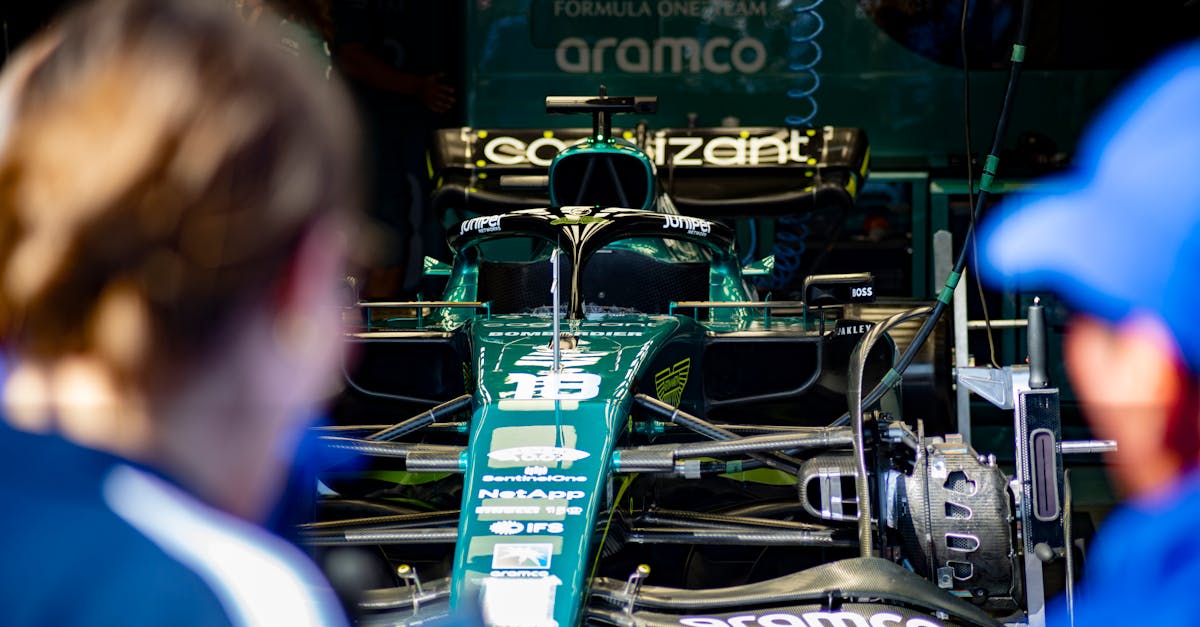
- Sainz’s recovery. Carlos Sainz went from 20th to eighth for four points. Williams is ninth on 16 points, nine clear of Aston Martin, where Fernando Alonso retired and Lance Stroll finished 17th.
- Senna’s Williams unsold. One of only two Williams cars driven by Ayrton Senna failed to reach its reserve price at auction, proof that even the most famous cars have a ceiling in the current market.
- Cadillac’s last two chances. Bottas and Perez have two races to score the team’s first point. They were kept for their experience, and a points finish before the season ends would be the clearest way to justify that choice.