
Mercedes Open Russell Inquiry as Antonelli Eyes Title Clincher in Mexico
Mercedes are investigating George Russell's slump just as Andrea Kimi Antonelli closes in on the title, while McLaren rue another wasted Saturday and Red Bull admit their start problems run deep.
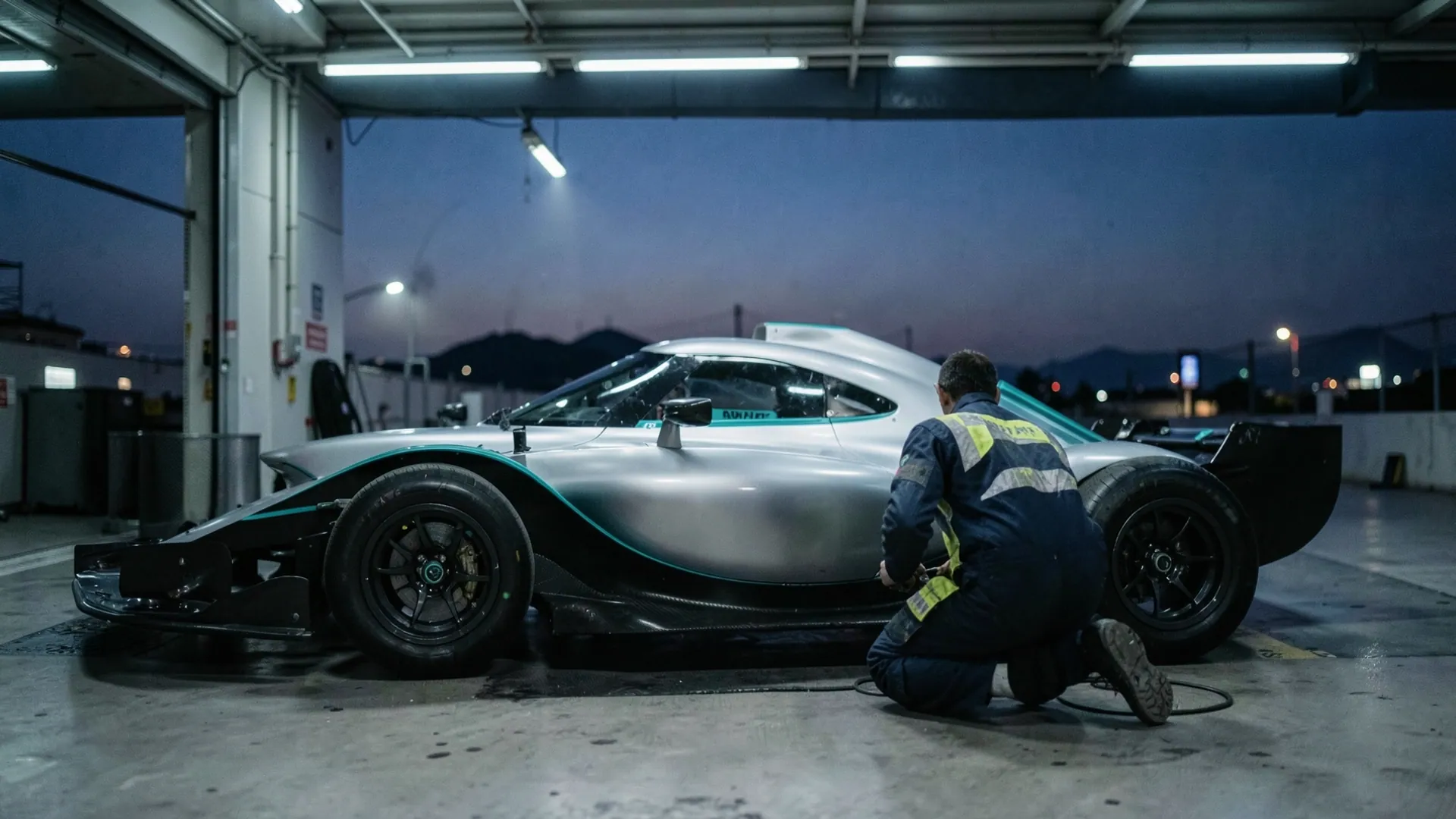
Mercedes have opened an internal review into George Russell’s form, with Toto Wolff admitting he cannot fully explain why his most experienced driver has trailed Andrea Kimi Antonelli so heavily in 2026. The timing is awkward: Antonelli won the United States Grand Prix from pole on Sunday, his ninth victory of the season, while Russell finished eighth in Austin. Antonelli now heads to Mexico City this weekend with the championship within reach.
Wolff’s Russell problem, and Marko’s verdict
The numbers explain why Mercedes feel compelled to look inside the garage rather than at the car. Antonelli has 365 points and Russell 242, a gap of 123 between two drivers in the same machinery. In Austin, Russell started sixth and dropped two places, scoring four points while his team-mate took 25. Mercedes have 12 wins this year, and Antonelli has nine of them.
Wolff has framed the inquiry as a joint effort between team and driver to find the root of the deficit, and he has pushed back firmly against Helmut Marko. The former Red Bull adviser suggested that being beaten to a world title by a team-mate of Antonelli’s age is the kind of blow a driver does not recover from. Wolff’s reply is that Russell still has what it takes.
Both men have a point, and history supports elements of each argument.
The 2014 parallel
The closest precedent is Sebastian Vettel at Red Bull in 2014. He arrived at that year’s regulation reset as a four-time champion and was comprehensively beaten by Daniel Ricciardo, who adapted more quickly to a car that behaved nothing like its predecessor. Vettel left for Ferrari at the end of the season and later won races again, but he never recaptured his Red Bull dominance. A new rule set rewards drivers whose instincts suit the new cars, and an experienced driver can find that years of muscle memory work against him.
That is the more charitable reading of Russell’s season, and probably the more accurate one. He has won three Grands Prix and is still second in the championship. A driver who had lost his edge would not be doing either. The problem is consistency relative to a team-mate who appears to have found the W17’s sweet spot almost immediately.
Wolff is right to resist Marko’s fatalism, but there is a practical issue Mercedes cannot ignore. If the gap stems from how the car is set up around Antonelli’s preferences, the inquiry needs to decide whether development should follow the faster driver or be broadened to suit both. Most teams in Mercedes’ position follow the faster driver. That is rational, but over a long cycle it can quietly deepen the divide.
Russell’s preparation for Mexico will also be shortened. He sits out first practice so that Mercedes can complete one of their mandatory young-driver outings. It is routine, but it costs him an hour of running at a circuit where the thin air makes set-up unusually sensitive, in a week when every lap of understanding matters to him.
Antonelli’s Mexico arithmetic
With five Grands Prix remaining, 125 points are still available. Antonelli leads Russell by 123, Lewis Hamilton by 124, Max Verstappen by 129 and Charles Leclerc by 132. If he leaves Mexico more than 100 points clear of everyone, the title is his.
That makes the maths straightforward for Antonelli. Even if one of his rivals wins on Sunday, a top-eight finish would be enough to guarantee the championship. A lower finish, combined with a win for Russell or Hamilton, could push the decision to the following round.
Should he seal it on Sunday, Antonelli would become the youngest world champion in the sport’s history. He is 20, three years younger than Vettel was when he took his first title in 2010. That record has stood for 16 seasons, and it would fall to a driver in only his second year in Formula 1.
What still holds the W17 back
The intriguing note from Wolff is that Mercedes are not entirely satisfied with their car. Their latest upgrade package has shown its potential in Antonelli’s hands, but Wolff concedes there is still a significant puzzle to solve before it works as intended.
This links directly to the Russell question. An upgrade that delivers on one side of the garage but not the other is a familiar pattern in Formula 1. It often means the update widens the car’s performance window in one direction while narrowing it in another. Antonelli seems able to exploit what the new parts offer. If Mercedes can understand why Russell cannot, they may solve both problems at once. That is presumably the real aim of Wolff’s inquiry, however it has been framed in public.
Mercedes also have a constructors’ title to wrap up. They lead Ferrari by 133 points, with a maximum of 215 still available to a team that finishes first and second in every race. It is not yet settled mathematically, but it is not a realistic contest either.
A four-way scrap for second place
With the title almost decided, the most competitive fight left this season is for runner-up. Only nine points separate four drivers:
| Pos | Driver | Team | Points |
|---|---|---|---|
| 2 | George Russell | Mercedes | 242 |
| 3 | Lewis Hamilton | Ferrari | 241 |
| 4 | Max Verstappen | Red Bull | 236 |
| 5 | Charles Leclerc | Ferrari | 233 |
Austin reshaped this group. Leclerc started fourth and finished second, Hamilton gained a place to take fourth, and Verstappen slipped from second on the grid to third at the flag. Russell’s eighth place cost him most of the cushion he had built up.
Ferrari’s 30-point haul was their best collective response in some time, and it strengthens their hold on second in the constructors’ standings, where they now sit 119 points clear of Red Bull and McLaren. More interesting is what it means for the drivers. Hamilton has one win in red, Leclerc the same, and the two are separated by eight points. Second place in the championship would be a meaningful result for Hamilton in his second season at Maranello, but so would beating Leclerc, and Ferrari may soon have to decide whether that matters to them.
Verstappen is the wildcard. He has two wins and a car that occasionally threatens Mercedes, but Red Bull’s weakness at the start, discussed below, leaves him vulnerable in the opening seconds of each race. Mexico’s long run to Turn 1 will test that.
McLaren’s Saturday habit
McLaren left Austin with fifth for Lando Norris and seventh for Oscar Piastri, and the team’s management have described the result as disappointing while insisting the MCL40 had the pace to finish on the podium. The diagnosis is familiar. Norris qualified eighth and Piastri seventh, and in the current era strong race pace from that far back usually goes to waste. A car in dirty air overheats its tyres while the leaders manage theirs in clean air.
Norris did well to gain three places, and he has addressed suggestions of a disagreement with the pit wall. As he describes it, the debate was a normal one: whether to pit for the safer option of fresh tyres or stay out and protect track position. Every team has that kind of discussion during a race, and it is less a sign of division than of how narrow McLaren’s options become when they start in the midfield.
The broader picture is sobering for the defending constructors’ champions. McLaren are level with Red Bull on 355 points in the fight for third. Norris, the reigning drivers’ champion, is sixth with two wins. Piastri, a title contender last year, has 144 points and no victories. McLaren have spent the season trying to find the qualifying pace to match a car that is clearly competitive on Sundays. That they are still searching with five rounds left says something about the difficulty of the problem, and suggests they would be wise to prioritise lessons for 2027 over short-term fixes.
The fight for third with Red Bull is a genuine contest, though, and it is worth real money. McLaren’s better balance across both cars should give them the edge, provided they can qualify where their race pace suggests they belong.
Red Bull’s launch problem won’t be solved this year
Isack Hadjar started third in Austin and finished sixth, and he was candid afterwards: small, avoidable issues, which he described as stupid, had a significant effect on his race, and he wants them sorted. Laurent Mekies, meanwhile, has acknowledged that Red Bull have made progress with their race starts this season, but says the structural changes needed to make them the benchmark will have to wait until 2027.
Read together, those remarks describe a team that has accepted a compromise. Starts have been a talking point across the grid under the 2026 power unit rules, with the removal of the MGU-H making launches harder to manage than in the previous era. Red Bull are in their first season with their own power unit, and Mekies is effectively admitting that the solution lies in hardware rather than software or driver technique. Hardware changes take a winter.
For Hadjar, that is frustrating but hardly damaging. He has 105 points, eighth in the championship, and has handled the step up to the senior team with more maturity than many predicted. His impatience with small mistakes is a good sign. Drivers who expect the details to be right usually help teams get them right.
For Verstappen, the stakes are higher. He is five points behind Hamilton for third and six off Russell for second. Mexico City has one of the longest runs to the first braking zone on the calendar, and the altitude reduces both downforce and cooling. A poor getaway there could cost him several places before the field reaches Turn 1, and the slipstream down that straight makes those places hard to recover. If Red Bull’s starts are going to undermine his push for second, Mexico is where it is most likely to happen.
Bearman’s penalty, Honda’s roadmap and Cadillac’s seats
- Bearman’s penalty. Oliver Bearman has said he was shocked by the 10-second penalty he received for his collision with Pierre Gasly in Austin, arguing that he had nowhere to go after gaining two places on the opening lap. Gasly went on to take the final point in 10th. Opening-lap incidents remain among the most inconsistently judged areas of stewarding, and Bearman’s complaint will be heard sympathetically in the paddock.
- Jos Verstappen’s health. Max Verstappen’s father has posted a reassuring update after a fake image spread on social media and prompted concerns about his health. The episode showed how quickly fabricated content travels, and the family deserves credit for responding calmly.
- Williams’ extra young-driver running. Williams are giving one of their junior drivers another FP1 outing beyond the mandatory requirement, as part of a double swap. With the team ninth on 12 points and both cars lapped in Austin, using Friday running to invest in the future makes sense.
- Honda’s plan for Aston Martin. Honda has set out a development roadmap aimed at significantly improving the power unit it supplies to Aston Martin. The need is obvious: Aston Martin have seven points, and both cars were lapped in Austin. The real test is whether those targets are met by the start of next season.
- Cadillac’s 2027 line-up. Will Buxton has added to speculation about who will drive for Cadillac next year. The team are still pointless in their debut season, with Valtteri Bottas retiring and Sergio Pérez finishing 19th in Austin, so their 2027 driver choices will reveal whether they value experience or long-term potential more highly.