
Mercedes Credits Russell for Antonelli's Title as Ferrari Holds Peace Talks
Mercedes has praised George Russell's part in Andrea Kimi Antonelli's championship, while Fred Vasseur has detailed Ferrari's Hamilton-Leclerc talks and Red Bull's faith in Liam Lawson signals a gentler approach to young drivers.
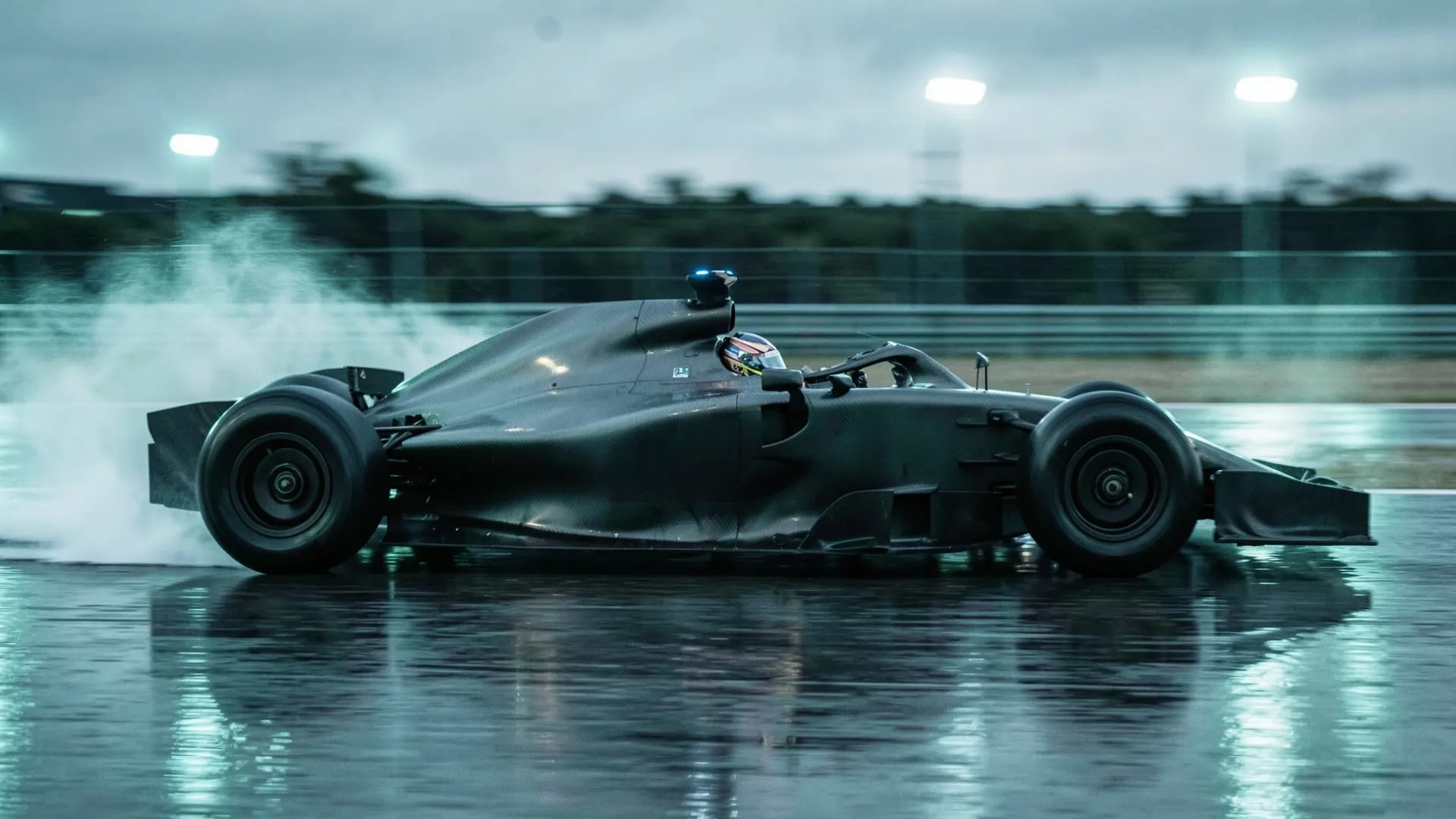
Mercedes has credited George Russell with a central part in Andrea Kimi Antonelli’s world championship, a week after a rain-hit Brazilian Grand Prix in which Lando Norris won from pole and Max Verstappen climbed from 21st on the grid to second. The team’s pit wall has admitted that Ferrari’s struggles at Interlagos took the pressure off its own turbulent afternoon, and Fred Vasseur has described the meeting he held with Lewis Hamilton and Charles Leclerc in Brazil. Red Bull’s decision to keep Liam Lawson, meanwhile, has prompted a wider debate about how the organisation treats its young drivers.
Why Russell belongs in Antonelli’s title story
The numbers behind Antonelli’s season are emphatic. He has 390 points and nine wins from 20 rounds, and he leads Verstappen by 111 with three Grands Prix left. At most 75 points remain from those races, so the title is his. At 20, he is the youngest champion the sport has produced, comfortably younger than Sebastian Vettel was when he took the 2010 crown at 23.
PlanetF1 reports that Mercedes has gone out of its way to highlight Russell’s contribution. The sporting case for that is stronger than it might first appear. Russell has won three races of his own, and each of those victories meant 25 points that did not go to Verstappen, Ferrari or McLaren. Mercedes has 12 wins this year, and the fact that three came from the “other” car is part of why no rival ever built a sustained run against the leader.
There is a technical dimension too. In the first year of a rulebook, a team needs an experienced driver who can tell the engineers which direction is genuinely faster and which merely feels comfortable. Russell, in his fifth season at Brackley, was that reference. Antonelli, in only his second year, had the benefit of a car developed partly around feedback from a team-mate who knew exactly how Mercedes works.
The arrangement carries a cost, and Mercedes would be wise to acknowledge it. Russell is third on 262 points, 128 behind his team-mate, and a driver of his calibre does not want to be remembered as the foundation stone for someone else’s title. Mercedes once ran a full-blown rivalry between Hamilton and Nico Rosberg, and later a more settled pairing with Valtteri Bottas. Its challenge for 2027 is to keep Russell a contender rather than let him drift into the second of those roles.
The head start Allison points to
James Allison has given GPfans his view of where Mercedes’ dominant start came from. The broader pattern is familiar. When the rules are rewritten, the team that reads them best tends to bank a lead that rivals spend the rest of the year chasing, as Mercedes did in 2014 and Red Bull did in 2022. Antonelli’s title was largely built in the opening phase of the season, before the field could converge.
Interlagos, the Ferrari reprieve and a Williams-sized landmark
According to Motorsport.com, Mercedes arrived in Brazil needing a clean race to close out the constructors’ championship, and did not get one. Antonelli started second and finished fifth, while Russell rose from seventh to fourth. Mercedes left with 22 points, a modest return for a team of its strength.
The pit wall’s admission is a candid one: Ferrari had a worse weekend still. Leclerc started 14th and finished eighth, while Hamilton started 20th and came home ninth, a lap down. That gave Ferrari six points, and Mercedes’ lead grew from 126 points to 142. A team can score at most 129 points from the three remaining Grands Prix, so the arithmetic no longer works for Ferrari.
That brings the history into view. PlanetF1 reports Toto Wolff reacting to landmarks that put him in the company of Ron Dennis and Sir Frank Williams. The comparison holds up:
- Antonelli’s title is the eighth drivers’ championship of Wolff’s Mercedes era, after Hamilton’s six and Rosberg’s one between 2014 and 2020.
- A ninth constructors’ crown would equal the total Williams won under Sir Frank.
The more impressive part of this second dynasty is how it was achieved. Mercedes spent four seasons of ground-effect regulations rarely setting the pace, then rebuilt itself into a champion team when the rules changed. Sustaining one era is hard. Building a second after losing the first is rarer.
Five drivers, 33 points: the fight for runner-up
With the title settled, the most absorbing contest of the final three rounds is the battle for second place.
| Pos | Driver | Team | Points | Gap to 2nd |
|---|---|---|---|---|
| 2 | Max Verstappen | Red Bull | 279 | – |
| 3 | George Russell | Mercedes | 262 | 17 |
| 4 | Lewis Hamilton | Ferrari | 261 | 18 |
| 5 | Charles Leclerc | Ferrari | 249 | 30 |
| 6 | Lando Norris | McLaren | 246 | 33 |
Verstappen’s drive at Interlagos is the main reason he heads that group with some breathing room. Gaining 19 places in mixed conditions to finish second was a reminder that his racecraft is undimmed, whatever the car beneath him. Only eight cars finished on the lead lap, which shows how punishing the afternoon was.
Norris, meanwhile, converted pole into his third win of the season. He has scored 246 points in a year in which McLaren rarely had the fastest car, and he is within range of second place. Behind him, Isack Hadjar’s third place from fifth on the grid gave Red Bull a double podium. Red Bull’s 33 points matched McLaren’s haul from Norris and Oscar Piastri, keeping it 17 points clear in the fight for third in the constructors’ standings.
RacingNews365 has noted that the grid carries five world champions: Fernando Alonso, Hamilton, Verstappen, Norris and now Antonelli. That is one short of the six who lined up in 2012. Their fortunes vary widely. Alonso finished 12th in Brazil, and Aston Martin has seven points all season.
Vasseur’s peace talks, and why they matter now
Crash.net reports that Vasseur has given more detail of the meeting he held with Hamilton and Leclerc in Brazil. When a team principal convenes his two drivers mid-weekend, the relationship has reached the point where it needs managing rather than trusting.
The timing makes sense. Hamilton and Leclerc are fourth and fifth, separated by 12 points, and both have a realistic shot at second in the championship. That is exactly the situation in which team-mates start to race each other harder than they race their rivals. Mercedes learned this the hard way in 2014 and 2016, and Wolff responded with formal rules of engagement.
Ferrari’s priority, though, has to be the constructors’ table. It sits second on 510 points, 95 ahead of Red Bull. That sounds safe until you look at Brazil, where Red Bull outscored Ferrari by 33 points to six. Repeat that swing at every remaining race and the margin would shrink to 14 by the season finale. That would not be enough for Red Bull to overtake, but it would leave little room for error, and second place carries real prize-money value. Two drivers who cost each other a few points per weekend would put that position at risk.
The anniversary of Hamilton’s greatest day adds some perspective. Six years ago today, in Istanbul, he equalled Michael Schumacher’s seven titles at a race where Lance Stroll had taken a career-first pole. He is still on seven, now 41, with one win for Ferrari this season. If Vasseur’s talks produce a clear framework for the final three rounds, it will serve Hamilton as much as anyone, because his best route to a strong finish is a team pulling in one direction.
Patience at Red Bull, an open seat at Cadillac
Lawson stays, and Red Bull shows a gentler hand
Autosport has made a pointed case that Red Bull failed Lawson in 2025, rather than the other way round. He was promoted to the senior team and dropped after two rounds. The argument is that keeping him for another year is the minimum Red Bull owes him, not an act of generosity.
The 2026 numbers support his case. Lawson is ninth in the championship on 89 points, more than double the 38 of team-mate Arvid Lindblad, and he has carried the RB F1 Team to fifth in the constructors’ standings. He qualified third in Brazil and finished seventh. That is the work of a driver who has rebuilt his reputation, not one being kept on out of sympathy.
Autosport frames the retention as possibly the first sign of a change in the organisation’s instincts, and there is something to that. For years, the Red Bull system has treated its second seats as auditions with very short deadlines. Hadjar’s podium in Brazil and his 122-point season suggest that patience produces better drivers than churn does.
There is also movement behind the scenes. RacingNews365 reports that a long-serving Red Bull figure left after the Brazilian Grand Prix and has spoken about Verstappen on the way out. Each departure from the team’s old guard raises the same question: how firmly does Red Bull’s future depend on keeping its four-time champion content? Verstappen’s performance in Brazil showed he is still delivering. Whether the team around him keeps pace is the issue for 2027.
Pérez, Herta and Cadillac’s open seat
Cadillac’s first season has been as hard as most new teams’ debuts. It is the only team without a point, and Sergio Pérez started 22nd and finished 18th in Brazil. RacingNews365 reports that Pérez, contracted until the end of 2029, does not yet know who will partner him next year, and has been clear about the quality he wants that driver to bring.
That gives him an unusual degree of influence for a driver at the back of the field. It is also a sensible demand. A new team learns fastest when its two cars produce comparable data, and a weak second seat slows development as surely as a missing upgrade.
Colton Herta is the name attached to the rumours. Speaking to GPfans, the American has discussed the benefits of his first season racing in Europe. The logic of that move is clear. His previous chance of a Formula 1 seat, with AlphaTauri, collapsed over superlicence eligibility, and a year on European circuits addresses the knowledge gap that IndyCar drivers face when they arrive. For an American manufacturer, an American driver who is ready on merit would be the ideal outcome.
The phrase “on merit” carries the weight here. Cadillac’s credibility will rest on its results rather than its marketing, and the driver it picks for 2027 will say a lot about which of those it prioritises. If Herta is the choice, he needs to be picked as the best available option, not as the most convenient story.
Loose ends before Las Vegas
- Las Vegas next. Round 21 takes place on the Las Vegas Strip on 22 November. Its long straights and cold track temperatures could reshuffle the five-way fight for second.
- Third in the constructors’ standings. Red Bull (415 points) leads McLaren (398) by 17 after Brazil, and both teams now have two drivers capable of podium finishes.
- The back of the table. Haas (31 points) and Audi (28) are separated by three points in the fight for seventh. Nico Hülkenberg’s 10th place in Brazil narrowed that gap.
- Ownership chatter. PlanetF1 reports a former Liberty Media executive tipping Formula 1 for an imminent sale. For now, that is one person’s view rather than a process under way.
- Schumacher’s comeback revisited. Rosberg has told PlanetF1 about the one area where he believes Schumacher declined during his Mercedes return. That return began at 41, the same age Hamilton is now.
Antonelli’s title is secure, but the final three rounds still carry real consequences. The result that will matter most into 2027 is whether Russell finishes second ahead of Verstappen. If he does, Mercedes enters next season with two drivers who believe they can be champion, and that would make it a far harder team to beat than one built around a single star.