
Allison Explains the Early Edge Behind Mercedes' 142-Point Constructors' Lead
James Allison has explained the advantage that put Mercedes ahead at the start of 2026, and the numbers behind a 142-point lead show how much that early edge was worth.
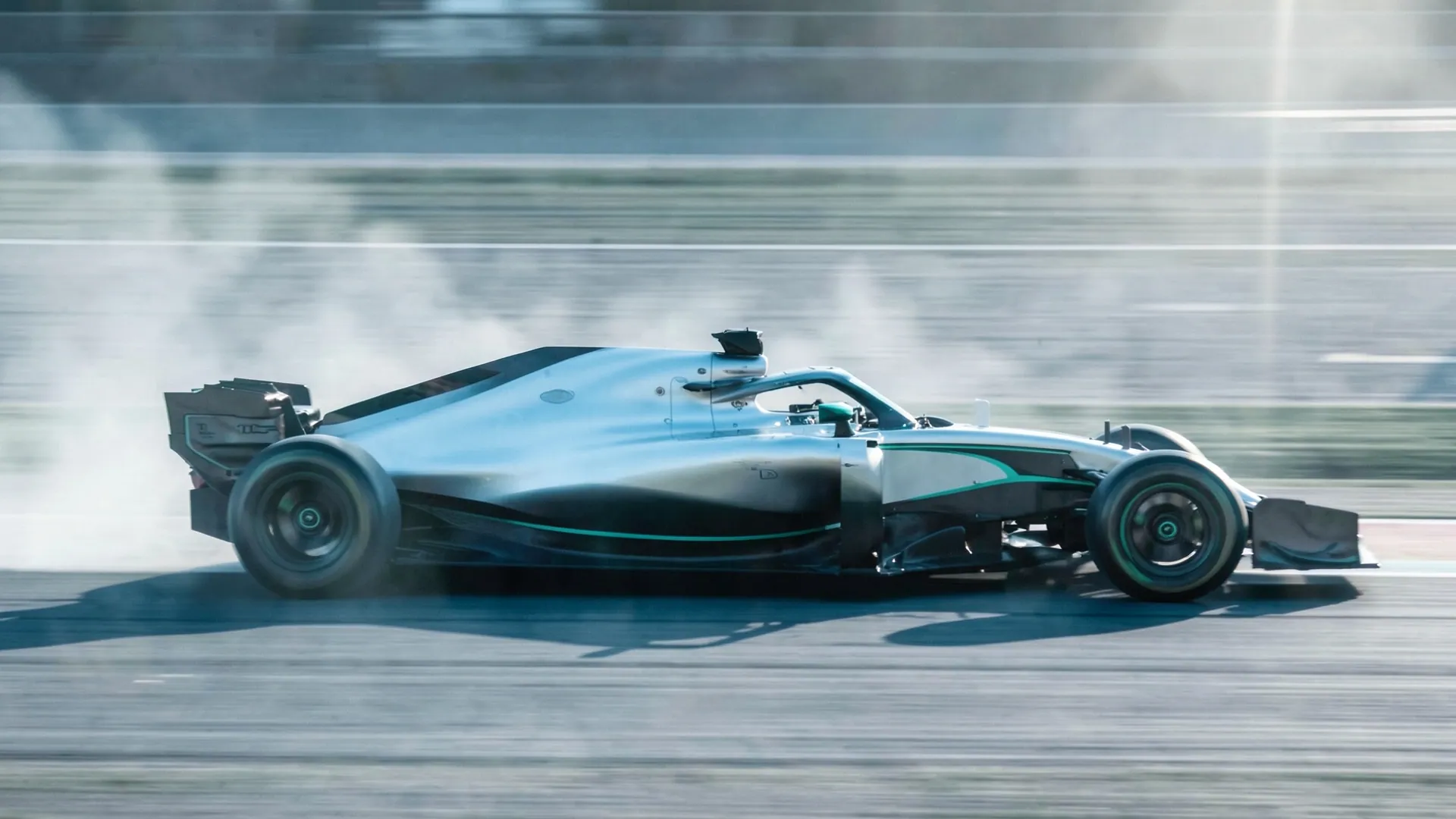
James Allison, Mercedes’ technical director, has given his account of why the team began the 2026 season so far clear of its rivals, pointing to an advantage he believes the opposition could not match. With three rounds remaining, that early edge has become a 142-point lead in the constructors’ championship and 12 victories from 20 Grands Prix. Andrea Kimi Antonelli, who has nine of those wins, leads the drivers’ standings by 111 points.
A head start, in Allison’s telling
GPfans reports that Allison’s comments centre on the opening phase of the season, when Mercedes looked a class apart. The emphasis on the start matters. Technical directors rarely discuss an advantage while they are still exploiting it. When one of them does, it usually means the advantage has either been banked or matched.
Allison is worth listening to on this subject. His career includes title-winning spells at Ferrari, Renault and Mercedes, and he has seen regulation resets from both sides. He was at Ferrari when Mercedes ran away with the first hybrid era in 2014, and at Mercedes when Red Bull got the 2022 ground-effect rules right first time. He knows better than most how much a winter’s head start is worth, and how quickly it is spent.
The 2026 rules were the biggest reset in more than a decade. The cars changed and so did the power units, which now rely far more heavily on electrical deployment, with the MGU-H gone and sustainable fuel mandated. A rulebook that open rewards whoever reads it correctly first. Allison’s account, as reported, is effectively an admission that Mercedes did, and an acknowledgement that the gap was greatest before rivals had time to respond.
What 12 wins from 20 rounds actually add up to
The scale of Mercedes’ season is clearest when set against the rest of the field.
| Team | Points | Wins | Winners |
|---|---|---|---|
| Mercedes | 652 | 12 | Antonelli 9, Russell 3 |
| Ferrari | 510 | 2 | Hamilton 1, Leclerc 1 |
| Red Bull | 415 | 3 | Verstappen 3 |
| McLaren | 398 | 3 | Norris 3 |
No other team has won more than three races. Ferrari sit second on consistency rather than victories, which is why their gap to Mercedes is large but not overwhelming. The 142-point margin is already greater than the 129 points a team could collect from a one-two in each of the three remaining Grands Prix. Antonelli’s 111-point lead over Max Verstappen likewise exceeds the 75 points available to a single driver from those three races.
That is dominance, but it looks different beside the precedents Allison knows so well. Mercedes won 16 of 19 races in 2014. Red Bull won 17 of 22 in 2022, and the following year was more one-sided still. Mercedes’ 2026 strike rate of 60 per cent is formidable without being total. Four different teams have won races this year, and six different drivers.
The pattern fits Allison’s framing. A team that begins a new rule set with a clear edge scores heavily while rivals are still learning their cars. The points gathered in that period do not disappear when the field closes up. Mercedes did not need to be the fastest team at every circuit through the autumn. It needed to be far enough ahead in the spring, and it was.
What the Mercedes customer teams reveal
Any explanation of Mercedes’ season has to account for the team’s customers. McLaren, Williams and Alpine all use Mercedes power units in 2026, and their results are a useful control experiment.
McLaren, the reigning constructors’ champions, are fourth on 398 points, 254 behind the works team despite sharing its engine. Alpine have 69 points and Williams 12. If the Mercedes advantage were simply a matter of the hardware coming out of Brixworth, McLaren in particular would be expected to sit much closer to the front. Lando Norris has won three races, which shows the package can win, but the gap in points shows how much more the works team has extracted from it.
That points towards integration rather than raw output alone. Under these regulations, how a team designs its chassis around the power unit, cools it, packages it and manages energy deployment over a lap is a performance area in its own right. A works team has the deepest knowledge of the engine and has it earliest. Customers receive the same unit but design around it with less lead time and less insight into how best to use it. The 2014 precedent is instructive: Williams and Force India had Mercedes power that year, and neither came close to matching the works car.
There is also a driver dimension that a purely technical explanation cannot cover. Antonelli has 390 points; George Russell, in the same car, has 262 and is only one point ahead of Lewis Hamilton in fourth. The 128-point gap between Mercedes’ drivers is almost as large as the gap between Mercedes and Ferrari. Whatever edge Allison’s engineers built, Antonelli has turned it into results more consistently than his team-mate, and Mercedes’ constructors’ lead owes a good deal to that.
Brazil and the limits of an early lead
The Brazilian Grand Prix on 8 November offered the clearest sign yet that the field has closed. Norris converted pole position into victory. Verstappen climbed from 21st on the grid to second, a drive that would have been hard to imagine against a Mercedes at full spring strength. Isack Hadjar completed a strong day for Red Bull in third. Russell recovered from seventh on the grid to fourth, while Antonelli started second and fell to fifth.
Red Bull and McLaren each took 33 points at Interlagos to Mercedes’ 22. One race, at a circuit with its own quirks, does not overturn a season. Mercedes still scored solidly on a difficult afternoon, which is how championship leads are protected. But Brazil showed what a Mercedes without its early margin looks like: competitive and dependable, but beatable by a well-sorted McLaren or by Verstappen on a good day.
That context explains why Allison can now talk openly. With the constructors’ title beyond Ferrari’s reach on Grand Prix points and Antonelli holding a lead greater than the points left on offer in the final three races, explaining past advantages carries little risk. Rivals have had a full season to study the Mercedes and will already have drawn their own conclusions.
Las Vegas, then the 2027 question
Las Vegas on 22 November will be a test of a different kind. The long straights reward strong energy deployment, and the cool night temperatures make tyre warm-up difficult. If the Mercedes edge lies in how the car uses its power unit, the Strip circuit should flatter it. If Red Bull and McLaren continue to look as strong as they did in São Paulo, it will confirm that the field has largely caught up.
The history of regulation resets suggests the answer for 2027. Stable rules compress the field, because the leaders’ discoveries become everyone’s starting point. Red Bull’s 2022 advantage grew in 2023 before eroding in 2024. Mercedes’ 2014 advantage lasted far longer, because the power unit rules restricted how quickly rivals could respond. The 2026 regulations allow more development freedom than the frozen engines of the early hybrid years, and the customer teams will carry a full season of knowledge into the winter.
Mercedes’ early-season advantage has already won it 2026. The more important question is whether Allison’s group can find the next advantage before Red Bull, McLaren and Ferrari finish closing the gap. Brazil suggests that work has to start now. Mercedes should begin 2027 as the reference team, but it is unlikely to enjoy anything like the margin it held this spring.