
Antonelli's Title-Winning Mercedes Was on the Edge of Retirement in Mexico
Mercedes has admitted that Andrea Kimi Antonelli's car nearly failed late in the race that sealed his world title, a scare that raises real questions for the team's final four rounds.
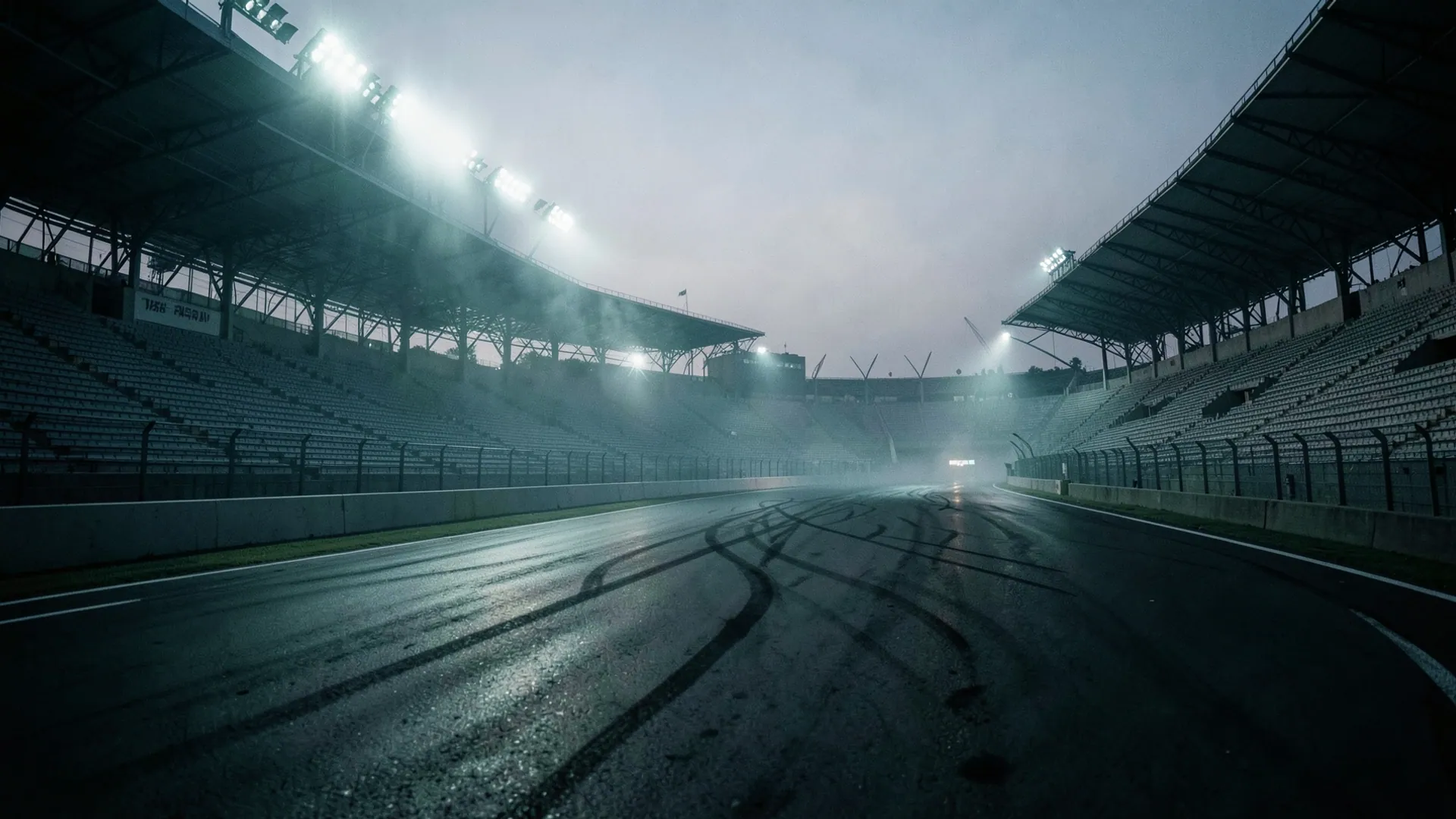
Mercedes has revealed that Andrea Kimi Antonelli’s car was “on the edge of retirement” in the closing stages of Sunday’s Mexico City Grand Prix, the race in which he finished third and clinched the 2026 world championship. The problem appeared late, but the car held together long enough to take the flag behind Max Verstappen and Lewis Hamilton. Those 15 points took Antonelli to 380, and with four rounds remaining his lead is now out of reach.
The admission changes how Sunday should be read. Antonelli’s title was presented as the inevitable end of a dominant season. It was, but the final step depended on a car that was close to stopping.
How close the celebration came to waiting for Brazil
The arithmetic matters here, because it shows exactly where the danger lay. Four Grands Prix remain, worth a maximum of 100 points to any driver. After Mexico, Verstappen is 119 points behind and Hamilton 121. Neither can catch Antonelli.
Now imagine the car had stopped. Had Antonelli retired with the rest of the order unchanged, he would have been stuck on 365 points. Verstappen’s win would have put him on 261, 104 behind. That would still have been enough, just. Even with a retirement, Antonelli would have been champion.
That conclusion holds only because Verstappen won the race. Hamilton started from pole. Had he converted it into a win while Antonelli’s car failed, Hamilton would have left Mexico on 266 points, 99 behind with 100 still available. The title would have stayed open, and the celebration would have moved to São Paulo.
So the near-miss was a compound one. It needed two things to happen at once: Antonelli’s car giving up, and Hamilton turning pole position into victory, with Charles Leclerc lining up third behind him. Verstappen climbing from fifth on the grid to the win removed the second condition. It is an odd footnote that Red Bull’s driver did as much as anyone at Mercedes to make sure the title was settled on Sunday.
None of this makes the scare trivial. A champion-elect nursing his car to the flag in third shows that this season’s numbers rest on machinery that has not always been as robust as the results suggest.
Nine wins, and the value of simply finishing
Antonelli’s season has been built on getting to the end of races. He has won nine of the 19 Grands Prix so far and averaged exactly 20 points per round. That second figure matters more than the first. Verstappen, Hamilton, George Russell and Leclerc, second to fifth in the standings, are separated by 16 points. Each has fewer than 70% of Antonelli’s total, because between them they have shared out most of the other wins and dropped points in a way he has not.
Mercedes as a team has been just as consistent. It has won 12 of 19 rounds, and its 630 points are 126 more than Ferrari’s. In a year of entirely new regulations, with a power unit split close to evenly between combustion and electrical output and a new generation of sustainable fuel, Brixworth appears to have produced the best engine and Brackley the best package around it. Dominance in the first year of a new formula has precedent: Mercedes did it in 2014, and Brawn did it in 2009.
What sets Antonelli apart from those earlier champions is his age. At 20, he is the youngest world champion in the sport’s history, comfortably beating the record Sebastian Vettel set in 2010. A rookie season in 2025 that had real low points has been followed by a second season in which he rarely made the kind of error that loses a race. Mexico was a typical Antonelli result: fourth on the grid, third at the flag, and every available point taken.
That is also why the late problem stands out. For a driver whose championship has been built on consistency of execution, the one thing he could not control nearly cost him the moment.
The long shadow of Sepang
Mercedes knows better than any team how one mechanical failure can decide a season. In Malaysia in 2016, Hamilton was leading comfortably when his engine failed. Nico Rosberg went on to win the title by five points, and Hamilton has spoken about that race many times since. Ferrari’s 2022 campaign was also undone partly by power unit failures that left Leclerc parked while leading, first in Barcelona and then in Baku, just as Red Bull began to pull away.
Antonelli’s position is far more comfortable than Hamilton’s was in 2016. Even so, those examples explain why Mercedes chose to speak openly about how close it came. Teams that dominate the first year of a new rules cycle tend to stay ahead for several seasons, but only if their reliability holds up as rivals close the gap on performance. A component or system that came close to failing in round 19 needs to be understood before it fails in round one of 2027. By then, the margin may not be 119 points.
Being open about it carries a competitive cost as well. Telling rivals your car was near its limit hands them information, and Mercedes would not do that casually. The more likely reading is that the team wants to be clear, internally and externally, that the problem has been identified and is being dealt with, rather than letting the scare pass unexamined because the title was won anyway.
What Mercedes still has to protect
The obvious argument is that nothing is at stake now. The drivers’ title is decided, and Mercedes could take a cautious approach to the final four rounds, protecting components and accepting a few lost points.
That argument does not hold up, because the constructors’ championship is not yet secure. A team can score at most 43 points in a race with a one-two finish, so 172 remain across the four rounds. Mercedes’ lead of 126 is very large but not decisive on paper. If Mercedes outscores Ferrari by four points at Interlagos, its lead will exceed the 129 points left after Brazil and the title will be settled. Ferrari outscored Mercedes by 30 points to 23 in Mexico, so that is not a formality.
Russell has his own reason to push. He is fourth on 250 points, 11 behind Verstappen in second and nine behind Hamilton in third. Second place in the championship matters to drivers, and Russell’s Mexico result, starting second and finishing sixth, cost him ground in that fight. Asking him to drive conservatively to protect the car would be hard to justify.
The four venues ahead are also demanding. Interlagos is bumpy and asks a lot of the suspension and floor. Las Vegas means long full-throttle sections in cold conditions. Qatar puts heavy, sustained loads through the car in fast corners. Abu Dhabi ends the season with a long night race. None of them is an easy place to manage a car that has already come close to its limits.
A champion who can now afford to help
The most sensible plan for Mercedes is to treat Antonelli’s car as the safer place to take risks for the rest of the season. He has nothing left to lose in the standings, so if parts need extra testing, or there is a case for running the car harder to learn more, his garage is the place to do it. Russell should get the most reliable specification the team can provide.
Antonelli can also contribute directly to the constructors’ title by scoring heavily in Brazil, where a strong result could close it out at the first attempt. That would end the debate about how cautious to be, and allow Mercedes to use Las Vegas, Qatar and Abu Dhabi as a test programme for next year rather than a points-protection exercise.
Mexico showed that a dominant car can still come close to failing. If Mercedes finds the cause before Sunday, the scare will have served its purpose. If the same problem returns in São Paulo, the team will face a much harder decision, and the questions will shift from this season to whether this car is as reliable as its results suggest heading into 2027.