
Ferrari's Final Floor Upgrade Sharpens the Fight for Runner-Up Behind Antonelli
Ferrari brings its last major 2026 package to Austin just as Mercedes admits mixed results from its own upgrade, with four drivers separated by 23 points in the race for second.
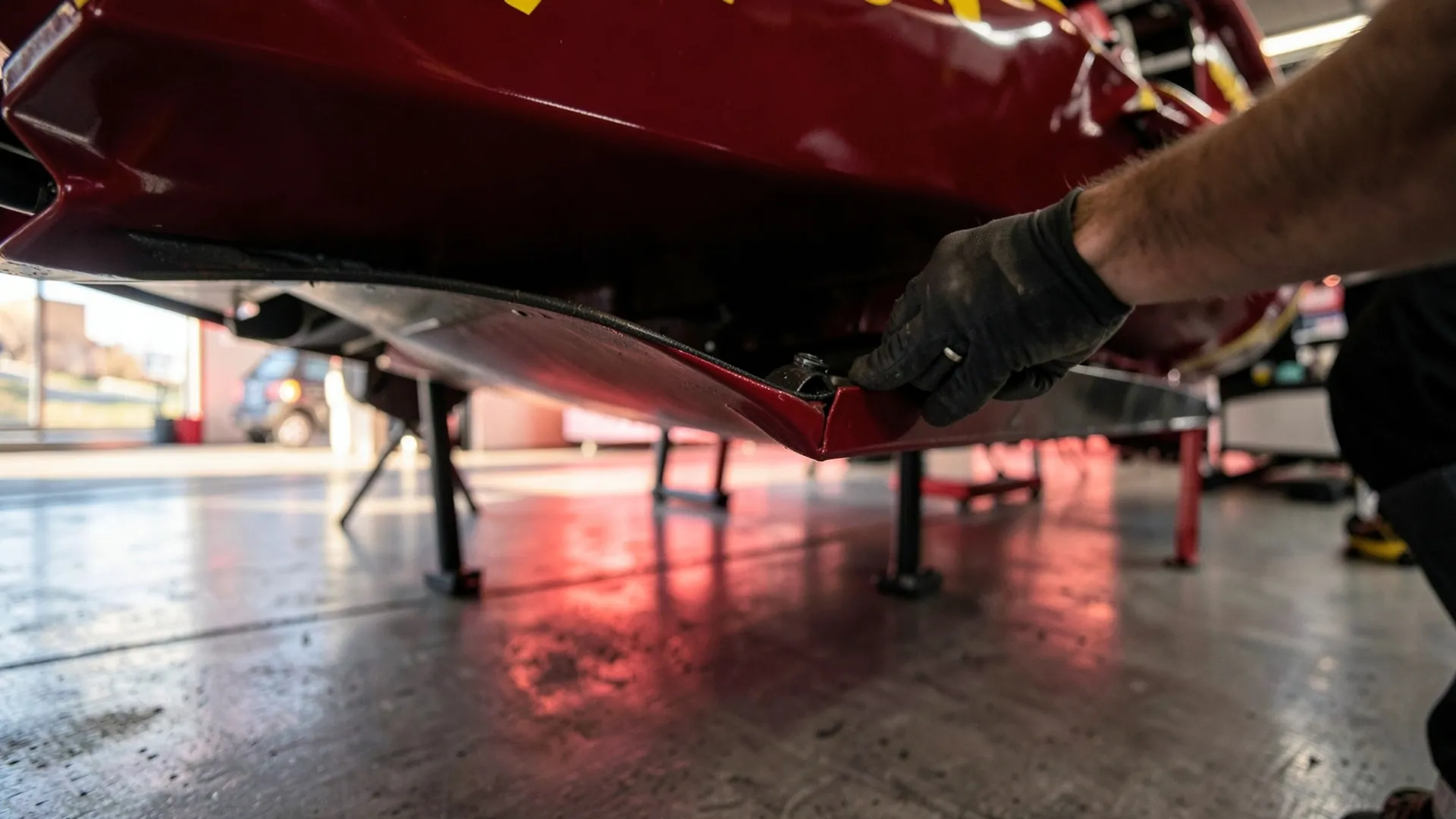
Ferrari is expected to introduce a new floor at the United States Grand Prix at the Circuit of the Americas on 25 October, Motorsport.com reports, in what would be the team’s final major upgrade of the 2026 season. The package arrives as Mercedes concedes that its latest W17 upgrade has produced more downforce without delivering a clean step forward. Mercedes also confirmed it considered an upside-down rear wing, a concept Ferrari pushed into the conversation, before deciding against it. With six rounds left, Austin is where the last significant hardware of the year will be judged.
Why Maranello is still spending on 2026
The constructors’ table does not demand a late push from Ferrari. The team sits second on 444 points, 134 behind Mercedes and 105 clear of McLaren. A team can score at most 43 points at a grand prix with a one-two, so overhauling Mercedes would require Ferrari to outscore it by an average of more than 22 points every weekend until the end of the season. Mercedes has won 11 of 17 races. That is not going to happen.
Second place is comfortable without being mathematically secure, and Motorsport.com notes that Maranello’s attention has already moved largely to next year. So why bring a floor at all?
There are three reasons. The first is the drivers’ championship, where Lewis Hamilton and Charles Leclerc are both live contenders for runner-up. The second is money. Constructors’ positions are worth real prize income, and protecting second against any late McLaren or Red Bull surge has value. The third, and most important, is what the floor teaches. This is the first year of a new rules cycle, and the regulations carry over into 2027. A floor that behaves as the wind tunnel and CFD predicted is a validated direction for next year’s car. One that doesn’t is a warning that is far cheaper to receive in October than in February.
Under the cost cap, most of the expense of this package was committed weeks ago, when the parts were designed and signed off for manufacture. Leaving it on the shelf would waste the money already spent and forfeit the data still to be gathered.
COTA is a demanding place to run it. The track is notoriously bumpy, and the high-speed sequence through the first sector rewards a car whose downforce holds up as ride height changes. A new floor that stays consistent there will stay consistent almost anywhere.
Mercedes and the limits of more downforce
Mercedes’ own upgrade story is less tidy than its standings suggest. According to PlanetF1, the team’s analysis after Singapore found that the revised W17 generates more downforce than the previous specification, but the findings came with caveats rather than a clear verdict.
Singapore’s result matched that ambiguity. Andrea Kimi Antonelli started fourth and finished third, a solid haul for the championship leader. George Russell started 19th and recovered to ninth for two points. Mercedes left Marina Bay with 17 points, against 26 apiece for Ferrari and Red Bull, while Max Verstappen converted pole into his second win of the season.
Extra downforce is not the same thing as lap time. Load gained on paper can come with drag that costs speed on the straights. It can also shift the aerodynamic balance in a way that unsettles the car in slow corners, or narrow the window in which the tyres work. Teams often find that an upgrade measures well in the tunnel but takes several weekends of set-up work before the drivers can extract its potential. Singapore is also a poor reference point. It is a slow, bumpy street circuit with high downforce demands and unusual track temperatures, and it says little about how a car will behave in Austin’s fast sweeps.
Russell has been blunt about the urgency. Crash.net reports that he has urged Mercedes to get on top of its recent upgrades after Verstappen and Red Bull emerged as the team to beat in recent races. His concern is understandable. Antonelli’s lead is large enough to absorb a few mediocre weekends, but Russell’s hold on second is not.
The rear wing Mercedes left in the drawer
RacingNews365 reports that Mercedes considered an upside-down rear wing, the concept Ferrari brought into play this season, but has not introduced one. The decision says a good deal about how a championship leader thinks in the closing phase of a season.
A rear wing concept of that kind is not a bolt-on. It changes how the rear of the car loads up and how the airflow interacts with everything upstream, including the floor and diffuser. On a 2026 car, it must also work with the active aerodynamics that switch the wings between high-downforce and low-drag modes. Making it work would require tunnel hours, CFD capacity and money. Under the sliding scale for aerodynamic testing, the constructors’ leader receives the smallest allocation of all, so Mercedes would have to divert those resources from its 2027 programme.
The risk-reward calculation is lopsided. With a 134-point lead in the constructors’ standings and Antonelli 102 points clear in the drivers’, Mercedes stands to gain little from a radical late concept and could lose a great deal if it introduces instability. The team also has its own institutional memory here. In 2022 and 2023, it stayed loyal to a car concept for too long, and it is understandably wary of letting another team’s idea pull its development off course.
Late upgrades can transform a team’s fortunes, though. In 2022, Mercedes brought a significant package to Austin, and a few weeks later Russell won in Brazil. The difference is that the 2022 Mercedes had nothing to lose, whereas this one has a championship to protect.
Four drivers, 23 points: the race for second
Antonelli, on 340 points with eight wins, is not yet mathematically champion, but nobody behind him is realistically hunting him down. The genuine contest is for second place.
| Pos | Driver | Team | Points | Gap to 2nd |
|---|---|---|---|---|
| 2 | George Russell | Mercedes | 238 | — |
| 3 | Lewis Hamilton | Ferrari | 229 | 9 |
| 4 | Max Verstappen | Red Bull | 221 | 17 |
| 5 | Charles Leclerc | Ferrari | 215 | 23 |
Ferrari’s floor could decide this fight. Leclerc finished second in Singapore and has the form. Hamilton has the points, though he slipped from third on the grid to sixth at the flag. If the new floor gives Ferrari a genuine step, Russell’s nine-point cushion over Hamilton could disappear in a single weekend. Verstappen, meanwhile, has momentum and, on recent evidence, the benchmark car.
Lando Norris, on 201 points, is a further 14 behind Leclerc. He is on the fringe of this group, and his McLaren team is locked in its own scrap with Red Bull for third in the constructors’ standings, where only seven points separate them (339 to 332).
Russell’s two-round deadline
Mercedes’ decision to shelve the inverted wing is the right one for the team. It protects two titles that are already within reach and preserves scarce resources for 2027. It is less helpful for Russell, who must now hope that set-up work, rather than new parts, unlocks the W17’s extra downforce before Ferrari’s floor and Verstappen’s form close him down.
Ferrari, by contrast, has little to protect in the constructors’ table and everything to learn. If the floor delivers in Austin, it stops being a late-season curiosity and becomes the foundation of the 2027 car, as well as the most likely way for Leclerc or Hamilton to finish the year as runner-up.
Our judgement is that Russell will not hold second place to the end of the season unless Mercedes resolves its upgrade questions within the next two rounds. And if Ferrari’s floor works at COTA, the driver most likely to overtake him is Leclerc rather than Verstappen.