
Mercedes' New Front Wing and Ferrari's Upgrade Set Up an Austin Development Duel
Mercedes are bringing a new front wing to the Circuit of the Americas and Ferrari a major upgrade, with Antonelli 102 points clear and six rounds left to decide the 2026 championships.
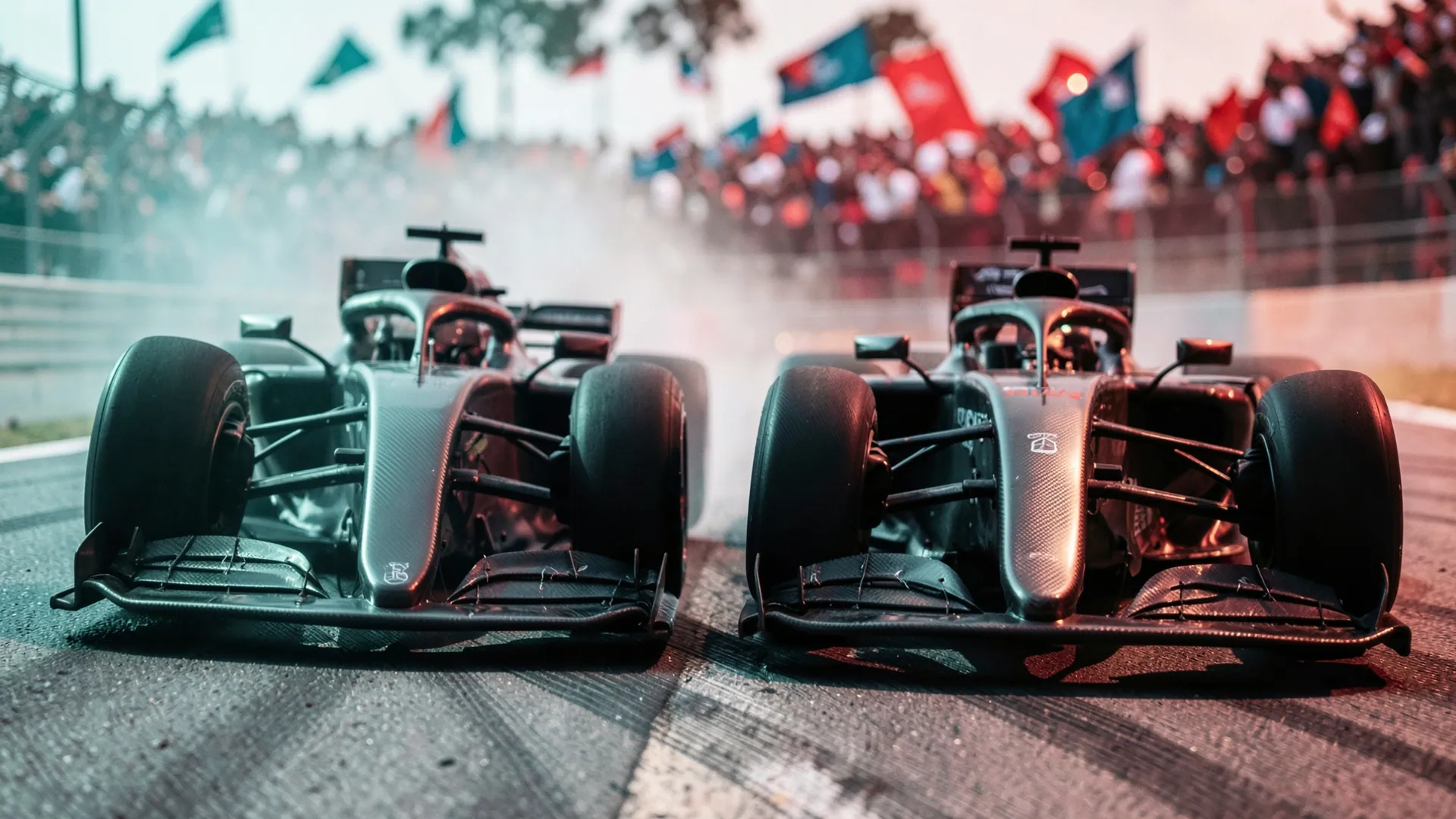
Mercedes will bring a new front wing to the Circuit of the Americas for Sunday’s United States Grand Prix, and Ferrari are arriving in Austin with a substantial upgrade of their own. The timing is deliberate. Round 18 opens the final six-race stretch of the 2026 season with Andrea Kimi Antonelli 102 points clear of his Mercedes team-mate George Russell, and both teams need to know whether their factories can still find meaningful performance.
A dominant team that wasn’t the fastest in Singapore
On paper, Mercedes hardly look like a team in need of rescue. They have won 11 of the 17 Grands Prix so far, Antonelli has taken eight of those victories, and their 578 points leave them 134 clear of Ferrari in the constructors’ championship. Yet GPfans reported that the new wing is a response to recent struggles, and Singapore exposed the problem. Max Verstappen won from pole for Red Bull, Charles Leclerc finished second for Ferrari, and Antonelli came home third after starting fourth. Russell, who started 19th, recovered to ninth for two points.
Third place is no disaster for a championship leader, and Antonelli extended his advantage over Russell by 13 points that night. But the W17 was not the quickest car around Marina Bay. A team that has set the pace for most of the year knows how quickly an advantage disappears once rivals find a few tenths.
The choice of a front wing is revealing. Under the 2026 regulations it does a more complicated job than at any point in recent memory. It is narrower than its predecessor, and with active aerodynamics its flaps open on the straights to shed drag before returning to a high-downforce setting for the corners. That makes the front wing the component that sets the car’s aerodynamic balance in two distinct states. It also governs how the car behaves in the transition between them. A wing that loads the front axle more consistently through that switch can sharpen turn-in without any change to the floor or suspension.
It is also a relatively self-contained part to design, manufacture and fit, which matters for a team working under the cost cap. As constructors’ leaders, Mercedes also receive the smallest share of wind-tunnel and CFD time, because aerodynamic testing allowances are scaled in favour of teams lower down the order. When development hours are scarce, a front wing is the most efficient place to spend them.
Austin is a sensible venue for the introduction. The sequence of esses after the first corner is among the most demanding high-speed direction changes on the calendar and punishes a car whose front end goes lazy. The long back straight rewards efficient drag reduction, and the slow stadium section tests traction and low-speed rotation. A wing that works across that spread of corners should work almost anywhere.
Why Ferrari are still spending in October
Ferrari’s push makes sense once you look at what remains available to them. The drivers’ title is a distant prospect. Lewis Hamilton is third, 111 points behind Antonelli, and Leclerc is fifth, 125 adrift. But Hamilton is only nine points behind Russell in the race for second, and Ferrari hold a 105-point cushion over McLaren in the constructors’ standings. Second place there is theirs to lose rather than to chase. RacingNews365’s technical analyst Paolo Filisetti framed the package as Ferrari’s attempt to gain an advantage over their rivals during the run-in.
The bigger reason is 2027. This season is the first under an entirely new set of regulations, and those rules carry over into next year. Every part Ferrari validate on track this autumn feeds directly into next season’s car. In a mature rules cycle, late-season upgrades are often a poor use of limited budget. In the first year of a new formula, when the development curve is steep and teams are still learning how factory data translates to the track, they look more like an investment.
Singapore offered Ferrari mixed evidence. Leclerc converted second on the grid into second at the flag and finished ahead of both Mercedes. Hamilton started third but fell to sixth, behind both McLarens. The car had pace, but it could not deliver it consistently across two drivers and a full race distance. Ferrari will want the new parts to fix that.
The team also has a recent precedent at this circuit. In 2024 Ferrari brought a significant package to Austin and left with a one-two, Leclerc ahead of Carlos Sainz. That proves nothing about 2026, but it does show that the Circuit of the Americas, with its broad mix of corner types, gives an honest verdict on new parts.
Antonelli’s open mind and the arithmetic of a 102-point lead
Antonelli told RacingNews365 that he wants Mercedes to approach the weekend with an open mind over the W17’s set-up. It is a sensible position. A new front wing changes the car’s aerodynamic balance, so the set-up that worked before it arrived may no longer be the right starting point. Austin’s bumpy surface adds another complication, because ride height and suspension stiffness have to be balanced against the demands of the high-speed sections. A driver who insists on a familiar set-up can easily mask what a new part is actually doing. For a 20-year-old in only his second Formula 1 season, the remark also reflects a mature understanding of how upgrades are evaluated.
The championship arithmetic explains why he can afford that patience. Six Grands Prix carry 150 points for a driver who wins them all. Antonelli leads Russell by 102, Hamilton by 111 and Verstappen by 119. To overturn the deficit across those six races, Russell would need to outscore Antonelli by an average of at least 17 points per race. That is the equivalent of winning every remaining Grand Prix while his team-mate finishes sixth each time. Hamilton and Verstappen would need even more.
| Driver | Team | Points | Gap to Antonelli |
|---|---|---|---|
| Andrea Kimi Antonelli | Mercedes | 340 | — |
| George Russell | Mercedes | 238 | 102 |
| Lewis Hamilton | Ferrari | 229 | 111 |
| Max Verstappen | Red Bull | 221 | 119 |
| Charles Leclerc | Ferrari | 215 | 125 |
| Lando Norris | McLaren | 201 | 139 |
Antonelli therefore does not need the new wing to become champion. Mercedes need it for other reasons. One is protection against the kind of run-in that turns a comfortable lead into a nervous one, where a retirement or two coincides with a rival suddenly finding speed. Another is securing second place for Russell, whose margin over Hamilton is now just nine points. The last is ensuring Mercedes do not enter the winter having lost the development initiative they held for most of the year.
What the Circuit of the Americas will reveal
Recent history offers clear warnings about in-season development. In 2022 Ferrari began the first year of a new rules cycle with arguably the fastest car, and Leclerc led the championship early on. Red Bull then out-developed them so convincingly that the title was decided long before the season ended. Mercedes spent that same year committed to a sidepod concept they eventually abandoned. The opposite case came in 2024, when McLaren’s Miami upgrade turned a midfield contender into a regular race winner within weeks. Upgrades can redefine a season in either direction, and early-cycle seasons tend to amplify their effect.
That is why Austin matters more than the championship table suggests. If Mercedes’ new wing restores the W17’s advantage, the remaining rounds become a formality and Antonelli can manage the gap. If Ferrari’s package moves them clear of Mercedes on pace, Hamilton becomes the favourite for second and Maranello enters the winter with real momentum. Red Bull will also be watching closely. Verstappen has just won from pole, and Red Bull trail McLaren by only seven points in the fight for third in the constructors’ standings.
The likeliest outcome is that Antonelli is champion either way, and probably before the final round. Austin’s real significance lies elsewhere. Mercedes’ front wing is an insurance policy on a title they have largely secured, while Ferrari’s upgrade is a down payment on 2027. If Leclerc and Hamilton beat both Mercedes on pace on Sunday, the contest for next year’s championship will have started here.