
Growing Pains: Is the New Madring Layout Too Punishing for F1 Cars?
Explores driver criticism of the track's design after multiple crashes from Lindblad, Hamilton and Bearman, including Bearman's 'oversight' comments.
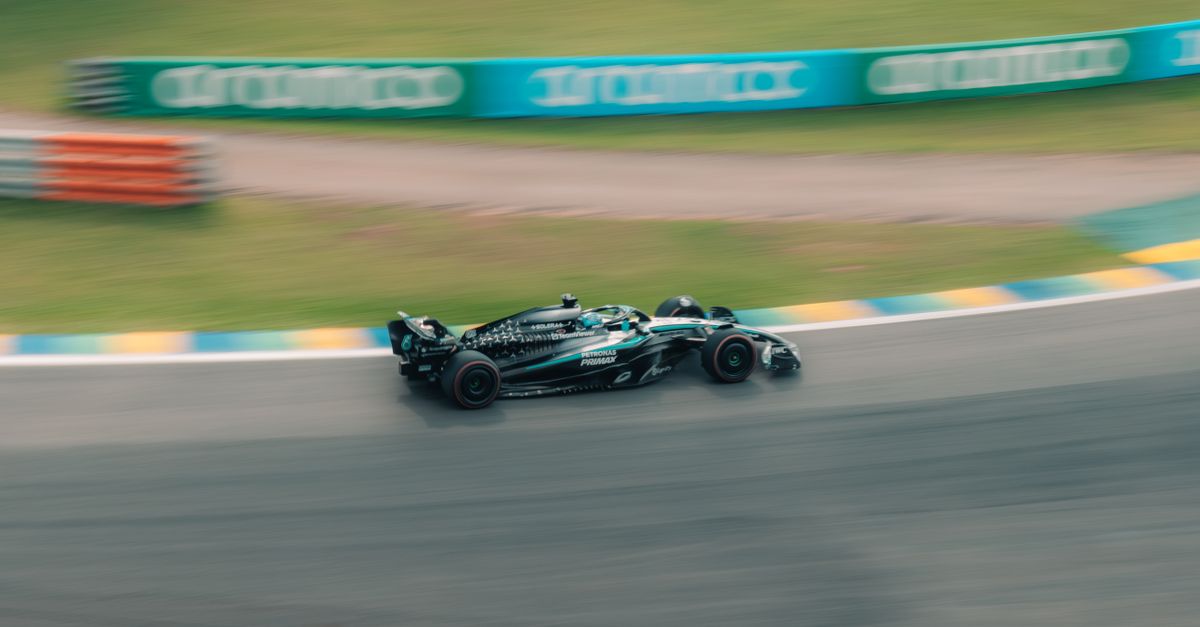
The Spanish Grand Prix has barely reached qualifying and the new Madring circuit already has a reputation problem. Three separate incidents across Friday and Saturday practice — involving three different teams — is not the kind of story a brand-new venue wants attached to its debut on the calendar, and the language coming from the drivers themselves suggests this is not simply a case of learning-curve nerves.
What Happened on Track
Friday’s opening practice produced the first warning sign. Arvid Lindblad was the only driver to put a car into the barriers, and while a single crash from a rookie adapting to a new layout might ordinarily be filed under normal growing pains, it set a tone that Saturday only reinforced. FP3 was red-flagged twice — first for Lewis Hamilton, then for Oliver Bearman — as both drivers lost their cars in separate incidents. Kimi Antonelli emerged as the man least troubled by the chaos, topping the session and arriving at qualifying with the form to suggest Mercedes have Madring’s measure better than most. But a session defined by two red flags rather than a clean run of representative laps leaves every other team short on the data that final practice is meant to provide.
The Hamilton element adds a further layer of intrigue. Beyond the crash itself, reports suggest he acted contrary to Ferrari’s instructions in his response to the incident, a detail that now leaves him facing possible scrutiny from the stewards. That is a separate governance question from the circuit-design debate, but it is not entirely unconnected — mistakes and their aftermath tend to be handled with less patience when a session has already been compromised by red flags and lost track time.
Bearman’s “Oversight” and Why Driver Feedback Matters
Of all the reactions from the weekend, Bearman’s is the one worth dwelling on. Drivers crash at new circuits regularly — unfamiliar reference points, evolving grip levels and a lack of historical data are par for the course whenever Formula 1 visits a venue for the first time. What is less routine is a driver explicitly identifying what he considers an “oversight” in the layout itself, rather than attributing an error to his own misjudgement or a car problem.
That distinction matters. Drivers are, in effect, the highest-fidelity sensors F1 possesses for circuit design — better than any simulation, because they are reacting in real time to blind crests, camber changes, barrier proximity and the compounding effect of committing to a corner at race speeds rather than a install-lap pace. When a driver of Bearman’s experience — still young, but no longer inexperienced, having spent a full season understanding what a Formula 1 car can and cannot forgive — flags a specific design shortfall rather than a personal error, it should be treated by the FIA and by Aramco’s circuit designers as substantive feedback rather than a frustrated aside.
The Wider Context: New Circuits Always Carry Risk, But Patterns Matter
Formula 1 has been here before. New or substantially reprofiled venues have historically needed a cycle of real-world running before their true character — and their flaws — become apparent. Barrier positioning that looks conservative on a CAD render can prove unforgiving once cars are running at genuine load through a corner; run-off that appears adequate in simulation can turn out to be marginal once 90kg of downforce-dependent machinery loses grip mid-corner rather than in a straight line. That is precisely why circuits evolve — kerbs get reprofiled, gravel traps get extended, barriers get pulled back — often after exactly this kind of debut weekend.
What separates a normal teething period from a genuine design concern is the spread of incidents. One crash, from one driver, in one session, is noise. Three crashes across two sessions, involving a rookie, a two-time world champion in Hamilton, and a driver explicitly calling out the layout, starts to look like a pattern rather than isolated error. Different teams, different experience levels, different causes on the surface — but a common thread of the track offering less margin for a small mistake to be corrected before it becomes a big one.
GP Headlines’ Take
It would be premature to declare Madring fundamentally unsuited to Formula 1 machinery after a single practice weekend — new venues are almost always rough around the edges on debut, and some of what unfolded on Friday and Saturday will simply reflect drivers pushing to find the limit on a track with no historical reference lap times to calibrate against. Antonelli’s pace at the top of FP3 is a reminder that the layout is not unmanageable; it can clearly be driven quickly and cleanly.
But Bearman’s willingness to name the issue as a design oversight, rather than a driver error, deserves to be taken seriously rather than waved away as post-shunt frustration. Combined with Lindblad’s Friday crash and Hamilton’s own incident — plus the awkward footnote of his response to it — the weekend has produced enough data points for the FIA’s circuit safety process to take a proper look at specific corners rather than treating each crash as unrelated. If qualifying and the race pass with the same tight margins on display, Madring’s inaugural weekend will be remembered less for who won and more for how quickly the layout needed revising before it returns.