
Red Bull's 2027 Spy Shot Signals Change as Verstappen Chases Mercedes
A spy shot pointing to a major Red Bull change for 2027 shows a team planning beyond a lost season, as Verstappen keeps winning races in a car that cannot match Mercedes.
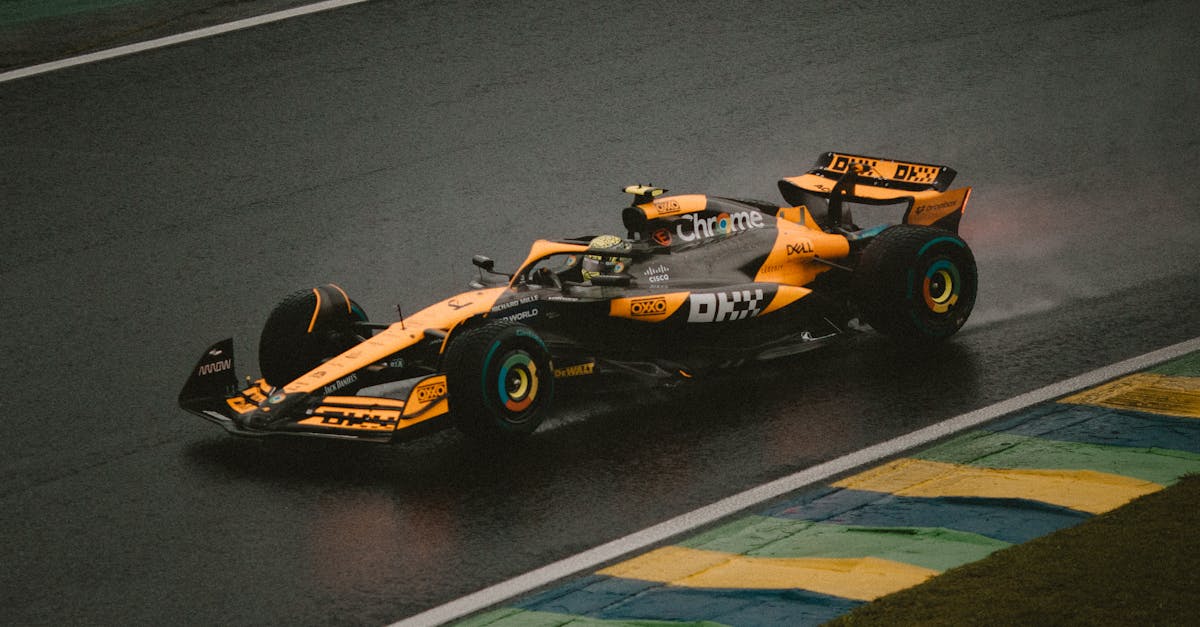
A spy shot published by PlanetF1 this week points to Red Bull preparing a major change for 2027, one that bears directly on Max Verstappen. It comes as Mercedes stand on the brink of both titles, having won 12 of the season’s 19 Grands Prix. Verstappen won the most recent of those races in Mexico City last Sunday, but the victory did little to hide the bigger picture. Red Bull are already thinking about next year, and they need to be.
One photograph tells you little about lap time. The intent behind it tells you a good deal more. A team that has spent most of 2026 watching Andrea Kimi Antonelli disappear up the road has every reason to make structural decisions now rather than wait for the winter.
A title out of reach, and a team looking ahead
The arithmetic is unforgiving. Antonelli has 380 points and nine wins. Verstappen is second on 261, 119 points behind, with four Grands Prix remaining and only 100 points available from them. Mercedes lead the constructors’ standings with 630 points to Ferrari’s 504. Red Bull are third on 382, just 17 points clear of McLaren.
This is the context in which any 2027 development should be read. For a team of Red Bull’s resources, the second half of a season like this becomes a balancing act. Every hour of design and simulation work spent on the current car is an hour not spent on next year’s. When the championship is gone and third place in the constructors’ table is the realistic prize, the calculation tilts heavily towards the future. A visible change this early suggests Red Bull made that call some time ago.
The cost cap makes the trade-off sharper. In the era of unlimited budgets, a front-running team could run two full development programmes in parallel. It cannot do that now. Resources moved to 2027 are resources taken from 2026, which helps explain why Red Bull’s current form rests so heavily on one driver.
Verstappen is carrying more than his share
Mexico City showed both Verstappen’s value and Red Bull’s problem. He started fifth, behind Lewis Hamilton on pole, George Russell, Charles Leclerc and Antonelli. He finished first, ahead of Hamilton and Antonelli, for his third win of the season. That result moved him to second in the standings, two points ahead of Hamilton, with Russell and Leclerc close behind. Just 16 points separate second from fifth.
Look at the other side of the garage, though. Isack Hadjar started seventh in Mexico and finished ninth, adding two points. He has 107 for the season, which leaves him eighth in the championship and 154 points behind his team-mate. Verstappen has scored 261 of Red Bull’s 382 points.
That imbalance has followed Red Bull for years. Pierre Gasly, Alexander Albon, Sergio Pérez and Liam Lawson all struggled to get near Verstappen in machinery that suited his aggressive, front-led style. Hadjar is in his first season alongside the four-time champion, and some of the gap is down to inexperience. But a pattern that has outlasted so many team-mates is not only about the drivers.
A car from which only one driver can extract performance usually has a narrow operating window. It responds to a particular way of loading the front axle and managing rotation through the corner, and it punishes anyone who drives differently. Verstappen can live on that knife-edge. Most drivers cannot. In a championship where both cars score, that costs Red Bull points every weekend, and it is a significant reason why Ferrari, with Hamilton and Leclerc finishing second and fourth in Mexico, sit 122 points ahead of them.
Whatever form the 2027 change takes, its success should be judged partly on this measure. If Red Bull build a faster car that still only Verstappen can drive, they will have solved only half the problem.
The 2014 lesson Red Bull cannot afford to repeat
Red Bull have been here before. In 2014, Formula 1 moved to hybrid power units and Mercedes produced a car and engine package so far ahead that they won 16 of 19 races. Red Bull, four-time defending champions, took the other three through Daniel Ricciardo, who capitalised on Mercedes’ rare stumbles. It looked like a team that would bounce back quickly.
It took them until 2021 to win another drivers’ title. The chassis side recovered relatively quickly, but the power unit deficit lingered for years. Red Bull spent much of that period fighting with their engine supplier rather than fighting for championships.
The parallels with 2026 are uncomfortable. Another sweeping regulation change has arrived, Mercedes have again got it right first time, and Red Bull have again won three races through a combination of opportunism and driver brilliance. The key difference is that Red Bull now build their own power unit, in partnership with Ford. That cuts both ways. There is no external supplier to blame or bargain with, but there is full control over the direction of development. If the gap to Mercedes is partly in the engine, as it was in 2014, Red Bull can at least attack it directly.
The 2026 regulations also give power unit manufacturers who are well behind the benchmark extra development opportunities. Those catch-up measures did not exist in 2014, when engine development was tightly frozen and Mercedes’ advantage became entrenched. They give Red Bull a route back that the 2014 team never had.
Where the 2027 gains have to come from
Second seasons under new regulations tend to be convergence years. The leading team has usually found the obvious gains already, while rivals still have large, well-understood deficits to close. Red Bull’s own history illustrates the point. In 2022, the first year of the ground-effect rules, they started the season behind Ferrari on reliability and pace before overhauling them. By 2023 they were almost untouchable, because their understanding of the concept had matured faster than anyone else’s.
Mercedes will face a different problem. As constructors’ champions, they will receive the smallest allocation of wind tunnel and computational fluid dynamics time under the sliding scale of aerodynamic testing restrictions. Red Bull, finishing third or fourth, will have more. Over a full year that difference is meaningful, though not decisive on its own. Mercedes spent 2014 to 2020 proving that a team with a structural advantage can keep extending it.
For Red Bull, the realistic 2027 targets look something like this:
- Close the raw pace gap so that Verstappen’s wins come from straight-fight speed rather than from strategy, conditions or rivals’ mistakes.
- Widen the car’s operating window so the second driver can score consistently, which would have a dramatic effect on the constructors’ table.
- Make progress on the power unit using whatever catch-up provisions apply, rather than relying on chassis gains to compensate.
A spy shot showing a significant change suggests the team are at least willing to move decisively rather than iterate on a concept that has left them 248 points behind Mercedes in the constructors’ standings.
Keeping a four-time champion convinced
There is also a human dimension. Verstappen has won four world titles and has nothing left to prove about his ability. What keeps a driver of that calibre committed is the prospect of fighting for championships. A season of opportunistic wins and battles for second place is tolerable once. Two in a row would invite questions about his future that Red Bull would rather not face.
That is why a visible commitment to 2027 matters beyond engineering. It sends a message to the driver whose results are holding the team’s season together. Verstappen’s three wins this year have come in a car that, on most weekends, has not been the fastest. Red Bull know better than anyone how much he is adding.
The next test comes at Interlagos on Sunday, a circuit where Verstappen won from 17th on the grid in 2024. Another strong result there would strengthen his hold on second place and Red Bull’s grip on third. The real verdict will come next spring. If Verstappen is fighting Antonelli on pace by the first European rounds and Hadjar is regularly in the top five, this week’s photograph will look like the first sign of a genuine recovery. If not, 2027 will look a lot like 2015, and Red Bull will be running out of time to keep their best asset convinced.