
Interlagos Locked In Until 2035 as São Paulo's Backing Protects a Classic
Formula 1's five-year extension at Interlagos keeps the Brazilian Grand Prix on the calendar until 2035 and shows how municipal funding has become a classic circuit's strongest defence against richer bidders.
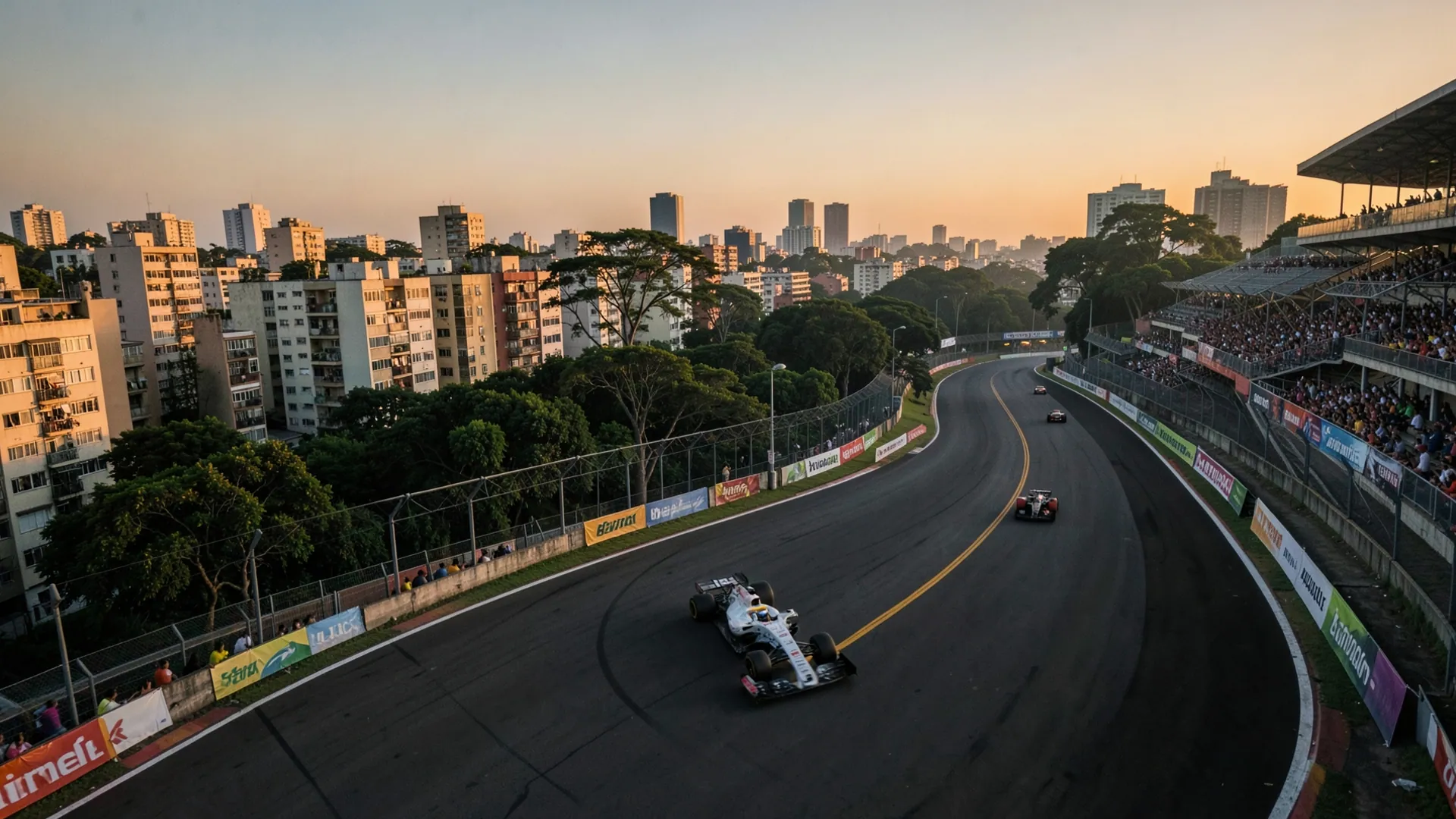
Formula 1 has extended its contract with the Interlagos circuit in São Paulo by five years, keeping the Brazilian Grand Prix on the calendar until at least 2035. The announcement came on the race weekend itself, with round 20 of the 2026 season due to run at the Autódromo José Carlos Pace on Sunday. The deal continues a partnership built on the city’s financial contribution, which from 2021 saw the event billed as the São Paulo Grand Prix. In a sport where heritage alone no longer guarantees a place, that contribution is what matters most.
How São Paulo bought its place on the calendar
Seven years ago, the Brazilian Grand Prix looked closer to extinction than at any point since Interlagos became its permanent home in 1990. In 2019 the federal government championed a move to Rio de Janeiro, built around a new circuit planned for the Deodoro district. The project never left the drawing board. Environmental objections to clearing forested land and doubts over funding stalled it, and Formula 1 was left with a race whose future was being argued over by politicians rather than promoters.
São Paulo resolved the impasse. The city agreed a five-year deal from 2021, a later extension carried it to 2030, and this latest agreement adds another five years. The renaming to “São Paulo Grand Prix” was the visible price of that support. The city put up the money, and the city put its name on the event.
That sequence matters because it inverted the usual relationship. For most of the championship’s history, Brazil’s race existed because Formula 1 wanted to be in Brazil. Since 2021, it has existed because a single municipal government decided the event was worth paying for, and that government has now reached the same conclusion twice more.
Why municipal money beats heritage alone
Formula 1’s commercial model rewards hosts who can pay substantial annual fees, and those fees are increasingly met by governments rather than private promoters. The newer arrivals of the past decade have largely been state projects in the Gulf and elsewhere, where hosting a grand prix forms part of a national tourism or image strategy. A privately run circuit relying on ticket sales and modest sponsorship struggles to compete with that.
Interlagos occupies a middle ground. The circuit is owned by the city, so public backing is not a subsidy bolted onto a private venture but a direct investment in a municipal asset. The return São Paulo seeks is economic: hotel occupancy, international broadcast exposure and a fixed date in the global sporting calendar. That case is easier to make than in a country chasing prestige, because the event is long established and the crowds already exist.
There is a trade-off. Public money brings public scrutiny, and any city budget is exposed to changes in administration. The 2019 episode showed how quickly a Brazilian race can become a political bargaining chip. Yet a municipal commitment is narrower and more stable than a national one, and São Paulo has now renewed its support across more than one electoral cycle. For Formula 1, that track record is worth almost as much as the fee.
The deal also gives Interlagos something rarer than money: certainty. A contract to 2035 allows the circuit to plan infrastructure work over a decade, gives local organisers a basis for longer sponsorship agreements and removes the annual speculation that dogs venues on short terms.
The classics that ran out of road
The contrast with parts of Europe is instructive. Imola dropped off the calendar after 2025. Zandvoort’s organisers confirmed that 2026 would be the Dutch Grand Prix’s final edition, citing the economics of continuing. Spa-Francorchamps, perhaps the most revered circuit of all, has kept its place only by accepting a rotation that will see it skip certain seasons from 2027.
None of these venues lacked history or popularity. What they lacked, to varying degrees, was a public authority willing to underwrite rising hosting costs indefinitely. With the calendar capped at 24 rounds and interest from new markets such as Rwanda and Thailand, Formula 1 can afford to let even beloved circuits fall away if the numbers stop adding up.
Brazil shows the same pattern from the other side. It is the championship’s only South American round. Its race weekends regularly attract some of the biggest crowds of the season, and its television audience is substantial. Even so, the race only became secure once São Paulo’s government tied its own finances to it. Sentiment kept Interlagos in the conversation, but the money closed the deal.
Why the circuit still earns its place
None of this would matter if Interlagos had become a procession. It has not. The anti-clockwise layout is short and undulating, sitting around 800 metres above sea level, and the long uphill drag from Junção to the start-finish line feeds into the Senna S, one of the most reliable overtaking spots on the calendar. Add unpredictable weather and the result is a circuit that keeps producing memorable races, from Ayrton Senna’s 1991 home win to Lewis Hamilton’s 2008 title snatched at the final corner and Max Verstappen’s victory from 17th on the grid in the wet in 2024.
This weekend’s race arrives with less at stake at the top than many past visits to Interlagos. Andrea Kimi Antonelli leads the drivers’ championship on 380 points, 119 clear of Verstappen. That margin already exceeds the 100 points on offer across the four remaining grands prix. Mercedes, on 630 points, hold a 126-point lead over Ferrari in the constructors’ standings.
Behind Antonelli, however, the fight is extraordinarily close:
| Position | Driver | Team | Points |
|---|---|---|---|
| 2 | Max Verstappen | Red Bull | 261 |
| 3 | Lewis Hamilton | Ferrari | 259 |
| 4 | George Russell | Mercedes | 250 |
| 5 | Charles Leclerc | Ferrari | 245 |
Four drivers are separated by 16 points in the race for runner-up. Verstappen moved into second by winning in Mexico City last Sunday from fifth on the grid, while Hamilton converted pole into second place and now sits two points behind him. Red Bull and McLaren are also only 17 points apart in the scrap for third in the constructors’ championship. A circuit that punishes errors and rewards bravery is a fitting place for those battles to tighten.
There is a home angle too. Gabriel Bortoleto is the first Brazilian to race full-time in Formula 1 since Felipe Massa retired in 2017, and he arrives on the back of eighth place in Mexico, which delivered four of Audi’s 27 points this season. A local driver in the field strengthens the commercial case São Paulo is making. It gives the grandstands a name to cheer and domestic broadcasters a reason to invest in coverage. The extension secures the stage for Bortoleto’s career at exactly the moment Brazil has a driver to put on it.
What 2035 asks of São Paulo
The extension is good news, but it does not settle the argument. Formula 1’s demands on its hosts are growing. Teams and broadcasters expect modern paddock facilities, and the sport’s sustainability targets will put pressure on logistics and venue operations. A contract running to 2035 will almost certainly come with expectations of continued investment in a circuit whose infrastructure has historically lagged behind the newest venues.
São Paulo has shown it is willing to pay to keep its race. The harder test will be whether it keeps paying to improve it, because the circuits that have fallen off the calendar rarely lost their place in a single negotiation. They were gradually outspent by rivals who kept upgrading while they stood still.
This agreement gives Interlagos a decade of breathing room, and the city deserves credit for using public money to protect a venue that consistently delivers. If São Paulo spends the next 10 years investing in the facility rather than simply renewing the fee, the next negotiation should be a formality.