
Norris Needs Headache Tablets as 2026 Cars Fail to Tame Bumpy COTA
Lando Norris is taking tablets to cope with Austin's bumps and Max Verstappen has criticised the surface, evidence that F1's softer new cars have not fixed the Circuit of the Americas' oldest problem.
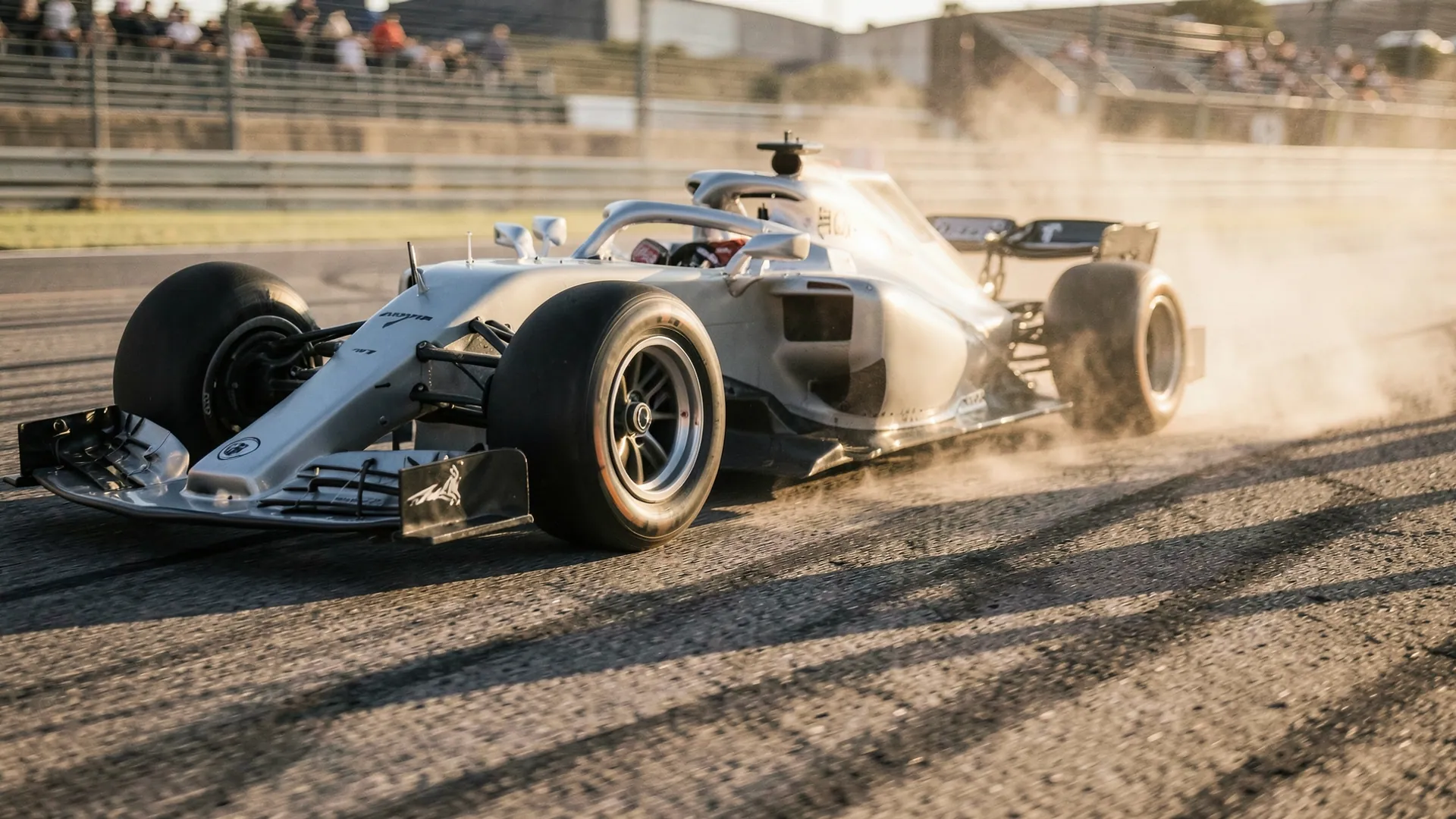
Lando Norris has said he needs to take tablets to manage headaches caused by the bumps at the Circuit of the Americas, ahead of Sunday’s United States Grand Prix in Austin. According to Autosport, the McLaren driver described the effect as “pretty bad”, and Max Verstappen joined him in criticising a surface that has been contentious for most of the past decade. The complaints matter because this is the first visit to Austin with the 2026 cars, which were meant to ride more gently than the stiff machines they replaced.
Tablets before the cars have turned a wheel
Drivers rarely discuss their medicine cabinets, which is what makes Norris’s admission notable. RacingNews365 reported that he is taking tablets to counter the physical effects of the bumps on his well-being. That is the language of a driver treating the circuit as an endurance problem rather than a quirk of its character.
The mechanism behind the headaches is well understood. A Formula 1 driver’s head, wrapped in a helmet and pressed into a tight cockpit, is subjected to a constant run of short, sharp vertical impacts whenever the car crosses a rippled surface. Over a lap, that means hundreds of small jolts through the neck and skull. Over a race distance, it adds up to fatigue, blurred vision on the worst sections and, for some drivers, the kind of pounding headache Norris is describing.
Verstappen’s criticism adds weight. He has won in Austin several times and has never been shy about saying a car or a circuit is not good enough. When the driver who has historically mastered this layout joins the complaint, it is hard to dismiss the issue as one driver’s sensitivity.
The softer ride that was supposed to arrive in 2026
The disappointment is sharper because the 2026 regulations were partly sold as an answer to exactly this problem. The ground-effect cars of 2022 to 2025 generated much of their downforce from venturi tunnels under the floor, which worked best when the car ran as low and as stiff as possible. That produced porpoising in the first season and a persistent, bone-shaking ride everywhere after it. Teams ran suspension so firm that drivers felt every seam in the asphalt, and several spoke openly about back pain.
The new rules changed the recipe. The cars are 100mm narrower, have a wheelbase 200mm shorter and lean less heavily on the floor for downforce, with active aerodynamics on the front and rear wings doing more of the work. In theory, that should free engineers to run softer springs and higher ride heights without haemorrhaging lap time.
In practice, the theory runs into the oldest truth in the sport: teams will always trade a driver’s comfort for performance if the stopwatch rewards it. The floors of the 2026 cars still produce meaningful downforce, and running them closer to the ground still pays. Plank-wear limits restrict how low a car can safely sit, and Austin has caught teams out before. In 2023, Lewis Hamilton and Charles Leclerc were both disqualified after the race for excessive skid-block wear, a direct consequence of cars bottoming out on this surface.
So the softer ride exists, but only where teams choose to take it. At a circuit as uneven as COTA, a car set up for lap time will still hit the bumps hard. The regulations have raised the ceiling on comfort; they have not forced anyone to use it.
A circuit built on shifting ground
The deeper problem lies beneath the asphalt. The Circuit of the Americas sits on clay-heavy soil that expands and contracts with moisture and temperature, which means the track moves between visits. Bumps that are ground down one year can return the next, and patching one section can leave a step between old and new surface elsewhere.
The circuit has carried out grinding and partial resurfacing in recent years, and each time the complaints have softened before returning. MotoGP riders, who feel surface imperfections far more acutely than anyone in a car, have long been among the loudest critics, and their concerns have at times centred on safety rather than comfort. Formula 1 drivers have tended to frame it as an irritant: a physical toll, a set-up headache for engineers and an unwelcome variable in plank wear.
That distinction is important. Nobody is suggesting Sunday’s race is unsafe to run. But there is a meaningful gap between “safe” and “acceptable” for a Grade 1 venue on a calendar that charges premium hosting fees and markets itself on the quality of its circuits. A driver needing tablets to get through a weekend sits awkwardly in that gap.
Seven points between McLaren and Red Bull
The timing is not ideal for Norris. With six rounds remaining, he is sixth in the drivers’ championship on 201 points, 139 behind Andrea Kimi Antonelli. The Mercedes driver has eight wins and a 102-point lead over his team-mate George Russell, so Norris’s own title defence is effectively over. His task now is to salvage as much as possible from the run-in, and that includes overtaking the drivers immediately in front of him in the standings: Leclerc is 14 points ahead in fifth, Verstappen 20 ahead in fourth.
The bigger stakes are in the constructors’ championship. McLaren are third on 339 points, only seven clear of Red Bull on 332. Verstappen won in Singapore from pole while Isack Hadjar climbed from 22nd on the grid to collect a point, and Red Bull’s combined haul of 26 points outscored the 22 McLaren took from Norris’s fourth and Oscar Piastri’s fifth. Two more weekends like that and the order flips.
Austin is precisely the kind of circuit where set-up compromise decides results. If McLaren soften their car to protect their drivers and the floor, they may give up time to a rival prepared to run lower and endure the punishment. If they go aggressive, they risk the plank-wear trap that caught Ferrari and Mercedes three years ago. Norris’s comments hint that the drivers already know which way the engineers are leaning. A driver who expects a gentle ride does not plan his medication in advance.
The complaint should also be set against Norris’s form. He finished fourth in Singapore, a solid result on a punishing street circuit in heat and humidity, and nothing in his remarks suggests he expects the bumps to cost him on Sunday. He is managing a problem, not making an excuse. The concern is that it is a problem he should not have to manage at all.
The case for a deadline on the asphalt
The 2026 cars were F1’s best opportunity in years to take the edge off circuits like this one. Smaller, lighter, less floor-dependent machines should have exposed a surface problem as a surface problem rather than a car problem. That is effectively what has happened. If drivers are still reaching for tablets in a generation of cars designed to ride better, the asphalt is the variable that has not changed.
That shifts the burden firmly towards the circuit and, by extension, the sport’s governing bodies. Grinding the worst bumps before each visit has become a ritual that buys a year of relief at best. A full resurface, engineered for the geology underneath it, would be expensive and might still not be permanent. But Formula 1 has demanded significant upgrades from venues before as a condition of staying on the calendar, and Austin, one of the sport’s commercial jewels in its most important growth market, is well placed to fund one.
The sensible course is for the FIA to treat this weekend’s driver feedback as evidence rather than grumbling, and to set a clear timeline for a long-term surface solution before the 2027 race. Antonelli may well extend his lead on Sunday, and the constructors’ fight may tighten further. The more lasting verdict from Austin, though, could be that the 2026 rules have shown exactly where the fault lies, and that COTA has run out of years in which to keep patching it.