
Horner's Call for Bigger Budget Cap Lands as Mercedes Reveals £633m Revenue
Christian Horner wants Formula 1's $215m cost cap raised just as Mercedes posts £633m in revenue, while McLaren reins in its drivers after Singapore and Ferrari readies a final floor upgrade for Austin.
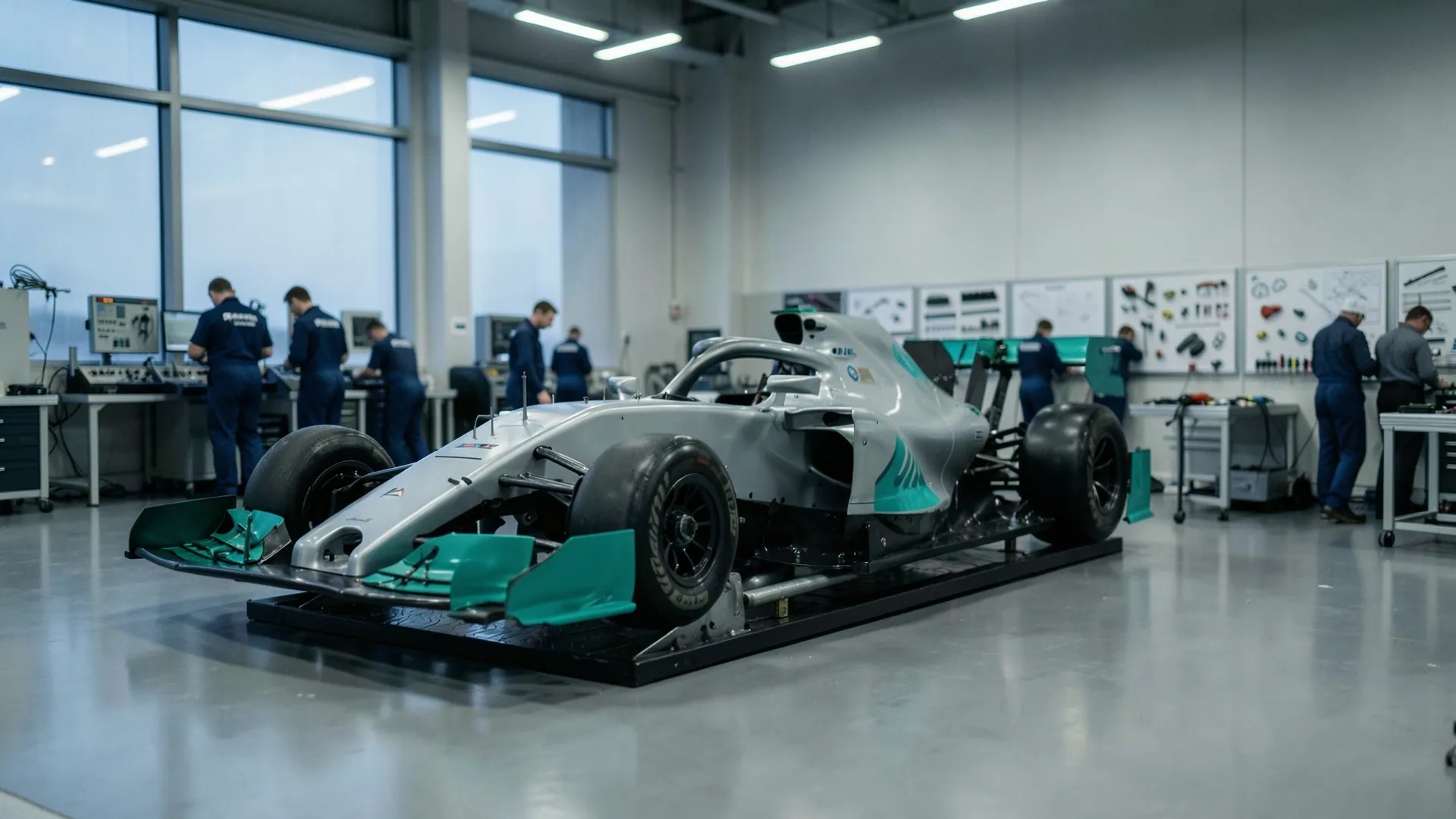
Christian Horner has called on Formula 1 to raise its $215m budget cap, arguing that teams are actually spending $500m to $600m a year. His comments came as Mercedes’ annual accounts, filed at Companies House, showed 2025 revenue of £633.4m and £125m paid to shareholders in dividends. At first glance the two stories make the same point. The real argument lies in the gap between them.
Otherwise, the sport’s attention is turning to Austin. The United States Grand Prix at the Circuit of the Americas on 25 October is Round 18, with six rounds left and Andrea Kimi Antonelli 102 points clear of his Mercedes team-mate George Russell. McLaren is still dealing with the fallout from its drivers’ collision in the Singapore sprint, Ferrari is preparing one last significant upgrade, and Aston Martin’s difficult season has produced a fresh and intriguing set of numbers.
Horner’s $600m figure and Mercedes’ £633m accounts
The former Red Bull team principal’s figure sounds like an accusation, but it is better read as a description. The cap, in force since 2021, limits spending on car performance. A long list of costs sits outside it, including driver salaries, the pay of a team’s three highest earners and marketing, while power unit development is governed by its own separate limit. Add those back, along with the commercial operation that surrounds a modern front-running team, and totals far beyond $215m are entirely plausible. Horner is not alleging that anyone is breaking the rules. His point is that the cap captures only part of what it costs to compete at the front.
The Mercedes accounts show what the cap has done for the teams’ finances. Revenue of £633.4m is income, not expenditure, drawn from sponsorship, prize money and other commercial streams. The more telling number is the £125m dividend. Before the cap, the leading teams depended heavily on their owners or parent companies to cover spending that ran well ahead of income. A front-running team now returning cash to its shareholders is the clearest evidence yet that the cap has turned F1 teams into viable businesses.
Index it, or leave it alone
- For a rise: costs across the industry have risen sharply since 2021, and a fixed ceiling squeezes the people and facilities that keep teams competitive. There is a reasonable case for indexing the cap to genuine cost inflation.
- Against a rise: a higher ceiling only helps the teams that can afford to reach it. Cadillac has yet to score in its first season, Aston Martin has seven points and Williams has 12. Raising the limit would reopen the spending gap the cap was designed to close.
The financial stability the cap brought is also part of what made the grid attractive enough for Audi and Cadillac to commit as full entrants. Modest inflation-linked adjustments are defensible. A step change upwards, while the championship leaders are paying nine-figure dividends, would be hard to justify.
Antonelli’s lead, and the noise around his future
Singapore did nothing to slow Antonelli. He finished third from fourth on the grid for 15 points, while Russell recovered from 19th to ninth for two. That 13-point swing stretched the gap to 102. Antonelli has eight wins from 17 rounds, and Mercedes has won 11 races between its two drivers.
The arithmetic for Russell is now stark. Counting grand prix points alone, he would need to win all six remaining races, with Antonelli finishing no higher than sixth in each, simply to draw level. Antonelli has been consistent enough this season to make that scenario remote. If he closes it out, he will become the youngest world champion in the sport’s history, beating the record Sebastian Vettel set in 2010 by roughly three years.
The attention away from the track reflects that status. A remark from Prince Albert II of Monaco prompted speculation about Antonelli’s plans, and his father has now spoken publicly in response. That a head of state’s passing comment can generate headlines shows how quickly Antonelli’s profile has grown. Mercedes’ priority over the next eight days will be keeping the focus on Austin rather than on stories it cannot control.
For Russell, the more realistic target is second place. He holds it by only nine points, and the pack behind him is tightening.
Ferrari’s final floor and a four-way fight for second
According to Motorsport.com, Ferrari is expected to introduce a new floor at the Circuit of the Americas as the final major upgrade of its 2026 season. Maranello’s attention has already turned to 2027, which makes the timing revealing. Next year is the second season of these regulations, so the lessons from this floor carry straight over. If the upgrade performs on track as the wind tunnel and simulation predicted, Ferrari will know its development tools are reliable. That confidence is worth more over the winter than any points the floor might add in Texas.
In the constructors’ championship, Ferrari sits second on 444 points, 134 behind Mercedes and 105 clear of McLaren. First place is out of reach and second looks secure. The prize lies in the drivers’ standings:
| Position | Driver | Team | Points | Gap to 2nd |
|---|---|---|---|---|
| 2 | George Russell | Mercedes | 238 | 0 |
| 3 | Lewis Hamilton | Ferrari | 229 | 9 |
| 4 | Max Verstappen | Red Bull | 221 | 17 |
| 5 | Charles Leclerc | Ferrari | 215 | 23 |
Twenty-three points cover four drivers. Leclerc finished second in Singapore, while Hamilton slipped from third on the grid to sixth at the flag. A floor that suits both drivers could give Ferrari a realistic chance of finishing second and third in the championship.
Mercedes holds back on the rear wing
RacingNews365 reports that Mercedes considered an upside-down rear wing, a concept Ferrari introduced, but has not fitted one. With a 134-point advantage, that restraint makes sense. A leader has little reason to adopt a rival’s idea mid-season and risk upsetting its own car’s balance. If the concept is worth having, it belongs in the design of next year’s car.
Verstappen lowers expectations for Texas
Max Verstappen won Singapore from pole, yet he has played down his chances in Austin, joking that the track’s bumps might require a new spine. He often undersells Red Bull’s prospects, but this warning is not unfounded. The Circuit of the Americas punishes a car that cannot cope with bumps and kerbs, and its fast opening sector demands very different qualities from the slow corners of Marina Bay.
Brown’s warning to Norris and Piastri has a constructors’ edge
Lando Norris and Oscar Piastri collided late in the Singapore sprint. According to Motorsport.com, team principal Andrea Stella said the team is still talking to both drivers, while chief executive Zak Brown took a noticeably firmer line.
The standings explain Brown’s tone. McLaren is third in the constructors’ championship on 339 points, just seven ahead of Red Bull. In Sunday’s race Red Bull outscored McLaren by 26 points to 22, thanks to Verstappen’s win and Isack Hadjar’s recovery from 22nd to tenth. Each position in the constructors’ table is worth significant prize money, and with Verstappen alone on 221 points, Red Bull will keep applying pressure.
Nor is this the first time the pair have made contact. Norris ran into the back of Piastri in Montreal last year, and McLaren has spent two seasons trying to let its drivers race freely without costing the team results. That balance was easier to defend when a drivers’ title was at stake. This year Norris is sixth, 139 points behind Antonelli, and Piastri is seventh on 138 points without a win. Neither has a realistic championship to fight for, so the argument for unrestricted racing between them is weaker than it was.
Clear rules of engagement for the final six rounds would be sensible. Neither driver needs to be singled out. McLaren simply cannot afford to lose points to its own drivers when Red Bull is only seven points behind.
Newey’s chassis, Honda’s deficit
GPfans reports that GPS analysis reveals the scale of Honda’s power unit deficit at Aston Martin, and suggests that Adrian Newey’s chassis is strong enough for Fernando Alonso to have fought for pole position with a competitive engine. The results so far tell only half of that story. Aston Martin is tenth in the constructors’ championship on seven points, ahead of only Cadillac. In Singapore, Alonso started 20th and finished 16th, while Lance Stroll started 21st and retired.
The data deserves some caution. GPS-derived speed traces are approximate, and they cannot easily separate a power deficit from high drag or a conservative energy-deployment strategy. The pattern is still familiar. Under the 2026 rules, the electrical side of the power unit contributes far more of the total output, so a manufacturer that falls behind on energy recovery and deployment loses heavily on every straight. Strong cornering speeds cannot make up that time.
Alonso has been here before. In 2015, McLaren-Honda insisted it had a capable chassis held back by an uncompetitive engine, and it took years for that partnership to deliver anything close to its promise. The 2026 regulations include provisions giving manufacturers that fall well behind extra development opportunities, and Honda’s case will be an early test of that system. If the chassis really is that good, Aston Martin has already solved the harder half of the problem. The open question is how quickly Honda can solve the other half.
Portimão, pit-wall software and Bearman’s seat
- Verstappen goes GT racing. Verstappen spends this Saturday in a GT3 car at Portimão in the GT World Challenge. He has been promoted on the grid after a rival team was penalised for a technical infringement, and one of his GT rivals used the occasion to joke about F1’s increasingly electrified cars.
- Red Bull’s strategy software. Jack Harington, Red Bull’s head of technical and performance partnerships, told CNBC that the team uses an artificial intelligence system that recommends actions during a grand prix. Strategy is one of the few areas where software can contribute in real time during a race, so other teams are likely to follow.
- Bearman’s 2027 seat. Haas has set out its position on Oliver Bearman, who has impressed this year but has not yet finalised his seat for 2027. He finished 12th in Singapore, and with Haas seventh in the constructors’ championship on 30 points, keeping a proven young driver looks like the obvious decision.
- A Texan helmet. Verstappen has revealed a special Austin-themed version of his helmet design for the United States Grand Prix.
- Horner reflects. In a separate interview, Horner described the biggest challenge of his time at Red Bull in strikingly candid terms, which fits his growing willingness to speak out on how the sport is governed.
- Austin’s verdict on Ferrari. If the new floor works as intended, Hamilton and Leclerc are the drivers best placed to take second from Russell, and that four-way fight is now the most open contest left in the 2026 championship.