
F1 today: the stories everyone's talking about — 24 Aug 2026
GP Headlines' round-up and analysis of the biggest Formula 1 storylines making news right now.
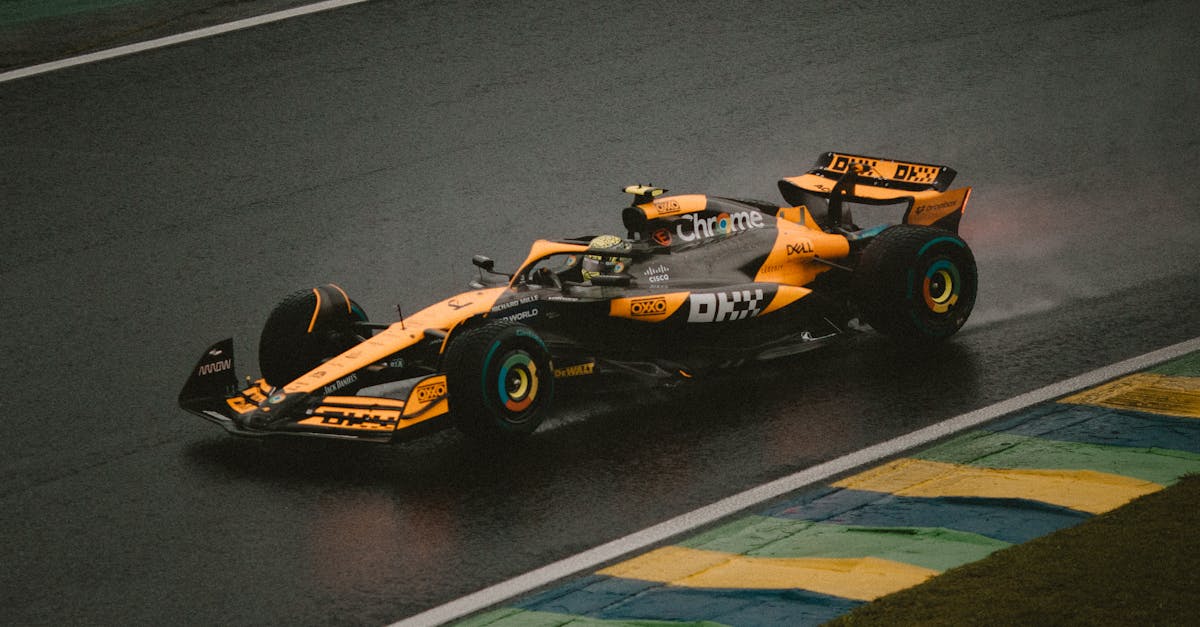
The paddock reconvenes this week with the championship picture more scrambled than it has been at any point since the summer break, and Zandvoort’s fallout is doing most of the shaking. Lando Norris has now won back-to-back races and looks every inch the man in form, Max Verstappen contrived a first-lap accident in front of his own fans, Ferrari’s garage is doing its now-familiar impression of a team at war with itself, and Mercedes — nominally the outfit leading the drivers’ championship through Kimi Antonelli — is simultaneously admitting it can’t afford to keep pace and about to send its title leader to the back of the grid at Monza. There is a lot to unpack, and most of it points the same way: this is a title fight entering a more volatile phase than the one we left before the break.
McLaren’s momentum, and Verstappen’s costly lapse
Norris’s victory at Zandvoort was McLaren’s second in succession, and the manner of it — controlled, unhurried, the sort of win that suggests a car with margin in hand rather than one being extracted to its limit — is the detail that should worry rivals most. A single dominant weekend can be circuit-specific; two on the spin, at venues with quite different characters, starts to look like a genuine step in competitiveness. Norris ended the first half of the season exactly as he’s now started the second, and that kind of consistency is precisely what wins championships that are decided by accumulation rather than fireworks.
Verstappen’s weekend, by contrast, was defined by an error that simply doesn’t fit his recent history. A first-lap crash at his home race is the kind of result that gets filed under “these things happen” for most drivers, but for a four-time champion who has built his reputation on ruthless opening-lap management, it’s a rare enough occurrence to be genuinely newsworthy rather than just unfortunate. The wider context matters here: Red Bull have not looked like the benchmark car for some time now, and a driver under pressure to extract more than the machinery comfortably offers is statistically more likely to find the limit the wrong way. None of that excuses the error, but it does explain the environment it happened in. One mistake doesn’t undo a season, but at this stage of a title fight — with McLaren looking increasingly serene — it’s the sort of weekend Red Bull can’t afford to make a habit of.
Ferrari’s strategy storm
If Zandvoort was a good weekend for McLaren, it was a thoroughly bad one for Ferrari’s internal harmony. Lewis Hamilton’s public frustration — that the team’s handling of the race, and specifically the dynamic between him and Charles Leclerc, cost him a podium — is not a new genre of Ferrari story, but it’s a particularly pointed one given how much scrutiny Hamilton’s first season(s) in red have already attracted. Leclerc’s own explanation of the instruction that triggered the unhappiness suggests this wasn’t simply a case of Hamilton reading a strategy screen and drawing the wrong conclusion; there was a specific team call that he felt disadvantaged him relative to his team-mate, and it’s telling that Leclerc felt the need to address it publicly rather than let Fred Vasseur’s version stand alone.
Vasseur’s defence — that he understands both drivers’ frustration but doesn’t believe Ferrari actually got the strategy wrong — is the standard team-principal position in these situations, and it’s worth taking at something close to face value: outcomes and decisions are not the same thing, and a call can be correct in expected value even when it produces a worse result on the day. But the detail that this wasn’t only a Hamilton problem — that there was a separate, additional strategic misstep affecting Leclerc’s race too — undercuts the “nothing to see here” framing somewhat. A team can defend one call as sound racing logic; defending two separate errors from the same weekend starts to look more like a pattern of execution problems than bad luck.
Why this keeps happening
Ferrari’s strategy department has been a recurring theme of criticism across multiple seasons now, under multiple leadership structures, which is itself instructive. It suggests the issue isn’t simply a personnel problem that a single change can fix, but something more structural — perhaps in how quickly the pit wall processes live data, or in the internal hierarchy of whose race gets prioritised when a call has to be made in seconds rather than minutes. Whatever the root cause, the optics of a two-time podium contender each leaving a race feeling short-changed by their own team, in the same afternoon, is not something Vasseur can wave away indefinitely. Confidence in a strategy call is partly a matter of trust, and trust erodes with repetition, not with any single incident.
Antonelli’s Monza nightmare
Buried among the Zandvoort fallout is a story with real title-race consequences: Mercedes has confirmed Kimi Antonelli will start Sunday’s Italian Grand Prix from the back of the grid after exceeding his power unit component allowance. The mechanics are straightforward — F1’s engine regulations permit a limited number of each component per season before penalties apply, and once a driver breaches that limit for multiple elements in the same unit, the penalties stack to the point where starting from the pit lane or the back of the grid is more efficient than working through a grid-position deficit corner by corner.
What makes this genuinely significant is who it’s happening to. Antonelli currently leads the drivers’ championship, and Monza is not a forgiving circuit for a car forced to fight through traffic — it’s the lowest-downforce track on the calendar, where overtaking is comparatively easier than at Zandvoort or Monaco but where a single lap lost to a poorly timed Safety Car, or a difficult first-lap squeeze through Turn 1, can undo an afternoon’s work regardless. A championship leader taking a self-inflicted zero, or something close to it, at his title rivals’ most favourable venue is the kind of swing that can reshape a points table far more than any single strategic error.
The decision to take the penalty now, rather than defer it, suggests Mercedes has judged that a fresh power unit is worth more across the remaining races than protecting Antonelli’s track position for one weekend — which tells you something about how they’re prioritising the run to the flag. It’s a pragmatic call, but it’s also a gamble that assumes Monza’s characteristics allow for recovery. Given how comfortably McLaren have been winning lately, gifting them a straightforward afternoon is not something Mercedes can view lightly.
Mercedes’ uncomfortable admission
The Monza penalty lands awkwardly alongside two other Mercedes stories that, put together, paint a slightly worrying picture for a team currently top of the standings. Antonelli himself has openly acknowledged that Mercedes is no longer the fastest car on the grid, a candid admission that follows McLaren’s second consecutive win and one that a title-leading driver doesn’t make lightly — it’s as much a signal to his own team as it is a comment for the media. And Toto Wolff has gone further, suggesting the team simply doesn’t have the financial firepower to develop at the same rate as its rivals.
That claim deserves scrutiny rather than automatic sympathy. Every team operates under the same cost cap, which was specifically designed to prevent the kind of spending disparity Wolff appears to be describing — though within that cap there remain differences in how efficiently budget is allocated between chassis development, power unit investment (which for a manufacturer like Mercedes runs partly outside the cap), and personnel. If Wolff’s point is that Mercedes’ spending is being pulled in more directions than a pure constructor like McLaren, that’s a legitimate structural disadvantage. If it’s simply an admission that development direction has been suboptimal, dressing that up as a budget story is less convincing. Either way, a team leading the championship publicly conceding it can’t out-develop the chasing pack is an unusual position to be in, and it raises the obvious question of how Mercedes intends to defend a lead built on early-season form once the development race genuinely bites.
Aston Martin’s quiet ascent
Amid the noise from the front-runners, Aston Martin’s trajectory continues to be one of the season’s more understated stories. Fernando Alonso’s description of the team’s recent progress as “incredible” is not the kind of word the two-time champion uses loosely, and Adrian Newey’s response — that there’s still more performance to come — is exactly the sort of measured confidence you’d expect from a technical leader who built his reputation on long-term project management rather than quick fixes. Newey’s arrival was always going to be judged over a multi-season horizon rather than an instant curve, and if Alonso, one of the most demanding and detail-obsessed drivers on the grid, is genuinely impressed by where the car is now, that’s a meaningful data point. Aston Martin won’t be troubling the championship picture this year, but as a leading indicator for 2026 and beyond, this is a story worth tracking closely rather than filing away as minor midfield chatter.
On the radar
- Stroll’s pit-lane intervention: Lance Stroll flagging Oliver Bearman and Gabriel Bortoleto for passing a red pit-exit light — resulting in reprimands rather than the stop-go penalties he wanted — is a small episode, but it’s a reminder of how seriously drivers take pit-lane safety infractions, and stewards may face pressure to be firmer next time.
- Nikola Tsolov’s Imola outing: The Red Bull junior’s first taste of F1 machinery is a useful marker of the junior pipeline’s next wave, worth watching for early impressions.
- Ferrari’s strategy department under the microscope: expect continued scrutiny of Vasseur’s pit wall after two separate strategic frustrations in one race.
- Team-mate head-to-head standings: the season-long qualifying/race/sprint comparisons are quietly building a picture of who’s genuinely leading their garage — worth revisiting as the run-in develops.
- Monza’s championship implications: how much ground Antonelli actually loses from the back of the grid will be one of the more consequential data points of the season so far.
The picture emerging from Zandvoort is of a title race entering a less predictable phase: McLaren ascendant, Ferrari distracted by itself, and Mercedes leading the table while quietly conceding it may not have the tools to keep doing so. Monza will tell us a great deal more than most Italian Grands Prix usually do.