
Rwanda's 10-Year F1 Deal Draws Amnesty Criticism as Verstappen Faces GT Stewards
Formula 1's decision to take a Grand Prix to Rwanda from 2030 has drawn human-rights criticism, while Mercedes' upgrade doubts and Verstappen's GT penalty at Portimão set the tone before Austin.
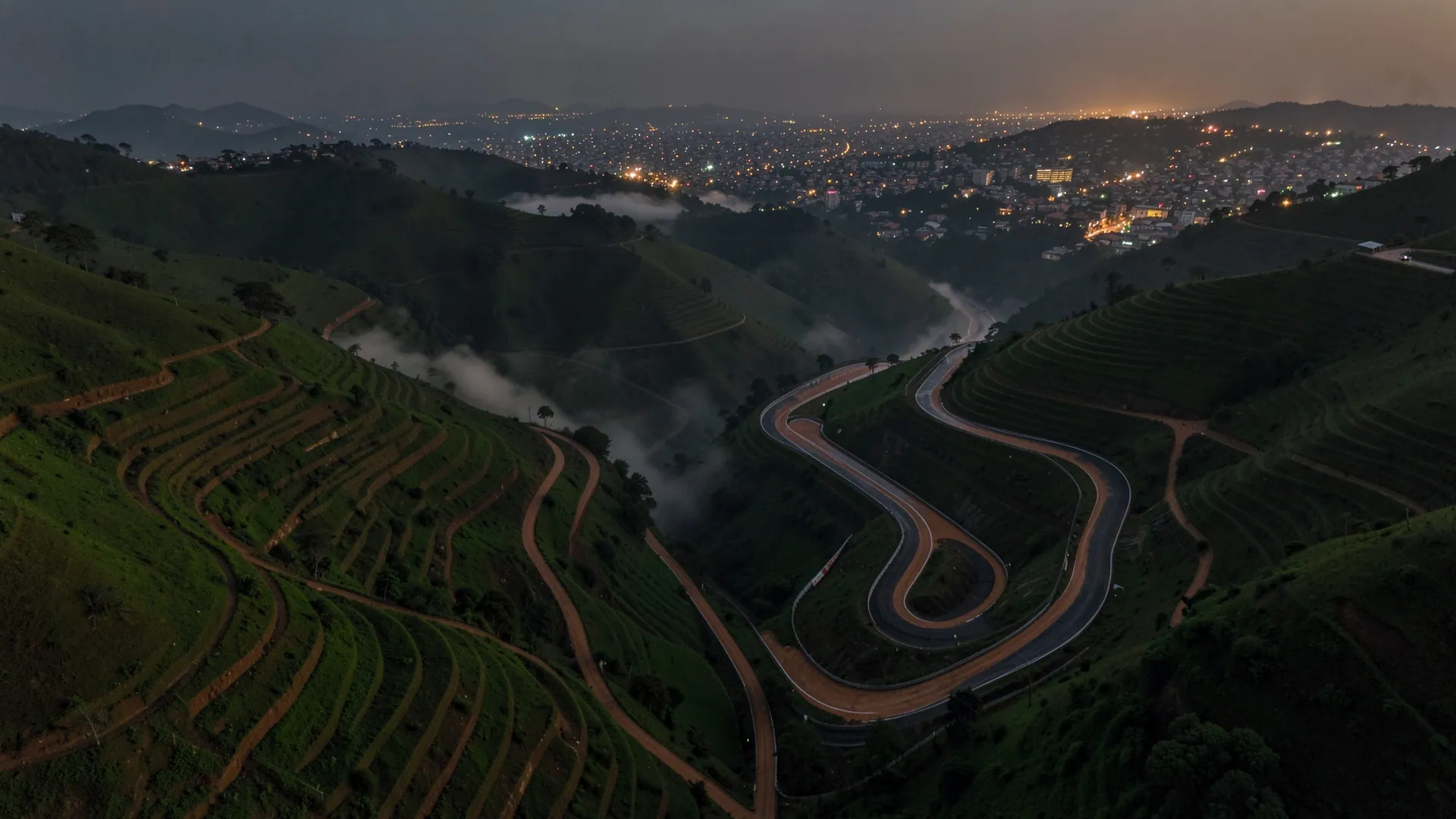
Formula 1 has awarded Rwanda a 10-year contract to stage an African Grand Prix from 2030, and the decision has drawn heavy criticism from Amnesty International and from another African nation. It is the most consequential calendar decision the sport has made in years. It also lands in the gap between Singapore and Austin, a week that has been busy off track.
Max Verstappen has gone from winning under the lights at Marina Bay to being found at fault by GT stewards in Portugal. Mercedes, runaway leaders of both championships, are hearing that their latest upgrade has not worked. McLaren’s Lando Norris has said publicly that his team are running short of new parts.
Rwanda’s 10-year deal and the price of returning to Africa
Formula 1 has not raced in Africa since the 1993 South African Grand Prix at Kyalami. Stefano Domenicali has spoken often about closing that gap, and Rwanda has courted motorsport openly for some time. Kigali hosted the FIA’s General Assembly and annual prize-giving in December 2024, a clear sign of where the conversation was heading.
The scale of the commitment is what makes this deal significant. A 10-year contract running from 2030 ties the sport to the country through the 2030s. That is the kind of tenure F1 has handed to Bahrain, Saudi Arabia and Qatar, and it has brought the same kind of objection.
Amnesty, and an objection from within Africa
Amnesty International’s criticism, as reported by GPfans, centres on allegations of torture and on the charge that the race is an exercise in sportswashing. RacingNews365 reports that an African nation has also spoken out, describing the decision as morally indefensible. The second objection should concern F1 more. Western NGOs criticising a Gulf or African host is familiar territory, and the sport has developed a standard response to it. Criticism from within the continent F1 says it wants to serve is harder to dismiss as outsiders misunderstanding the region.
Rwanda’s government has invested heavily in sport as a national showcase. The “Visit Rwanda” branding on Arsenal and Paris Saint-Germain shirts made the country familiar to millions of fans long before any F1 announcement. A Grand Prix is the logical next step in that strategy, which is exactly why critics see it as a reputational purchase.
F1 should publish its due diligence
The case for engagement has some merit. A race brings scrutiny with it, and an Africa-shaped hole in a supposedly global championship is a real weakness. But engagement only counts if it produces something measurable. F1 has had years in Bahrain and Saudi Arabia to show that its presence changes conditions on the ground, and it has offered little evidence that it does.
The sensible course is for F1 to publish the human-rights due diligence it carried out before signing, and to state clearly what it expects from its host over the life of the deal. The calendar is also running close to its limit, with 23 rounds this year. A guaranteed slot through the 2030s will put pressure on European venues on rolling deals, and on South Africa, whose own long-running bid now looks further away.
Mercedes’ upgrade problem is a 2027 problem
Karun Chandhok has warned on Sky Sports that Mercedes should be “concerned” that their latest aerodynamic package has not produced the expected step forward. In Singapore, Andrea Kimi Antonelli finished third from fourth on the grid. George Russell recovered from 19th to ninth. Neither result was a disaster, but neither looked like the work of a car that had just found performance.
It would be wrong to turn this into a title scare. Antonelli leads Russell by 102 points with six rounds left, more than four victories’ worth. He has won eight of the 17 races so far, and Mercedes have won 11. In the constructors’ championship they lead Ferrari by 134 points. Even if the package has made no difference at all, the car Mercedes started the season with is still good enough to finish the job.
Why the timing still matters
This is the first year of a new rules cycle, and every upgrade is also a test of the team’s tools. Wind tunnel and CFD numbers that fail to show up on track point to a correlation problem. A correlation problem in October of year one becomes a design problem for the 2027 car if nobody fixes it. Red Bull’s struggle to make late-season parts work during its own dominant era showed how quickly that can catch up with a team.
So the concern is real, but it is a concern about next year. Mercedes have enough of a lead to treat the last six rounds as a test programme, and they should use them that way. Austin’s long corners and bumpy surface will show whether the new parts help in the kind of high-speed sections Marina Bay lacks.
Verstappen wins in Singapore, then lands in trouble at Portimão
Verstappen controlled Singapore from pole for his second win of the season. Within days he was in front of the stewards at the GT World Challenge Europe Endurance Cup in Portimão, where he is racing for his own Verstappen Racing team. Reports from Crash.net, GPfans and RacingNews365 say the stewards judged a collision in the first free practice session to be avoidable, placed the fault with Verstappen and announced a penalty.
A practice tangle in a GT car is not much of a scandal. Contact in mixed-traffic endurance practice is common, even for the best drivers, because closing speeds and visibility are very different from those in a single-seater. The more interesting question is one of priorities.
A free weekend against a tight fight for second
Verstappen’s love of racing outside F1 is long established, and he believes it keeps him sharp. He has also earned the freedom: no team is going to tell a four-time champion how to spend a free weekend.
The championship picture is the other side of the argument. Verstappen is fourth on 221 points, and the fight for second place behind Antonelli is very close:
- Russell (Mercedes): 238 points
- Lewis Hamilton (Ferrari): 229 points
- Verstappen (Red Bull): 221 points
- Charles Leclerc (Ferrari): 215 points
- Norris (McLaren): 201 points
Five drivers are separated by 37 points. Red Bull are also only seven points behind McLaren for third in the constructors’ championship. With Austin following soon after Portimão, the physical risk is small, but it is not zero. Red Bull will want their lead driver to finish this weekend with a quiet race and no further stewarding.
The positive reading is that Singapore showed Red Bull can still win when the conditions suit them. If Verstappen carries that form to Austin, where he has a strong record, second place in the standings is a realistic target.
McLaren’s development drought
Norris has said plainly that a lack of development parts is costing McLaren in the standings. The team that won the last two constructors’ titles is third, on 339 points, and Oscar Piastri has not won a race this season. Fourth and fifth in Singapore was a solid result, but the pair still scored three points fewer between them than Verstappen did on his own.
Every team in a capped era makes the same choice at some point: keep spending on this year’s car, or move resources to next year’s. Norris has not said which way McLaren have gone, and it would be speculation to assume. What his comments show is that he believes his own team is falling behind in the development race, and that he is willing to say so publicly.
What third place is worth
The financial incentive is clear, because each constructors’ position is worth substantial prize money. A seven-point margin over a Red Bull team that has just won in Singapore will not last six rounds without some help. Isack Hadjar’s drive from 22nd to 10th in Singapore was a reminder that Red Bull can now score with both cars, which has not always been true in recent seasons.
For Norris personally, sixth on 201 points puts the runner-up spot within reach on paper. In practice, he needs the parts he says McLaren do not have.
Ferrari’s pipeline: Beganovic, Bearman and the Haas question
Ferrari have promoted Dino Beganovic to a permanent F1 reserve role. The Swede has spent seven seasons in the Ferrari Driver Academy and is currently racing in Formula 2. For a programme that has sometimes left juniors waiting too long for a clear next step, this is a deliberate commitment.
The more delicate story is at Haas. Oliver Bearman, a Ferrari junior placed with the American team, finished 12th in Singapore. PlanetF1 reports that Haas have been asked how Toyota, their technical partner since late 2024, would view a line-up of two Ferrari-backed drivers. The question exists because Haas sit between two manufacturers. Ferrari supply the power unit and much of the driver pipeline. Toyota bring money, engineering support and ambitions of their own, which include Japanese talent in their reserve and test programme.
Why the second seat carries political weight
Customer teams have always used driver seats as a currency. Loaned juniors save money and keep a supplier happy. A second Ferrari driver would tie Haas further to Maranello at the moment Toyota’s investment is growing. However politely Toyota answer the question in public, Haas cannot satisfy both partners with two seats indefinitely. How they handle the next contract decision will show which relationship they see as more important for the long term.
Haas are seventh in the constructors’ championship on 30 points, seven ahead of Audi. Whoever they pick, points this autumn will matter more than politics.
Also in the paddock before Austin
- Austin’s giant cowboy hat. The Circuit of the Americas wants to build what it says would be the world’s largest cowboy hat, with a bar inside. It fits the venue’s habit of making the race weekend a festival as well as a sporting event. Round 18 takes place on 25 October.
- Colton Herta’s difficult F2 season. The F2 leadership has acknowledged that the former IndyCar winner has found the series hard. Herta’s route to F1 runs through Cadillac, who are still without a point after Sergio Pérez finished 17th and Valtteri Bottas 19th in Singapore. His results matter for the superlicence and for the credibility of the American project.
- Bearman’s 849 Testarossa. A Monaco influencer filmed Bearman driving Ferrari’s 1,000hp-plus hybrid supercar out of a Monte Carlo dealership. It is a harmless story, though it also shows how closely his image is now linked to Maranello.
- Russell’s recovery drive. Russell went from 19th to ninth in Singapore at a track where overtaking is notoriously hard. If Mercedes’ upgrade questions persist, drives like that could decide the fight for second.
- Audi’s points. Nico Hülkenberg’s eighth place lifted Audi to 23 points, seven behind Haas. In a midfield this tight, one good weekend can change the order.
Austin should give the clearest answer yet on Mercedes’ upgrade. If the package works on a circuit with long, fast corners, the concern goes away. If it does not, Red Bull and Ferrari will spend the final five rounds fighting for a runner-up spot that Mercedes may struggle to hold.