
FIA's 2027 Ban on F1's Hidden Development War Matters More Than It Looks
The FIA's decision to outlaw a behind-the-scenes development battle from 2027 has drawn little attention, but invisible arms races have shaped Formula 1's competitive order more decisively than any sidepod.
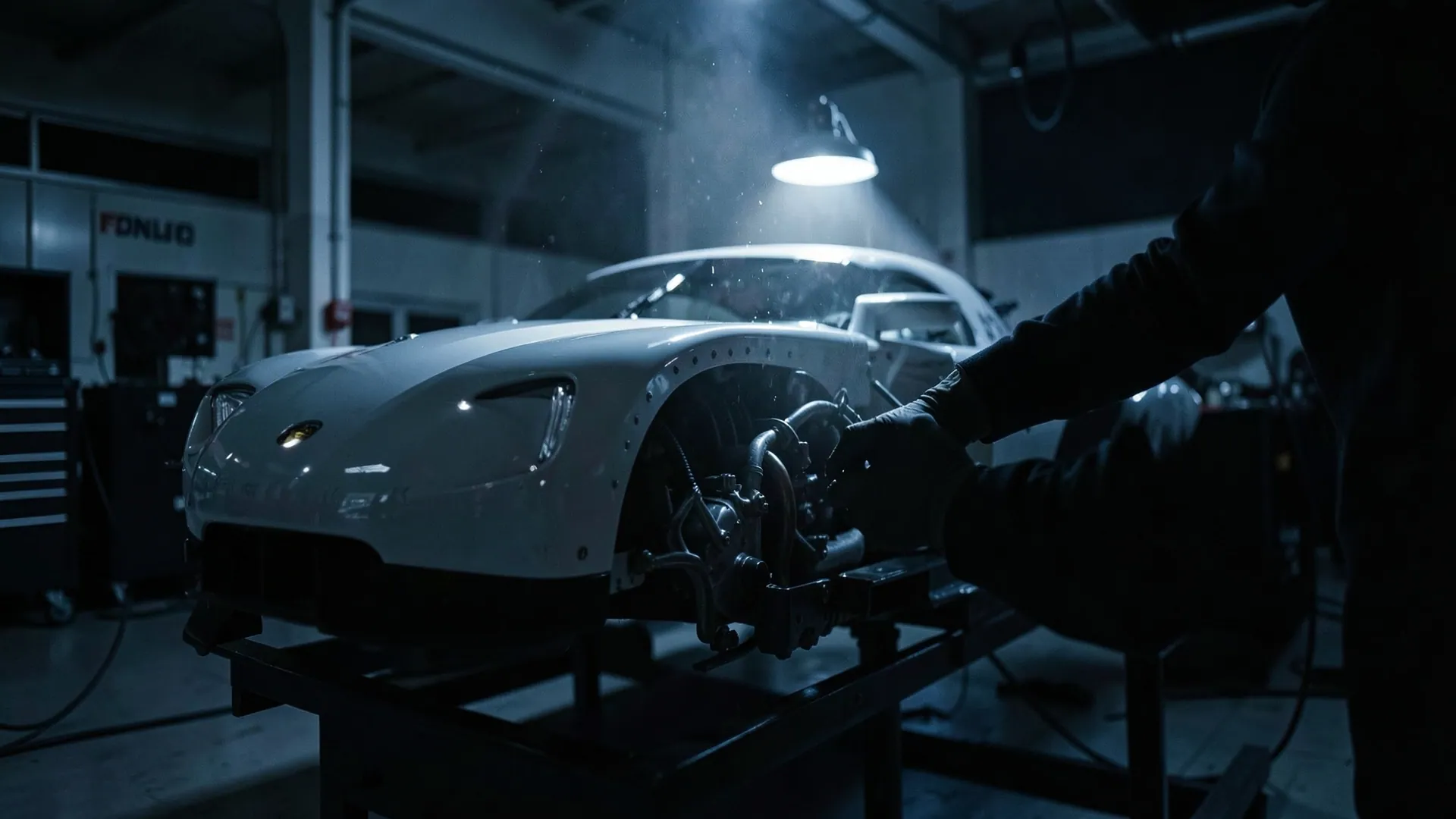
The FIA has announced that a largely hidden strand of Formula 1 development will be banned from the 2027 season. Alongside Andrea Kimi Antonelli’s march towards the drivers’ title, the move has barely registered. It deserves more attention than that, because it targets exactly the kind of arms race that has historically decided who wins: one fought away from the cameras, in places rivals cannot photograph, copy or easily protest.
The instinct when a governing body announces a ban for the following year is to file it under housekeeping. This one deserves better. The areas of an F1 car that nobody outside a team can see are where competitive advantages last longest, and closing one of them off changes the economics of the whole sport.
Why invisible gains outlast visible ones
Visible development cancels itself out quickly. A new floor edge or sidepod concept appears in the pit lane on Thursday and is photographed from every angle by Friday. Within weeks every technical office on the grid has studied it, simulated it and decided whether to copy it. The 2022 and 2023 seasons showed how fast that convergence can happen, as teams that started with radically different sidepod philosophies drifted towards the same broad solution.
Hidden development does not work like that. When a gain lives somewhere a photographer cannot reach, rivals must first work out that it exists, then reverse-engineer what it might be, then find a way to build their own version. Each of those steps takes months. By the time the field has caught up, the originator has usually moved on.
That is the argument at the heart of PlanetF1’s report on the FIA’s decision, which suggests the battle could be more significant than it appears. Low profile and low importance are not the same thing. Often they are opposites.
The cost cap sharpens the point. Since 2021, every team has worked within a spending ceiling, which turns development into a series of trade-offs. A pound spent on an area the public never sees is a pound not spent on aerodynamics, suspension or reliability. For the biggest teams, which run at or near the cap, a hidden arms race forces difficult choices. For smaller teams it is worse: they cannot afford to fight on every front, so they must concede some ground entirely. A ban removes one front from the war and frees budget for areas where the playing field is more even.
Mercedes’ margin in the first year of new rules
The timing is significant because 2026 is the first year of an entirely new rulebook, covering both chassis and power unit. New regulations are when hidden advantages are at their most potent. The visible concepts converge within a season or two, but the gains buried deeper in the car can define an era.
The current standings show how decisive an early advantage can be. Mercedes has won 11 of the 17 Grands Prix so far and leads the constructors’ championship on 578 points, 134 clear of Ferrari. Antonelli has eight of those wins and sits on 340 points, 102 ahead of team-mate George Russell. Lewis Hamilton is third on 229, with Max Verstappen fourth on 221 after his win from pole in Singapore. Ferrari, McLaren and Red Bull have two victories apiece.
| Constructor | Points | Wins |
|---|---|---|
| Mercedes | 578 | 11 |
| Ferrari | 444 | 2 |
| McLaren | 339 | 2 |
| Red Bull | 332 | 2 |
With six rounds to run, starting at the Circuit of the Americas this weekend, Antonelli’s lead is not yet mathematically safe. But Russell needs a collapse from his team-mate and a near-perfect run of his own. Even Singapore, where Verstappen and Charles Leclerc locked out the front row and Antonelli finished third, cost the leader little.
Nobody outside the teams can say how much of Mercedes’ advantage sits in areas the public cannot see. That uncertainty is the point. When a team dominates the first year of a new formula, rivals instinctively look for the explanation in the places they can study. The history of this sport suggests the most durable advantages are usually found in the places they cannot.
What Brawn’s diffuser and Mercedes’ turbo taught the FIA
Two Mercedes-linked chapters from recent history make the contrast clear.
In 2009, Brawn’s double diffuser was the defining innovation of the season. It was visible, it was protested, and once it was ruled legal in April, every team was working on a copy within weeks. Brawn won the title on the strength of its early lead, but the advantage itself eroded quickly.
In 2014, Mercedes arrived with a power unit whose split turbocharger layout, with the compressor and turbine at opposite ends of the engine, was buried inside the car. Rivals took years to fully understand and replicate the packaging gains it delivered. That hidden advantage underpinned the longest period of dominance F1 had seen.
The FIA has repeatedly stepped in when development disappears from view. Front-and-rear interconnected suspension was effectively outlawed mid-season in 2014 after the FIA questioned its legality. Mercedes’ dual-axis steering was legal for 2020 and banned from 2021. Oil consumption limits were progressively tightened from 2017 to stop teams burning lubricant for performance. The scrutiny of Ferrari’s 2019 power unit ended in a confidential settlement with the governing body. In 2025, load tests on flexible wings were tightened because deflection on track was exceeding what static tests could detect.
Two patterns run through that record. First, the hardest battles for the FIA are always the ones it cannot easily measure. Second, bans announced for the following season allow the teams that invested heavily to keep the benefit until the rules change. This decision follows that template. The 2026 order is untouched, and whoever has led this particular arms race keeps the reward for the remaining six rounds.
Why the midfield gains most when this front closes
The announcement also lands at a pointed moment in the design calendar. By late October, 2027 cars are well into development. Teams that had planned to keep pushing in this area must now redirect people and budget elsewhere, while teams that had chosen not to compete in it lose nothing. A small but real redistribution of resources begins immediately.
The likely beneficiaries sit further down the order. Cadillac has yet to score a point in its debut season, and Audi has 23 points in its first year as a works team. Williams has 12 and Aston Martin seven. Teams in that position cannot spread their resources across every front the leading teams are fighting on. Every area the FIA takes off the table gives them a better chance of concentrating on the developments that actually move them forward.
For the leading teams, the effect is subtler. A ban does not remove knowledge. Engineers who learned how to extract performance from a hidden area take that understanding into whatever they work on next. Mercedes, Ferrari, McLaren and Red Bull will lose a battlefield, but they keep the culture that made them good at fighting on it.
A ban only works if it can be policed
The case for the ban is sound. F1 benefits when performance comes from areas rivals can see and respond to, because that encourages convergence and close racing. Removing a costly, invisible arms race from a cost-capped sport is a sensible use of the regulator’s power, and announcing it a full season ahead gives teams time to adjust without upending the current championship.
The weakness is enforcement. Hidden development becomes a war precisely because it is difficult to see, and what is difficult to see is difficult to police. The flexi-wing saga showed how long it can take the FIA to catch up with what teams are actually doing on track, and how much performance can be found in the gap between what a test measures and what a car does at speed. If the 2027 rule relies on static checks or self-declaration, the most resourceful teams will look for the next grey area as soon as this one closes.
The ban will be judged on what happens next season. If the gap between the front of the grid and the midfield narrows in 2027, and if the team that wins the first year of the new rules does not carry its advantage unchallenged into the second, this low-profile decision will deserve far more credit than it received when it was announced. If Mercedes is still winning two races in every three, the FIA will have learned that it closed the wrong door, or closed the right one too late.