
Honda's Two Lost Years Explain Aston Martin's Slump and Cloud Its 2027 Hopes
Outgoing HRC chief Koji Watanabe's admission that Honda wasted two years of engine development goes a long way to explaining Aston Martin's dismal season and shows how steep the climb to 2027 will be.
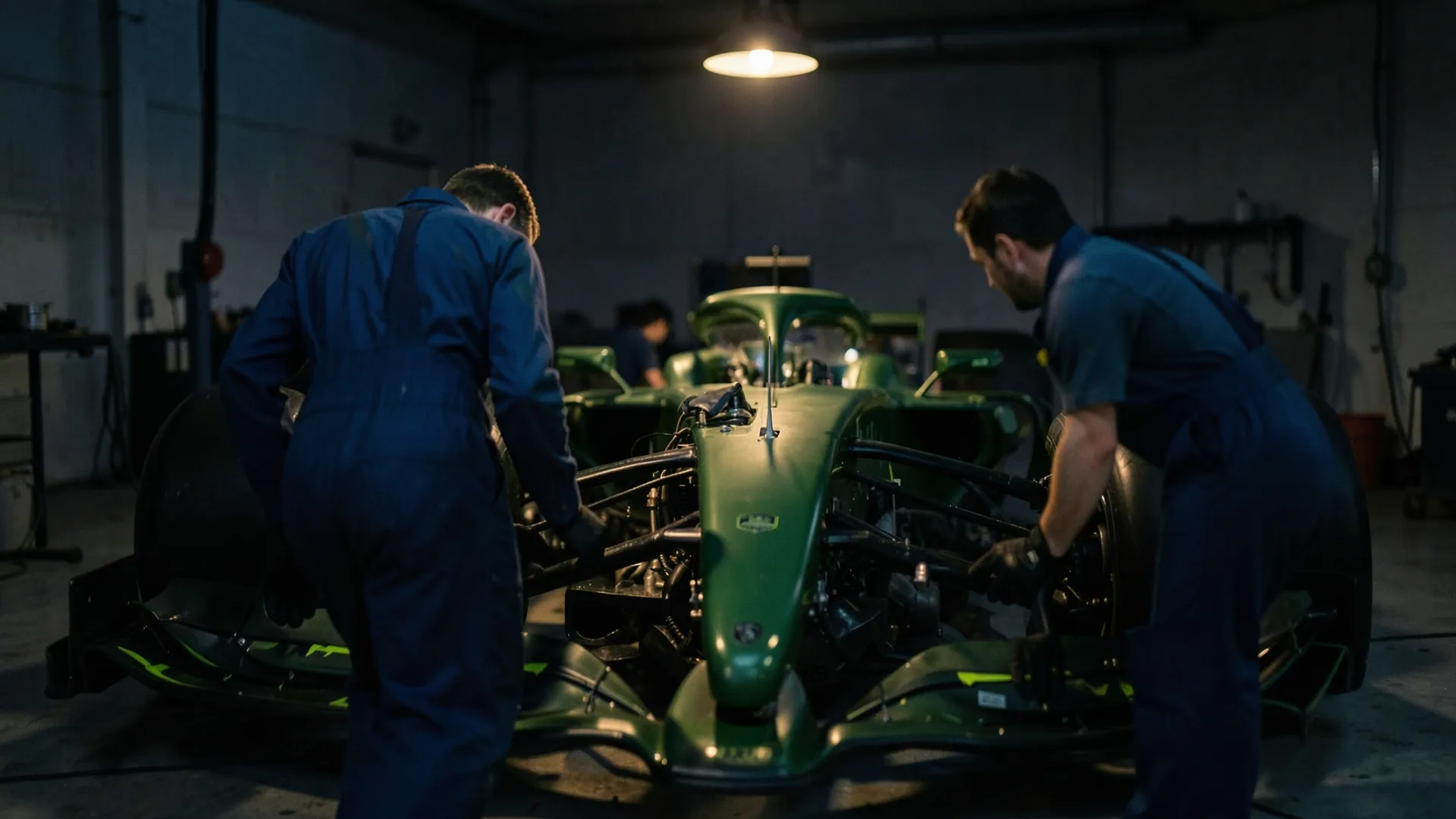
Koji Watanabe, the outgoing president and CEO of Honda Racing Corporation, has admitted that Honda “wasted two years” in developing the power unit it builds for Aston Martin. Coming from the man who has led Honda’s racing arm through its return to Formula 1, the remark amounts to a formal acknowledgement that the team’s problems in 2026 stem from Sakura rather than Silverstone. With six rounds left, Aston Martin have seven points and sit 10th of 11 in the constructors’ championship, ahead only of the debutant Cadillac squad.
What Watanabe actually conceded
Manufacturers rarely talk this way. The usual language of a struggling engine programme is about “learning”, “data” and “the next step”. Watanabe chose a far blunter word, and its significance lies in what it implies: the deficit is structural, rooted in decisions made long before the 2026 cars ran, rather than something a couple of upgrades will fix.
The timeline makes the admission easy to understand. Honda announced in October 2020 that it would leave F1 at the end of 2021. It kept supplying Red Bull and its sister team through HRC afterwards, but as a company it had stepped back from long-term investment in grand prix engines. It was not until May 2023 that Honda confirmed it would return as a full works supplier to Aston Martin for the new regulations. Watanabe has not been quoted on exactly which two years he means, but the period between deciding to leave and deciding to come back is the obvious place to look.
That matters because the 2026 power unit is the most radical change to F1 engines since the turbo-hybrid era began in 2014. The MGU-H has gone, electrical power now supplies roughly half the total output, and the cars run on fully sustainable fuel. Rivals that committed early had years to research combustion, battery chemistry and energy recovery for that formula. Honda effectively started its sprint after the others were well into theirs.
A grid that exposes the shortfall
The 2026 standings read as much like a ranking of power units as of chassis. Mercedes have 578 points and 11 wins, and Andrea Kimi Antonelli leads the drivers’ championship on 340 points, 102 clear of team-mate George Russell. McLaren, a Mercedes customer, are third on 339. Red Bull, now running the Red Bull Ford unit built in Milton Keynes, have 332 points and won in Singapore last weekend through Max Verstappen.
At the other end, the comparisons are just as revealing:
| Team | Power unit | Points |
|---|---|---|
| Audi | Audi (new works programme) | 23 |
| Williams | Mercedes customer | 12 |
| Aston Martin | Honda | 7 |
| Cadillac | Ferrari customer | 0 |
Audi are the uncomfortable benchmark. They are a brand-new engine manufacturer, building their first F1 power unit in Neuburg, and they have more than three times Aston Martin’s points total. Nico Hülkenberg added four more with eighth place in Singapore. Honda, whose engines powered Verstappen to four consecutive drivers’ titles between 2021 and 2024, is being outscored by a first-timer.
Singapore showed in miniature what that gap looks like over a race distance. Fernando Alonso started 20th and finished 16th, a lap down. Lance Stroll started 21st and retired. Meanwhile, Russell climbed from 19th to ninth and Isack Hadjar came through from 22nd to 10th to score a point. Singapore is a street circuit that tends to reward downforce and traction over outright power. If the Honda-powered cars cannot make progress there, the high-speed tracks to come offer little hope.
Under these regulations an engine deficit hurts more than it used to. With so much of the output electrical, a unit that harvests and deploys energy less efficiently can leave a car short of power on the straights. The driver is then left to choose between defending poorly and sacrificing energy elsewhere on the lap. A weaker power unit also forces the chassis team to run less wing to compensate for lost straight-line speed, which costs grip in the corners. The two problems compound one another.
The ghost of 2015 and the Red Bull irony
Anyone who followed F1 a decade ago will recognise this story. Honda rejoined in 2015 with McLaren, a season after the turbo-hybrid rules arrived, and spent three years well short of the pace. The low point came at Suzuka in 2015, when Alonso described his engine over the radio as a “GP2 engine” in front of Honda’s home crowd. The partnership ended acrimoniously after 2017.
The parallel goes beyond the poor results. In both cases Honda came to a new engine formula behind the companies that had prepared for it longest, and in both cases the deficit proved far harder to close than to open. The difference is that in 2015 Honda had at least been fully committed from the outset. This time, by Watanabe’s own account, part of the lost ground came from a period when the company had decided it was not going to be there at all.
Honda did eventually turn the McLaren failure into success. Its stint with Toro Rosso from 2018 gave it the space to develop away from the spotlight, and Red Bull won races from 2019 and titles from 2021. That recovery took around four years from the 2015 debut. Aston Martin’s owner, Lawrence Stroll, has spent heavily on a new factory and wind tunnel and on bringing in Adrian Newey, and he did not make that investment with a four-year rebuild in mind.
There is also an irony that will not be lost in Japan. Red Bull Powertrains was created to fill the gap Honda left, and its first engine has won races at the first attempt. Verstappen’s victory in Singapore was Red Bull’s second of the season. Honda’s withdrawal gave its former partner the motivation to become self-sufficient, and the decision to return came too late to stop the new rival getting ahead.
How much of the blame lies with the engine
Watanabe’s admission should not become a blanket excuse for the whole team. Aston Martin’s results do not suggest a good car let down only by its engine. Seven points from 17 rounds, with Alonso and Stroll often starting from the back three rows, points to problems across the package.
The honest answer is that no one outside the team can yet judge the chassis properly, because the power unit hides so much. That is the most damaging consequence of Honda’s shortfall. Newey’s first car designed under new regulations should have been the best measure of whether Aston Martin’s huge investment was working. Instead, the team have lost a year of clean comparison, and their engineers are developing aerodynamics while unsure how much of the lap-time deficit they are actually responsible for.
The championship table offers only cold comfort. Finishing near the bottom brings a more generous aerodynamic testing allowance for next year, but extra wind tunnel time does little for a team whose biggest weakness is the power unit. Williams are five points ahead in ninth, so climbing one place is possible over the last six rounds. It would change the prize money more than the picture.
Why 2027 is a test of Honda’s nerve
There are reasons to think next season can be better. The 2026 rules include a mechanism for manufacturers that fall significantly behind the best combustion engine, granting them additional development opportunities to prevent one supplier from running away with the formula. If Honda qualifies, as its results suggest it will, it will have more room to correct its design than a strict freeze would allow. A new engine also tends to improve sharply in its second season, as the basic architecture becomes reliable and the engineers learn how to extract performance from it.
The bigger question is institutional. Watanabe is leaving, and his admission reads in part like an outgoing executive clearing the record. His successor will inherit a programme that has been told publicly, by its own leader, that the company once lost faith in F1 and paid for it. The test is whether Honda’s management now commits the budget and patience the project needs, or whether a second season near the back revives the doubts that caused the problem in the first place.
Alonso turned 45 in July. He does not have years to wait, and Lawrence Stroll’s appetite for spending without results will not last indefinitely either. Austin next weekend will reveal little, because the deficit is too large for one race to show meaningful progress. The more telling evidence will come at the first race of 2027. If Aston Martin are still fighting Cadillac rather than Audi and the midfield at that point, Watanabe’s two wasted years will have become three, and the partnership will face the same question that ended McLaren-Honda.