
Mercedes Blame Unusual Car Behaviour for Antonelli Spin as Ferrari Rivalry Simmers
Mercedes have traced Andrea Kimi Antonelli's costly Interlagos spin to unusual car behaviour, while Verstappen's view of Ferrari's two-leader set-up and Newey's cost-cap stance frame the run-in to Las Vegas.
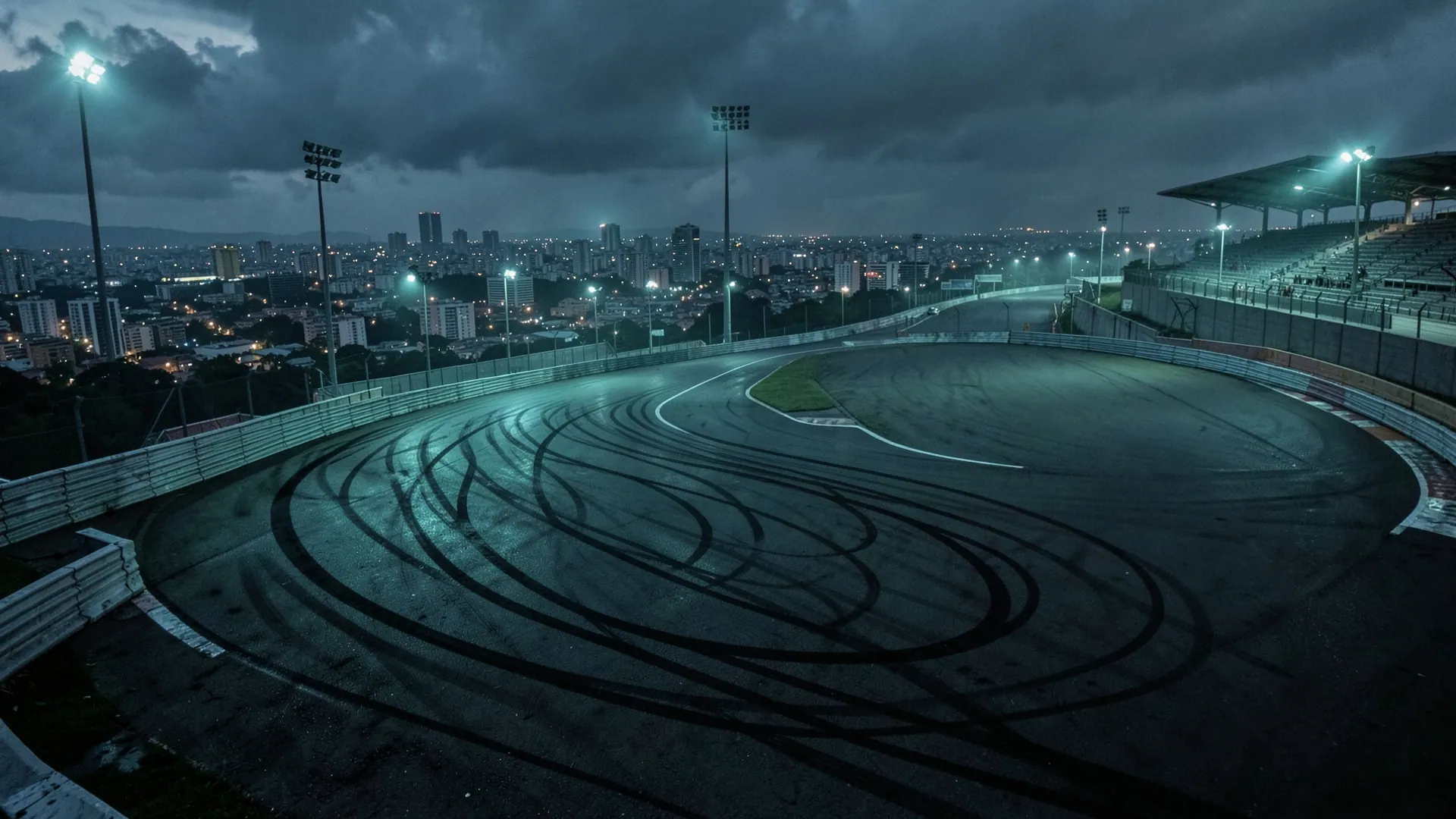
Mercedes have blamed “unusual” behaviour from Andrea Kimi Antonelli’s car for the spin that cost him a likely victory at Sunday’s Brazilian Grand Prix. Starting second, Antonelli looked ready to take the lead after Lando Norris made a poor getaway from pole. He finished fifth instead, while Norris recovered to win. With the drivers’ title settled and three rounds left, attention has moved to Ferrari’s internal politics, the fight for runner-up and how the cost cap treats the teams at the back.
The spin that spoiled Antonelli’s first race as champion
Interlagos was Antonelli’s first event since his title was confirmed in Mexico. Until the spin, the race had promised a champion’s flourish. Norris bogged down from pole, Antonelli had the run on him, and the lead was there to be taken. The spin ended that. Ten points for fifth hardly matters to a driver on 390 points and nine wins, 111 clear of Max Verstappen. What matters more is how Mercedes chose to explain it.
Deputy team principal Bradley Lord described the car’s behaviour as unusual, which points the finger at the machine rather than the man. There are two ways to read that. The generous reading is that Mercedes have found something in the data that the driver could not have anticipated, and they are saying so promptly. The more cautious reading is that a team with the title already won has every reason to protect its young champion’s confidence before the final three races and the winter.
Both can be true. Either way, a Mercedes doing something unexpected is a genuine engineering question for a team that has otherwise mastered the 2026 regulations. Twelve wins from 20 rounds, nine of them Antonelli’s, show how rarely the car has bitten. If the behaviour can be reproduced and understood, it is a useful lesson to take into 2027 development. If it cannot, it will nag at the engineers through the winter.
The day’s arithmetic was mildly unflattering. Mercedes scored 22 points from George Russell’s fourth and Antonelli’s fifth, while Red Bull and McLaren took 33 each. Even so, a 142-point lead over Ferrari, 652 to 510, leaves the constructors’ title a formality rather than a worry.
Russell credits Wolff for the lean years
Russell, meanwhile, has praised Toto Wolff’s way of steering Mercedes through what he called extremely tough times. That is a pointed reference to the ground-effect era, when Mercedes went from serial champions to a team searching for answers. The praise lands differently now that the team has a champion again. A team that stayed calm while losing has earned the right to stay calm when its champion spins out of the lead, and Mercedes’ measured explanation this week fits that pattern.
Norris wins from pole and still has a grievance
Norris’s victory was his third of the season and the most complete answer he could give to a poor start. Having lost the lead at the start, he regained it when Antonelli spun and then managed the race to the flag. On a day when only eight cars finished on the lead lap, that is a measure of how far clear the front of the field was.
The postscript is more interesting. Norris has said he disagrees with an FIA penalty that changed the result late on Sunday. A race winner contesting a stewards’ decision that did not cost him the win is unusual, and it says something about how drivers view consistency in the stewards’ room. Their complaint is rarely about any single decision; it is that they cannot predict how the next one will go. When the winner joins in, the argument gains a weight it would lack if it came only from the driver penalised.
For McLaren, Brazil underlined how uneven their year has been. Norris has 246 points and sits sixth. Oscar Piastri finished sixth from 10th on the grid and remains winless on 152 points, a gap of 94 between team-mates in the same car. Norris is 33 points behind Verstappen in the race for second, with at least 75 points on offer from the remaining Grands Prix alone. It is a long shot, but not an absurd one.
Verstappen’s charge from 21st reshapes the race for second
Verstappen started 21st and finished second. Interlagos has a history with him, as his 2024 victory from 17th showed, but this result rewards a different quality. With the field strung out and lapped traffic everywhere, he picked his way forward with the patience of a driver who knows exactly what the car can and cannot do.
Isack Hadjar’s third place from fifth was the quieter story and arguably the more telling one for Red Bull. A second car regularly finishing near the front is what the team has lacked for several seasons, and Hadjar’s 15 points lift him to 122, eighth in the standings. Together the pair matched McLaren’s haul exactly, leaving Red Bull 17 points ahead in third place in the constructors’ table, 415 to 398.
The battle for runner-up in the drivers’ standings is now the most open contest left:
| Position | Driver | Team | Points | Behind second |
|---|---|---|---|---|
| 2 | Max Verstappen | Red Bull | 279 | – |
| 3 | George Russell | Mercedes | 262 | 17 |
| 4 | Lewis Hamilton | Ferrari | 261 | 18 |
| 5 | Charles Leclerc | Ferrari | 249 | 30 |
| 6 | Lando Norris | McLaren | 246 | 33 |
Five drivers covered by 33 points with three races to go is a better contest than the title fight ever became. Verstappen is favourite on form. Russell has the fastest car. The Ferrari pair have the problem of racing each other as well as everyone else, which brings us to Maranello.
Ferrari and the cost of two leaders
Verstappen has weighed in on the skirmish between Lewis Hamilton and Charles Leclerc, saying that if he were running a team he would never sign two No 1 drivers. It is an unsurprising view from someone whose career has been built inside a team organised around him. It is also a view with plenty of history behind it.
Two-leader line-ups tend to work when the car is dominant enough to absorb the friction. McLaren in 1988 and Mercedes from 2014 to 2016 won titles while their drivers fought bitterly, because the margin to the rest of the field was large enough to pay for it. When the car is merely good, internal rivalry stops being a cost of doing business and becomes a cost to results. Ferrari are second in the constructors’ standings on 510 points, but they have only two wins all season, one each for Hamilton and Leclerc. That is the profile of a team whose drivers are taking points from each other rather than from Mercedes.
Brazil did little to help. Leclerc came through from 14th to eighth, Hamilton from 20th to ninth and a lap down, and Ferrari left with six points. The pair sit fourth and fifth in the standings, 12 points apart, with neither clearly established as the stronger bet for second.
The commentators line up
Damon Hill has returned to the Hamilton question, arguing that Ferrari face a significant decision if they are to win a championship. Ralf Schumacher, speaking to RacingNews365, took a different angle: he argued that a Verstappen-Mercedes partnership would not work and was critical of Hamilton’s leadership.
The opinions are louder than they are useful. Ferrari’s first problem is not the hierarchy. It is that their car has not been fast enough often enough for the hierarchy to decide titles. Naming a lead driver in a car that wins twice a year would solve very little. The better question for Ferrari is whether their 2027 car can produce a margin big enough to make a pecking order worth settling. Until it does, letting both drivers race, with clear rules of engagement, is the more defensible choice.
Newey’s cost-cap intervention and Aston Martin’s lonely season
Adrian Newey has backed another team boss’s suggestion that teams lower in the standings should receive extra relief from the cost cap. The sport already uses a sliding scale for aerodynamic testing, giving the teams at the bottom of the table more wind-tunnel and CFD time than those at the top. The proposal would apply similar logic to spending, which is a far bigger step.
Newey’s position is easy to understand. Aston Martin have seven points and sit 10th of 11 teams. Interlagos offered some encouragement, with Fernando Alonso starting eighth, but he finished 12th and a lap down, and the team’s other car was not classified. Another weekend without a point summed up a year in which promise has rarely turned into results.
The argument has merit, but it has limits:
- In favour: a capped sport freezes the order if the teams at the back cannot spend their way out. Extra headroom would give them a route to recovery that does not rely on rule changes.
- Against: it risks rewarding poor decisions, and it gives teams an incentive to sit just low enough in the table to qualify for relief.
- The practical obstacle: the teams at the front will resist anything that lets a rival with deep-pocketed ownership outspend them legally.
On balance, the case is strongest for a genuine newcomer such as Cadillac, still on zero points in its debut season, and weaker for an established team with a modern factory and wind tunnel. If the idea goes forward, its fate will depend on whether relief is tied to circumstances such as entry status rather than simply to finishing position.
Tricolour hair, a troublesome wrist and the fight for seventh
- Antonelli’s tricolour: the champion kept his promise to celebrate by spraying his hair in the colours of the Italian flag, a nod to Valentino Rossi. He is Italy’s first drivers’ champion since Alberto Ascari 73 years ago, so the theatre feels earned.
- Mick Schumacher’s wrist: the former Haas driver raced the whole 2026 IndyCar season with an injured wrist and has now made a decision on surgery. Completing a full season while carrying that injury deserves more credit than it has received.
- The Middle East finale: a RaceFans reader has welcomed F1’s decision to try to hold its final races in the Middle East. Until the sport confirms that both rounds will go ahead, the run-in after Las Vegas carries some uncertainty.
- Seventh in the constructors’ table: Haas lead Audi by 31 points to 28. Nico Hülkenberg’s single point for 10th narrowed the gap, while Oliver Bearman dropped from sixth on the grid to 17th. Three points is one good afternoon either way.
- Formula E Gen4: Andretti have revealed their livery for the new era, adding to the build-up to the electric series’ biggest technical reset.
- Las Vegas on 22 November: the long straights and cold track should suit Mercedes’ strengths. A clean Antonelli win there would answer the Interlagos questions faster than any engineering briefing, and Verstappen will need a podium to stop Russell, in the faster car, from eating into his 17-point cushion.