
Mercedes Reviews Brazil Slump as Verstappen Leads Tight Fight for Runner-Up
Mercedes has investigated its first podium-free race of 2026, Max Verstappen's charge from 21st has strengthened his hold on second, and Lewis Hamilton faces criticism over his public frustrations with Ferrari.
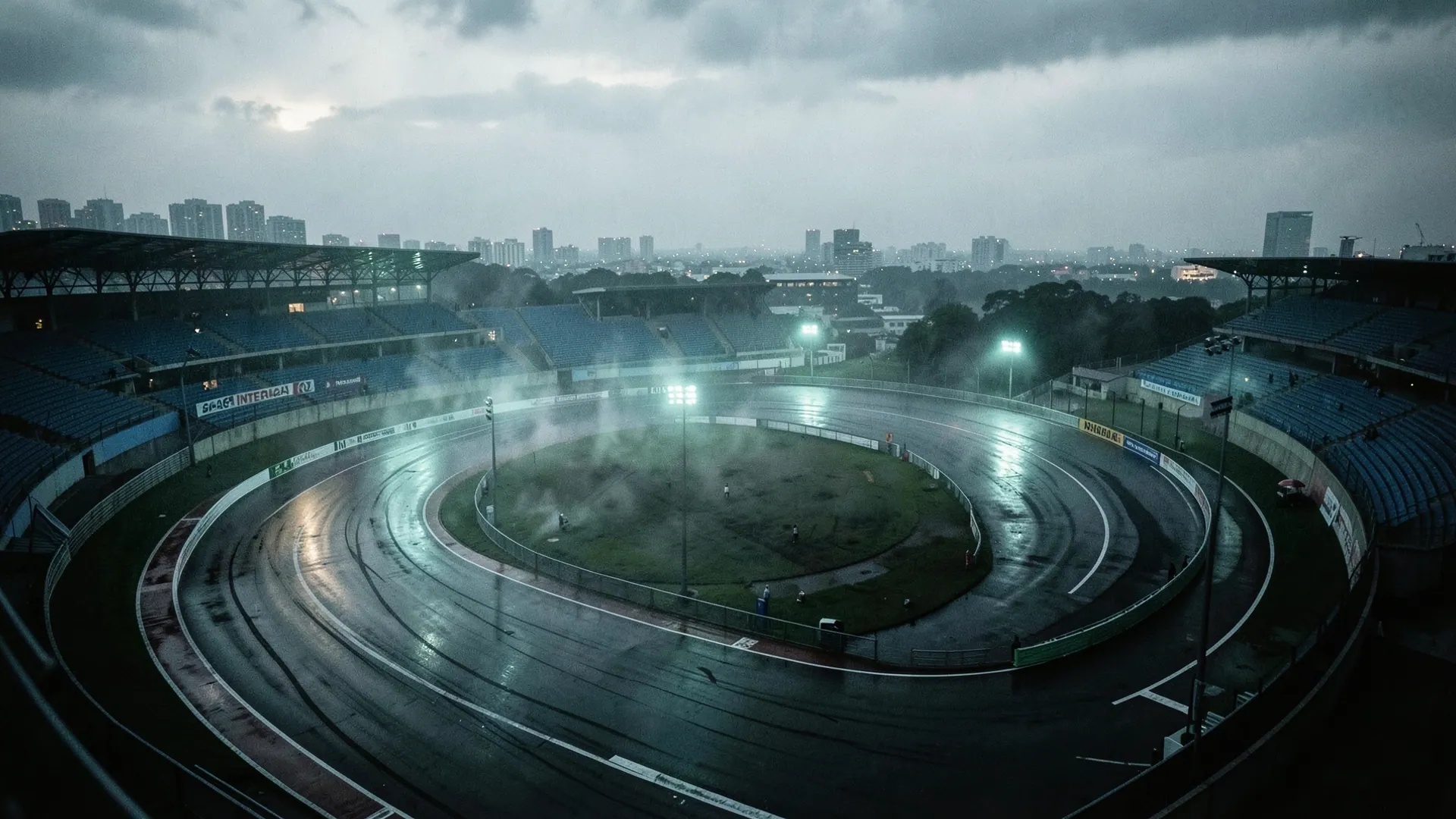
Mercedes has published the findings of its investigation into the Brazilian Grand Prix on 8 November, where neither W17 reached the podium for the first time in 2026. The review comes in the same week that Toto Wolff explained when he knew Andrea Kimi Antonelli would be champion, a title the 20-year-old secured in Mexico City at round 19. With Las Vegas on 22 November and three rounds left, the remaining questions are about the minor placings, reputations and what each team takes into 2027.
Why Interlagos stung the new champions
On paper, Brazil was a minor setback. Antonelli started second and finished fifth. George Russell climbed from seventh to fourth. Between them they still scored 22 points. But Mercedes has won 12 of the 20 rounds this year, and that record now sets its standards, not an ordinary points haul. Finishing behind Lando Norris and both Red Bulls, one of which started 21st, at a circuit where it had qualified on the front row was enough to prompt a proper investigation rather than a shrug.
There is a sound reason for that. The constructors’ championship is effectively beyond doubt: Mercedes leads Ferrari by 142 points with three rounds to run. But an unexplained weakness is something to close down, not carry. More importantly, the 2026 rules are only in their first year. Whatever caught the W17 out at Interlagos, whether set-up, tyre behaviour or something more fundamental, may still be in the car’s DNA next season. Teams that dominate the first year of a new formula usually stay ahead by understanding their bad weekends as thoroughly as their good ones.
Wolff’s verdict on Antonelli
The broader picture remains overwhelmingly positive for Brackley. Antonelli has nine wins and 390 points, a lead of 111 over Max Verstappen. He is the youngest world champion in the sport’s history, comfortably younger than the 23-year-old Sebastian Vettel in 2010. Wolff’s reflections on when he became convinced of the outcome inevitably carry a note of vindication. Promoting Antonelli straight from Formula 2 to replace Lewis Hamilton for 2025 was a significant gamble, and it has paid off sooner than almost anyone predicted.
RacingNews365 describes this season as the end of a painful five-year wait, and the framing fits. The team that won eight consecutive constructors’ crowns, the last of them in 2021, then spent the ground-effect era searching for answers. As in 2014, it has returned to the top by reading a new rulebook better than anyone else.
Verstappen’s drive from 21st tightens his grip on second
The standout performance in Brazil came from the back of the grid. Verstappen started 21st and finished second, an 18-point afternoon that strengthened his hold on the runner-up position. It also showed what Red Bull has become in 2026: not quick enough to fight Mercedes every weekend, but capable of extracting results when its lead driver has clean air to work with. Isack Hadjar’s third place, from fifth on the grid, was the young Frenchman’s best showing of the season and took him to 122 points.
Behind Antonelli, the order is remarkably tight:
| Position | Driver | Team | Points | Gap to second |
|---|---|---|---|---|
| 2 | Max Verstappen | Red Bull | 279 | – |
| 3 | George Russell | Mercedes | 262 | 17 |
| 4 | Lewis Hamilton | Ferrari | 261 | 18 |
| 5 | Charles Leclerc | Ferrari | 249 | 30 |
| 6 | Lando Norris | McLaren | 246 | 33 |
Five drivers are separated by 33 points, with as many as 75 still available from grands prix alone. Second place is a footnote in the record books, but it matters inside teams, and it will shape how several of these seasons are remembered.
Russell’s reset
Nobody has more riding on that order than Russell. He has three wins and sits third, yet he is 128 points behind a team-mate in the same car. That gap defines his year. Russell has said he is looking to Hamilton as an example as he plans his recovery for 2027. Hamilton’s own career offers the obvious precedent: beaten by Nico Rosberg in 2016, he responded with four titles in a row. The lesson from that period was less about raw speed than about consistency and refusing to let a bad weekend become a bad month. Russell’s 2026 has suffered most on the weekends when he lost touch with Antonelli early, and that is the area he needs to address.
Norris wins, and explains McLaren’s trade-off
Norris converted pole into victory at Interlagos, his third win of the season, and in the same week he explained why McLaren accepted a compromised 2026 in pursuit of a larger long-term goal. The reigning champion has spent much of this year in an unusual position: competitive enough to win occasionally, nowhere near consistent enough to defend his title.
The numbers show the cost. McLaren sits fourth in the constructors’ championship on 398 points, 17 behind Red Bull. Oscar Piastri, who recovered from 10th to sixth in Brazil, has 152 points and no wins. Few would have predicted that from a team that ended 2025 as the benchmark.
The logic of a trade-off is easier to see than to accept. Under a cost cap, every hour of wind-tunnel time and every pound spent on this year’s car is unavailable for next year’s. In the first season of a new formula the development curve is steep, and a team that pours resources into a fundamentally limited concept can spend a whole cycle chasing its tail. McLaren appears to have judged that its 2026 package did not justify that investment.
My view is that the decision is defensible but not yet proven. Brazil showed the car can still win when conditions suit, which partly supports McLaren’s argument and partly complicates it: a team three rounds from the end of a written-off season should not be taking poles. The real test is March. If McLaren starts 2027 on terms with Mercedes, this year will be remembered as a sacrifice that worked. If not, it will look like an expensive title defence that never took place.
Hamilton, Ferrari and the Schumacher comparison
Hamilton’s Brazil was difficult. He started 20th and finished ninth, a lap down, collecting two points. That leaves him a single point behind Russell and 12 ahead of Charles Leclerc. It comes alongside fresh criticism of how he has aired his frustrations with Ferrari in public, with one critic invoking Michael Schumacher, who rarely voiced grievances about the team outside its walls.
The comparison has some substance. Schumacher joined a struggling Ferrari in 1996 and did not win a title with it until 2000. Throughout those years, the team built around him, with Jean Todt, Ross Brawn and Rory Byrne, kept its disagreements largely private. That discipline was part of how Maranello turned itself around.
There are two caveats. First, Schumacher arrived at 27 with years ahead of him. Hamilton is 41, and his sense of urgency is understandable. Second, Ferrari’s season is better than the noise around it suggests. The Scuderia is second in the constructors’ championship on 510 points, with one win apiece for its drivers, a respectable return in the first year of a new formula.
The fair criticism is about effect rather than motive. Public frustration rarely changes what happens in the wind tunnel, but it does shape the story around a team, and Ferrari has always been vulnerable to that story becoming a distraction. Hamilton has earned the right to be candid. Whether candour serves his final chapter is a different question, and his best answer would be to overhaul Russell for third and hold off Leclerc over the last three rounds.
Aston Martin’s Honda problem and Newey’s long view
At the other end of the grid, Honda has acknowledged that the failure behind Lance Stroll’s retirement in Brazil was a problem it had seen before. That admission matters more than one lost result. A recurring fault means the root cause has not been fixed, and in the first year of a works partnership under new power-unit rules, reliability is the foundation on which everything else depends. Fernando Alonso started eighth and finished 12th, a lap down. Aston Martin is 10th in the constructors’ championship with seven points, behind Williams and ahead only of newcomers Cadillac.
Adrian Newey, meanwhile, sees parallels between this start and his early years at Red Bull. The comparison is reasonable. Newey joined Red Bull in 2006, and the team did not win a race until 2009. His first cars there were stepping stones while the team built the facilities, staff and processes that later produced four consecutive double titles.
The 2027 downforce fight
Aston Martin’s patience will depend partly on how the regulations evolve. Mercedes’ technical director has warned that teams will not “lie down” over the downforce cuts planned for 2027, a reminder that the rulebook is still being finalised a year into the new formula. His team has obvious reasons to resist changes that might erode its advantage. A team led by the sport’s most successful aerodynamicist has equally obvious reasons to welcome any reset in the aerodynamic rules.
The governing body needs to settle the 2027 package soon. Late changes favour the organisations with the greatest engineering capacity to react, and they make long-term projects such as Aston Martin’s harder to plan. Newey’s track record suggests the team will eventually come good. Honda now needs to show it can stop the same failure happening twice.
Loose ends before Las Vegas
- Audi’s Interlagos penalty: Audi has set out its reasoning after Nico Hülkenberg was penalised in Brazil, where he started fourth and finished 10th, a lap down. The single point he kept could prove significant, as Audi trails Haas by three points in the fight for seventh.
- Pérez’s departure: Sergio Pérez has confirmed when he will retire, citing his four children as his priority. He finished 18th in Brazil from 22nd on the grid, and Cadillac is still waiting for its first point.
- FIA presidency rules: Mohammed Ben Sulayem is pursuing a controversial change to a key rule governing the FIA presidency. Any move that alters how the governing body is led deserves close scrutiny from teams and member clubs alike.
- Lawson’s missed opportunity: Liam Lawson started third and finished seventh. RB F1 Team is comfortable in fifth on 114 points, but a podium was within reach.
- Merchandise on the Strip: Mercedes and Audi have launched adidas collections for Las Vegas, named “Neon Lights” and “After Hours” respectively, a small sign of how commercially important the event has become.
- Las Vegas, 22 November: The night race means overnight viewing for UK audiences. With Antonelli’s title already decided, the more significant contest is behind him, and Verstappen, who scored 18 points from 21st on the grid in Brazil, is best placed to finish the year as runner-up.