
Newey Backs Sliding-Scale Cost Cap Relief as Aston Martin Languishes on Seven Points
Adrian Newey has supported giving teams lower in the standings extra room under the cost cap, a notable intervention from a figure whose Aston Martin team has scored seven points all season.
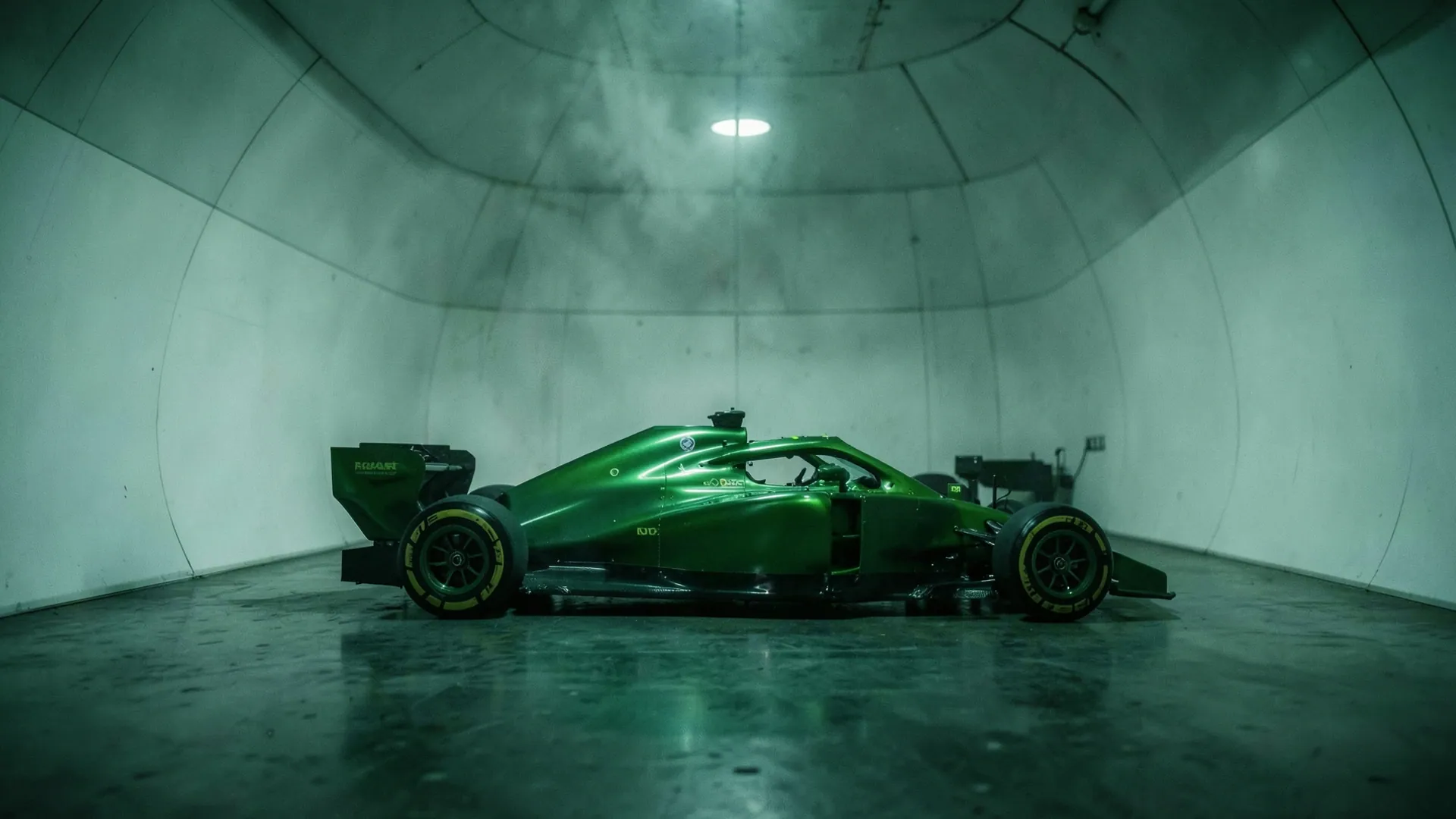
Adrian Newey has backed a proposal that teams finishing lower in the championship should receive additional headroom under Formula 1’s cost cap. According to GPfans, Aston Martin’s managing technical partner endorsed the suggestion after another team boss raised it. The idea is not new, but Newey’s support for it is. It also comes at a moment when his own team sits 10th of 11 in the constructors’ standings with seven points from 20 rounds.
Self-interest is the obvious charge, and it should be weighed. It is not the whole story, though. When the most decorated designer of the modern era says the financial rules are making recovery too hard, the paddock tends to listen. The proposal also points at a real problem the cost cap was never designed to solve.
Seven points and a lapped Alonso
Brazil showed the scale of Aston Martin’s difficulty. Fernando Alonso qualified eighth at Interlagos, a respectable result for a team in Aston Martin’s position, but finished 12th and a lap down. That was not unusual on Sunday, because only the top eight finishers completed the full race distance. Lewis Hamilton, ninth for Ferrari, was lapped, as was everyone behind him.
Aston Martin’s isolation goes deeper than one race. The constructors’ table shows how stretched the field has become in the first year of the new regulations:
| Position | Team | Points |
|---|---|---|
| 1 | Mercedes | 652 |
| 2 | Ferrari | 510 |
| 3 | Red Bull | 415 |
| 4 | McLaren | 398 |
| 5 | RB F1 Team | 114 |
| 6–11 | Alpine, Haas, Audi, Williams, Aston Martin, Cadillac | 147 combined |
Mercedes alone have scored more than every team from fifth to 11th put together. RB, at the head of the chasing pack, are 284 points behind McLaren in fourth. Below them, the six remaining teams have 147 points between them. Cadillac, in their debut season, have none. Williams, who arrived in 2026 with genuine ambition, have 12.
Aston Martin’s position is the most striking of all because of what was invested to avoid it. The team has a new factory, a new wind tunnel, Honda as a works engine partner from this season, and the first car shaped by Newey from the outset under a fresh rule set. Seven points is a poor return on all of that. The team’s diagnosis appears to be that resources alone cannot buy a quick recovery when the rules limit how fast those resources can be deployed.
The sliding scale already in the rulebook
A sliding scale based on championship position would not be a radical departure. F1 already uses one, just not in the financial regulations.
Since 2021, the Aerodynamic Testing Restrictions have allocated wind tunnel runs and CFD simulations in reverse order of the constructors’ championship. In the last regulation cycle the champion team received 70% of the baseline allocation, with the share rising in steps to 115% for the team finishing last. The principle was explicit: the teams furthest behind should have the most tools to catch up. Prize money is also distributed by finishing position, although in that case it favours the front.
The cost cap, introduced in 2021 at $145 million, sits outside that logic. Everyone works to the same ceiling. The aim was to stop the richest teams turning spending power into permanent advantage, and on that measure it has largely worked. Red Bull’s breach of the 2021 cap, which cost the team a $7 million fine and a 10% cut to its aerodynamic testing allowance, showed the FIA was willing to enforce it.
A flat ceiling has a side effect, though. It treats a team building a competitive car for the first time the same as a team refining a car that already wins. Under the ceiling, a front-runner can spend on marginal gains. A backmarker has to fund fundamental redesigns, extra staff and new correlation work to understand why its tools are giving the wrong answers. Each dollar is worth more at the back because there is so much more ground to recover.
That is the strongest version of the case Newey is endorsing. The aerodynamic sliding scale gives a struggling team extra wind tunnel time, but without matching financial room to hire the people and build the parts needed to use it, part of that advantage is lost.
The case against rewarding the back
The objections are substantial, and the teams at the front will press them hard.
The first is moral hazard. A financial bonus tied to a poor result rewards failure. It also weakens the cost cap’s main purpose of holding spending close to level. If a team can finish a season 10th and earn more spending room for the next, the cap stops being a fixed ceiling and becomes a variable one, with obvious scope for complaints and disputes.
The second concerns who would actually benefit. Several teams at the back are not limited by the cap at all; some have historically spent below it because their budgets do not reach it. For those teams, extra headroom is worth nothing unless the money exists to use it. The teams that could make use of the extra room are those with wealthy backers and well-funded facilities, and Aston Martin, backed by Lawrence Stroll, is a clear example. A rule presented as help for the struggling could mainly benefit rich teams that happen to be struggling, which is a different thing.
The third is governance. Changes to the financial regulations need agreement among the FIA, Formula One Management and the teams. Mercedes, with 12 wins and a 142-point lead over Ferrari in the constructors’ championship, have no reason to support a rule that would let their rivals spend more. Ferrari, Red Bull and McLaren hold the next three places and would lose out under any scale that rewards a lower finish. If those four teams vote together, they form a bloc that is very hard to override.
There is also the question of timing. Any relief would most likely apply from 2027 at the earliest. By then the field may have converged naturally, as it usually does once a new rule set matures. This season’s spread is partly a feature of a major regulation change, when a few teams find the right concept early and others do not. Structural financial rules written in response to a single season risk solving a problem that is already starting to shrink.
Where relief would genuinely help
Our view is that the principle is sound, but the mechanism matters a great deal.
A broad sliding scale on operating spending, with each place in the championship worth a few million more, would cause more trouble than it solves. It would be hard to police and easy to criticise as rewarding poor performance, and it would mainly help the teams that already have the most money outside the cap.
A narrower version deserves serious consideration. Relief could be limited to the first two or three seasons of a new regulation cycle, when gaps are largest and catching up is most expensive. It could be restricted to spending on correlation and development tools, mirroring the logic of the aerodynamic scale, rather than general operating costs. It could also be set as a fixed allowance rather than scaling with every place, so that finishing 11th does not become a financial strategy.
Such limits would answer the moral hazard argument while recognising the reality Newey is pointing to. Seven points from a team with Aston Martin’s facilities cannot be put down to poor management alone. It shows how hard it is to recover from a wrong concept when every team has the same budget for the fix.
The proposal’s prospects depend less on Newey than on whether a team from the front decides that a closer field is worth the cost. Liberty Media has a strong commercial interest in that outcome: a Grand Prix in which only eight cars finish on the lead lap, as happened at Interlagos, is not the product it wants to sell. Expect the idea to reach the F1 Commission agenda over the winter. Expect, too, that it will pass only if it is narrowed to time-limited relief tied to a new regulation cycle, which is the form in which it makes the best sense.