
Sainz Hits Back After Alonso's 'Low Quality' Jibe at F1's Backmarkers
Fernando Alonso's criticism of driving standards among F1's backmarkers has drawn a pointed reply from Carlos Sainz, whose Williams team lead Aston Martin by five points in the fight for ninth.
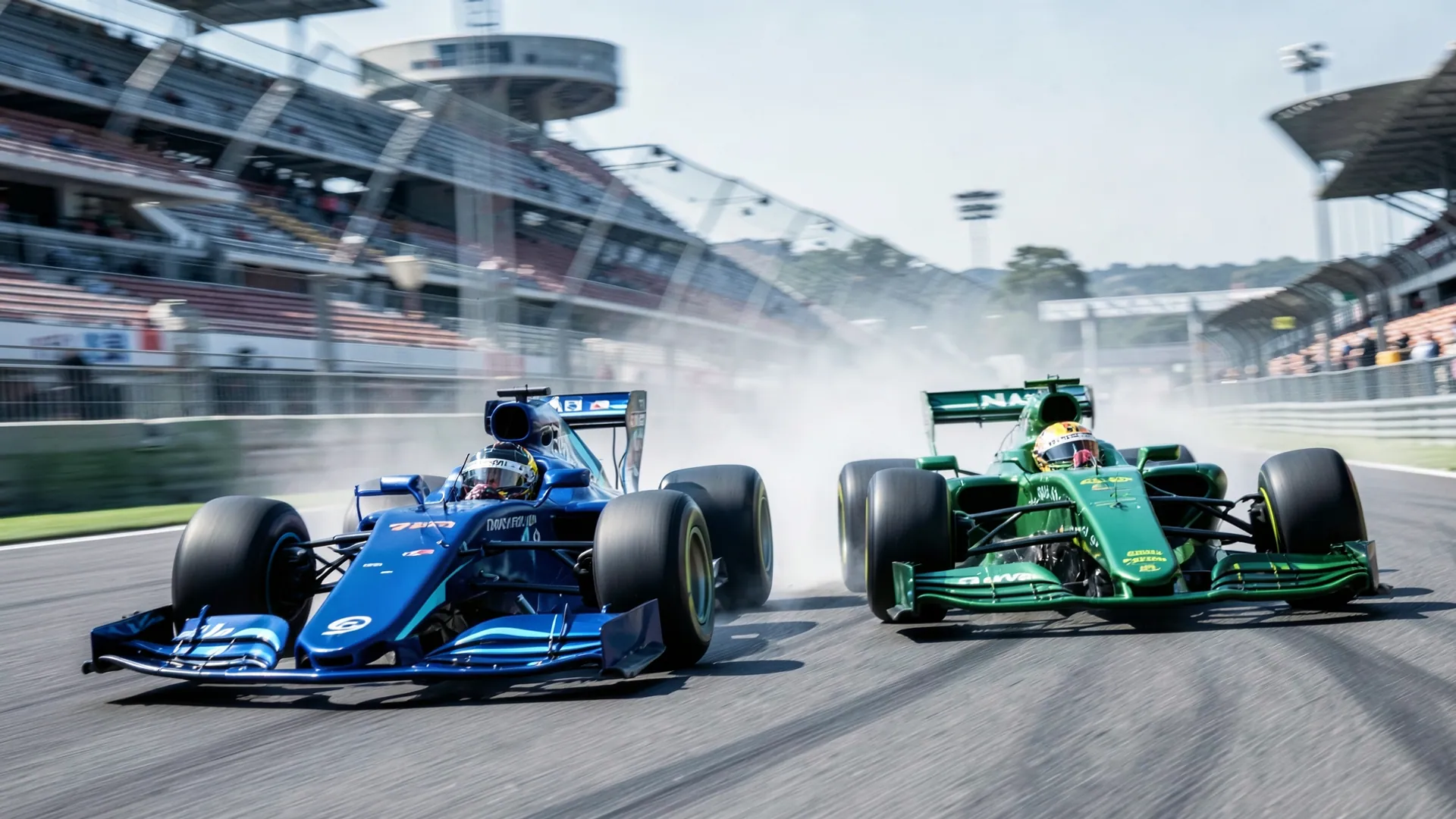
Carlos Sainz has hit back at Fernando Alonso after the two-time world champion criticised the standard of driving towards the back of the Formula 1 field, RacingNews365 reports. Alonso’s “low quality” jibe was aimed at the group he now races in most Sundays. Sainz spends his weekends in that same group and was not prepared to let the remark pass. Public disagreement between Spain’s two most successful active drivers is rare, and this one arrives with the Mexico City Grand Prix only days away.
Two Spaniards, one uncomfortable argument
Alonso and Sainz have long been close. Sainz belongs to the generation of Spanish drivers who grew up watching Alonso win titles with Renault in 2005 and 2006, and the older man has often spoken warmly of his compatriot. That history makes the exchange more notable. A barb from a peer is one thing. A barb from the driver you idolised as a boy, aimed at the group of cars you race in, is another.
Alonso’s words also carry particular weight. He is 45, has started more grands prix than anyone in the sport’s history, and has a long record of saying in public what others keep for the drivers’ briefing. When he describes the racing around him as low quality, stewards, team bosses and younger drivers all hear it.
Sainz has his own standing on this subject. He became a director of the Grand Prix Drivers’ Association in 2025, which gives him a formal interest in how driving standards are discussed and enforced. His pushback therefore reads less as a personal grievance than as a defence of the drivers he represents.
Five grand prix winners behind the lead lap
The United States Grand Prix shows why “low quality” is an awkward description. Nico Hülkenberg was the last driver on the lead lap, in 11th. Behind him, the lapped and retired cars were driven by:
| Pos | Driver | Team | Started |
|---|---|---|---|
| 12 | Arvid Lindblad | RB F1 Team | 14 |
| 13 | Gabriel Bortoleto | Audi | 21 |
| 14 | Esteban Ocon | Haas | 15 |
| 15 | Lance Stroll | Aston Martin | 22 |
| 16 | Fernando Alonso | Aston Martin | 12 |
| 17 | Alexander Albon | Williams | 17 |
| 18 | Carlos Sainz | Williams | 16 |
| 19 | Sergio Pérez | Cadillac | 18 |
| Ret | Valtteri Bottas | Cadillac | 19 |
That group includes five grand prix winners: Alonso, Sainz, Pérez, Bottas and Ocon. Between them they have more than 50 victories. Albon, Stroll and Hülkenberg have several hundred starts between them. Whatever the racing at the back of the 2026 grid suffers from, inexperience is not the cause. The back of this field is arguably the most decorated it has been in years, largely because Cadillac’s arrival brought Pérez and Bottas back after a season away.
Austin did not go well for the critic. Alonso started 12th, two places outside the points-paying positions, and finished 16th, a lap down. His team-mate Stroll started 22nd and finished ahead of him. Sainz had a quieter afternoon, dropping from 16th on the grid to 18th, with Albon just ahead in the sister Williams. The two Spaniards finished two places apart, in cars from teams separated by five points, and that is where the tension comes from.
Why the 2026 rules make the back of the field so ragged
There is substance in Alonso’s frustration, even if his diagnosis is wrong. Racing in the lower half of the order this season has often looked scrappy. The reasons are mostly mechanical and economic rather than a matter of talent.
The first is the power unit. Under the 2026 regulations, electrical energy supplies a far larger share of total output. As a result, two cars on the same piece of track can be in very different deployment states. A driver with a full battery closes on one who has run dry at a rate that would have been unusual a few years ago, and the defending driver has less time to react. Moves that look clumsy from outside are often the product of a large speed difference that has opened up within a few hundred metres. Teams with weaker packages also tend to have less refined energy management, which widens the gaps between the cars that end up fighting each other at the back.
The second is what each position is worth. In Austin, all 10 points-paying places went to Mercedes, Ferrari, Red Bull, McLaren, RB and Alpine. Unless a frontrunner retires, the drivers from Haas, Audi, Williams, Aston Martin and Cadillac are fighting over 11th and below. When finishing 14th rather than 16th earns nothing on the day, the downside of a risky move feels small. Yet a place gained can leave a driver in line to inherit points if cars ahead drop out, and the constructors’ table can come down to a countback. Little to lose, and occasionally a lot to gain, is a recipe for optimistic lunges.
The third is that the stakes at the bottom of the constructors’ championship are real. Each place is worth several million dollars in prize money, and the table is tight:
- Haas: 30 points (7th)
- Audi: 23 points (8th)
- Williams: 12 points (9th)
- Aston Martin: 7 points (10th)
- Cadillac: 0 points (11th)
Williams lead Aston Martin by five points with five rounds to run. Alonso’s and Sainz’s teams are therefore direct rivals for ninth place, and a single top-10 finish for either could swing it. That context matters. A complaint about driving standards from one side of a close fight will inevitably be heard by the other as gamesmanship.
What Alonso and Sainz are each protecting
Alonso’s season explains his mood. Aston Martin’s ambitious project, with Adrian Newey on board and Honda supplying works power from this year, was meant to give him a final competitive car. Instead, the team has seven points after 18 rounds. Alonso has always vented when a car falls short of its promise. His “GP2 engine” radio message at Suzuka in 2015, during McLaren’s troubled reunion with Honda, is the best-known example. Criticising the standard of the cars around him is a more outward-facing version of the same instinct. It is also less helpful. It shifts attention from Aston Martin’s performance to other people’s driving, and it invites exactly the kind of response Sainz has given.
Sainz’s frustration runs on a different track. Williams finished fifth in the 2025 constructors’ championship, and Sainz took a podium in Baku that year. The team’s 12 points this season are a step back from that platform rather than progress built on it. He is in no mood to be lumped in with a description of the back of the field as substandard when he regards himself, with some justification, as a driver temporarily in the wrong car. He won the Mexico City Grand Prix for Ferrari only two years ago.
On the merits, Sainz has the better of the argument. If Alonso believes particular drivers are making dangerous moves, the drivers’ briefing and the stewards’ room exist for that purpose, and Sainz, as a GPDA director, is well placed to take the point there. A generalised “low quality” verdict, delivered through the media about colleagues with this much experience, misreads a problem rooted in regulations and money. It also makes the next close battle between the two of them harder to judge on its own terms.
Alonso is not wrong that the racing at the back has been untidy. He is wrong about why. And as the most senior figure on the grid, he is better placed than anyone to push for the fixes that would actually help: clearer guidance on defending against large closing speeds, and consistent stewarding of the battles nobody sees on the world feed.
Mexico City’s long run to Turn 1 will test both
The timing is unkind. At the front, Andrea Kimi Antonelli’s 123-point lead over George Russell with five rounds to run means the title could be settled within weeks. As that contest fades, more attention will fall on the fights further down the order. The Autódromo Hermanos Rodríguez has one of the longest runs from the grid to the first braking zone on the calendar, and under this year’s energy rules a long tow and a full battery can produce big speed differences into Turn 1. That is exactly the scenario in which backmarker battles turn messy.
If the Austin grid is any guide, an Aston Martin and a Williams will start close together on Sunday, with ninth in the constructors’ championship at stake and an unresolved public argument hanging over both garages. The more useful outcome would be for Alonso and Sainz to settle it in the drivers’ briefing on Friday. If they meet at Turn 1 instead, expect the stewards’ verdict on that one incident to carry more weight in this debate than anything either man says before the race.