
Baku's Mega Straight Set to Test Teams' Setup Strategy Again
The Baku City Circuit's unique long straight forces teams into difficult aerodynamic and strategic trade-offs ahead of the race.
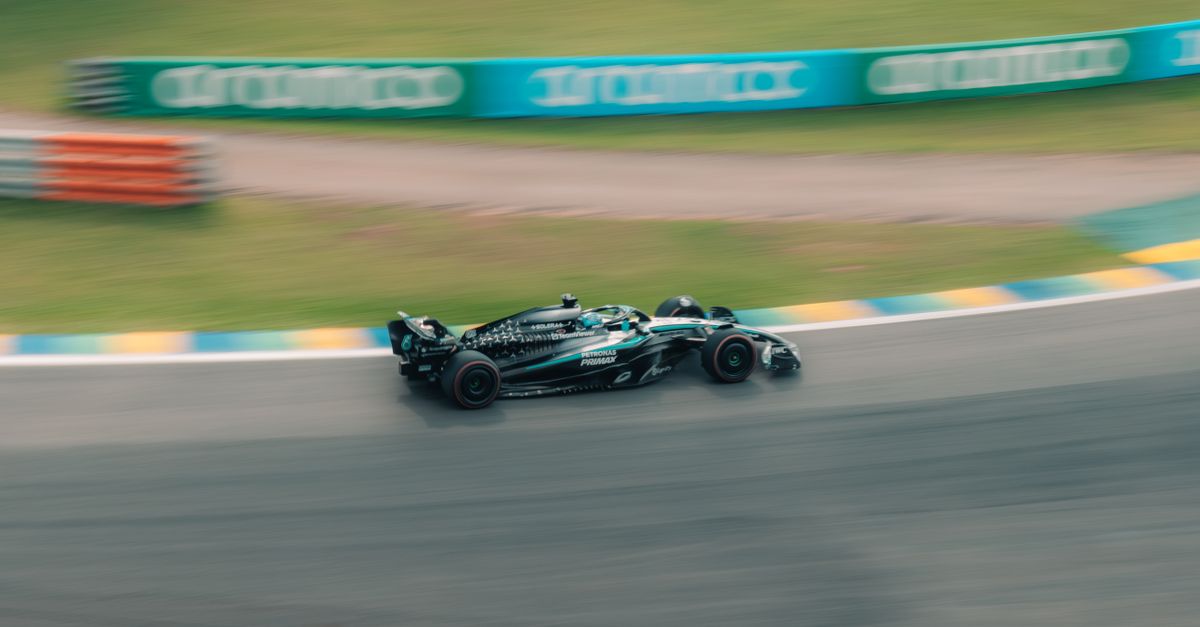
Baku’s Mega Straight Set to Test Teams’ Setup Strategy Again
Every year Formula 1 arrives in Baku and every year the same argument resurfaces on the pit wall: how little wing can a team dare to run down the longest straight on the calendar without being embarrassed everywhere else. The Baku City Circuit’s back straight, stretching for well over a kilometre and a half from the exit of the final chicane-like sequence to the braking zone for Turn 1, is unlike anything else the sport visits — a flat-out blast that rewards a slippery car more than raw cornering ability, and which punishes any team that gets its aerodynamic philosophy wrong for the weekend.
What’s Happening
The core issue is a familiar one in Baku, but it never gets any easier to solve. The circuit’s layout is essentially two circuits stitched together: a tight, twisting, low-speed section through the old town, full of ninety-degree turns and unforgiving walls, followed by that enormous straight along the seafront where cars will spend closer to twenty seconds at close to full throttle than at almost any other venue on the calendar. A setup that suits one half of the lap actively hurts the other. Load the car up with downforce to attack the castle section and the medium-speed corners, and the straight-line speed deficit down that back straight becomes painfully exposed, both in outright lap time and in the DRS-assisted overtaking battles that Baku so reliably produces. Strip the wing off to chase top speed, and the car becomes a handful through the slower corners, eating away at tyres and driver confidence in equal measure.
This is not a new dilemma for the teams, but it remains one of the trickiest to call correctly, because Baku’s characteristics don’t map cleanly onto any other circuit on the calendar. Teams cannot simply lift a setup window from Montreal or Spa and expect it to translate, because nowhere else combines such a low-speed infield with such an extreme high-speed section. The compromise each team reaches — and how far they’re willing to lean towards one extreme or the other — will do a great deal to shape both qualifying and the race itself.
Why It Matters
The stakes attached to getting this wrong are higher in Baku than they might be elsewhere, for a simple reason: the walls are close, the margin for error is minimal, and a car that feels unstable under braking at the end of a 1.5-second-plus flat-out run is a car that will eventually find the barriers. Baku has a well-earned reputation for producing red flags and safety cars, and a significant proportion of those incidents trace back to exactly this compromise — drivers arriving at Turn 1 or Turn 3 carrying more speed than their chassis is comfortable shedding, because the setup has been leaned towards straight-line efficiency.
There’s also a pure lap-time dimension to this. Because so much of the lap is spent at maximum velocity, the straight-line speed differential between a low-downforce and a high-downforce setup is magnified far beyond what it would be at a circuit with a more conventional balance of corners and straights. Get the wing level right and a team can find genuine tenths without touching the mechanical setup at all — which is precisely why so much of Friday practice in Baku is historically spent not on tyre work or race simulations, but on straight-line speed testing and DRS-effect evaluation.
Then there’s the strategic overlay. DRS trains are common at Baku precisely because the straight is long enough for a car with a small pace deficit to still lose meaningful time even with the wing open, while a car that’s found extra straight-line speed through its setup can make overtakes that would be impossible elsewhere. That interacts with tyre strategy too: a car that’s been set up “long” for the straight will often be gentler on its rear tyres through the fast, committed corners, which can open up different pit windows compared to a rival who has prioritised cornering grip.
The Wider Context
Baku has always occupied an odd niche in the modern calendar. It’s nominally a street circuit, grouped in the same bracket as Monaco and Singapore, yet its demands are almost the inverse of those two. Monaco rewards maximum downforce and punishes anyone who compromises cornering grip for straight-line speed, because there simply isn’t a straight long enough to matter. Baku does the opposite, asking teams to essentially build a low-drag qualifying setup and then live with the consequences through a genuinely tricky infield section. It’s this contradiction — a street track that behaves aerodynamically like a power circuit — that has made it such a compelling watch since it joined the calendar, and why it has thrown up such unpredictable results.
It’s also worth remembering that this compromise doesn’t just vary team to team, it varies car to car within the same field. A team whose 2025 challenger is fundamentally efficient — generating downforce without excessive drag penalty — can afford to run a bit more wing and get the best of both worlds, while a draggier design is forced into a starker trade-off. Baku, in other words, doesn’t just test setup philosophy for the weekend; it exposes underlying aerodynamic efficiency in a way few other circuits do.
GP Headlines’ Take
The predictable headache Baku produces every year isn’t a flaw in the circuit — it’s precisely what makes it worth watching. A track that forces genuinely divergent setup philosophies onto the grid, rather than everyone converging on the same downforce level, is a track that rewards clever engineering judgement rather than just outright car performance. Expect a spread of approaches from low-drag specialists to those unwilling to sacrifice cornering security, and expect that spread to matter more here, in both qualifying gaps and Sunday’s overtaking, than it would almost anywhere else on the calendar.