
Antonelli's Monza Penalty and the Cold Calculus of F1 Reliability Rules
Wolff's blunt stance on Antonelli's grid penalty highlights how F1's technical regulations show no mercy even for home heroes.
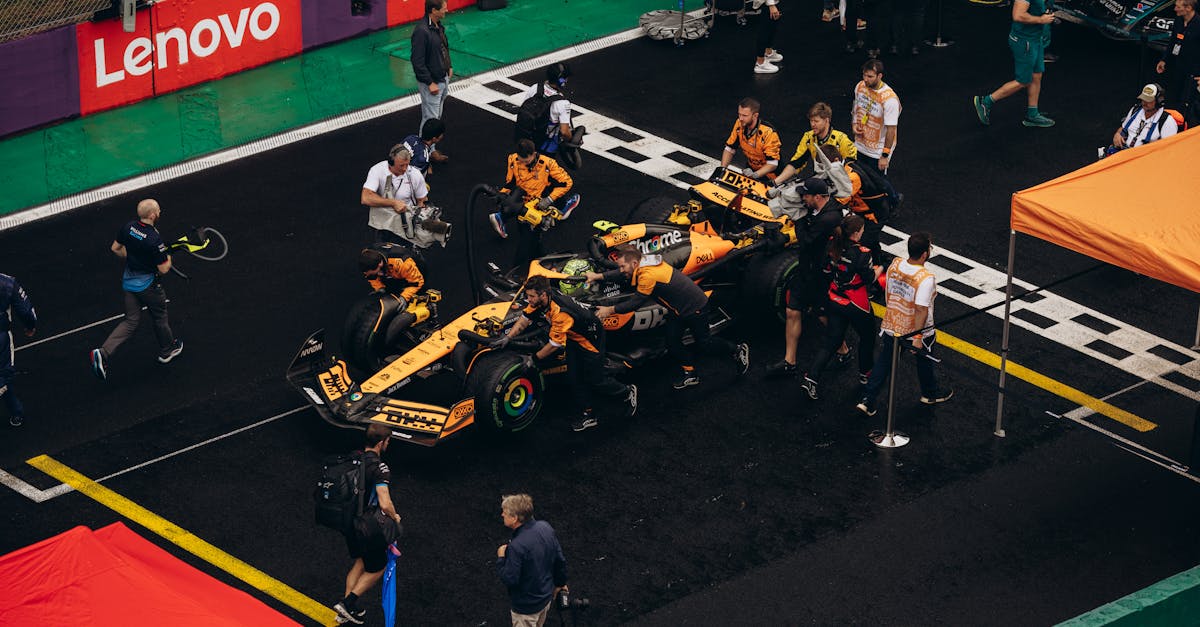
There is a particular cruelty in Formula 1’s calendar construction that has, this year, landed squarely on Kimi Antonelli’s shoulders. Of all the 24 races on the schedule, Monza is the one where an Italian driver in a Mercedes-powered car most wants a clean weekend in front of his own crowd. Instead, Antonelli arrives at the Autodromo Nazionale carrying a grid penalty for power unit component changes — the consequence of reliability issues that have dogged his rookie campaign — and both he and Toto Wolff have been refreshingly candid about what that means. There is no sympathy clause in the FIA’s technical regulations, and Wolff, characteristically, isn’t pretending otherwise.
An automatic penalty blind to context
Antonelli will start the Italian Grand Prix from a compromised grid position after Mercedes opted to fit new power unit elements beyond his allocated quota for the season. Under the current regulations, each driver is permitted a fixed number of internal combustion engines, turbochargers, MGU-Ks, MGU-Hs, energy stores and control electronics units per year before penalties kick in — typically a scale of five-place, ten-place or grid-drop sanctions depending on which components are exceeded and by how many. Exceed that allocation, as Antonelli’s side of the garage evidently has, and the penalty is automatic, non-negotiable and entirely blind to context. It doesn’t matter that it’s Monza. It doesn’t matter that he’s Italian. It doesn’t matter that this is precisely the race where a strong showing would carry outsized emotional and commercial value for both driver and manufacturer.
Wolff’s response has been notably unsentimental. Rather than frame the penalty as bad luck or push back against the optics of hobbling a home hero at his home race, the Mercedes principal has essentially told his driver — and the watching public — that this is simply how the sport works. Reliability problems have a cost, and that cost is paid on the grid, full stop. Antonelli, for his part, has struck a pragmatic tone too, suggesting he’ll approach the race with a “nothing to lose” mentality and go on the attack from wherever he starts.
Why the rules refuse exceptions
It would be easy to treat this as a minor procedural story — a rookie takes a grid drop, business as usual — but it’s worth pausing on why the regulations are built this way in the first place. The power unit allocation rules exist to contain costs and discourage teams from treating engines as disposable, throwing fresh components at every race in pursuit of marginal performance gains. That only works as a deterrent if the penalty is applied uniformly and without exception. The moment the FIA starts entertaining “but it’s Monza” or “but he’s a rookie” as mitigating factors, the entire framework loses its teeth. Antonelli’s situation is, in that sense, the regulation functioning exactly as intended — which is precisely why it stings.
There’s a second, more human dimension too. Antonelli is in his first full season, still being evaluated against the brutal standard Mercedes’ driver academy has always set, and reliability-driven penalties at this stage of a career carry a psychological weight beyond the points lost on Sunday. How a young driver responds to a setback like this — one entirely outside his control, born of hardware failure rather than driving error — often tells a team more about his temperament than a clean weekend would. Wolff’s blunt public framing may be as much about managing that psychological moment as it is about explaining regulations to the press.
From Honda’s struggles to Antonelli’s grid drop
This is not an isolated Mercedes problem, nor is it new to the sport. Grid penalties for power unit changes have shaped championship battles before — most memorably in the early hybrid era, when Honda-powered Red Bulls and McLarens routinely started from the back of the grid while engineers worked through teething troubles. The current regulations were partly designed to reduce that chaos by tightening the component allocation and raising the cost of non-compliance, but the trade-off is that any team still wrestling with reliability — as Mercedes appears to have been with Antonelli’s car this season — pays a very public, very predictable price.
It’s also a reminder that F1’s technical rulebook draws no distinction between a struggling backmarker and a front-running manufacturer’s protégé. Lewis Hamilton, Max Verstappen, Charles Leclerc — every one of them has, at some point, taken a grid penalty for exactly this reason, regardless of championship position or home-race significance. The regulations are, in that narrow sense, one of the more genuinely egalitarian aspects of a sport otherwise shaped by wildly unequal budgets and resources.
Wolff’s honesty serves Antonelli best
What’s most striking here isn’t the penalty itself but the tone Mercedes has chosen around it. Wolff could have leaned into the sentimental narrative — Italian driver, Italian Grand Prix, tough break — and generated some sympathetic headlines in the process. Instead, he’s opted for honesty about how the sport actually works, which is the more useful message for Antonelli long-term. Reliability penalties are not injustices to be railed against; they’re a cost of doing business in a sport where components are pushed to their absolute limits, and the driver who internalises that early tends to handle the inevitable next setback better than the one who doesn’t.
Antonelli’s “nothing to lose” framing suggests he’s already absorbed that lesson. A grid penalty at Monza is a poor birthday present for a home favourite, but it’s not a career-defining moment — how he drives back through the field on Sunday might well be more revealing than where he’d have started without it.