
Horner Says Antonelli Has Earned Number-One Status, but Mercedes Need Not Declare It
Christian Horner believes Andrea Kimi Antonelli has earned outright leadership at Mercedes, and a 102-point lead backs him up, but formally sidelining George Russell would solve a problem the team does not have.
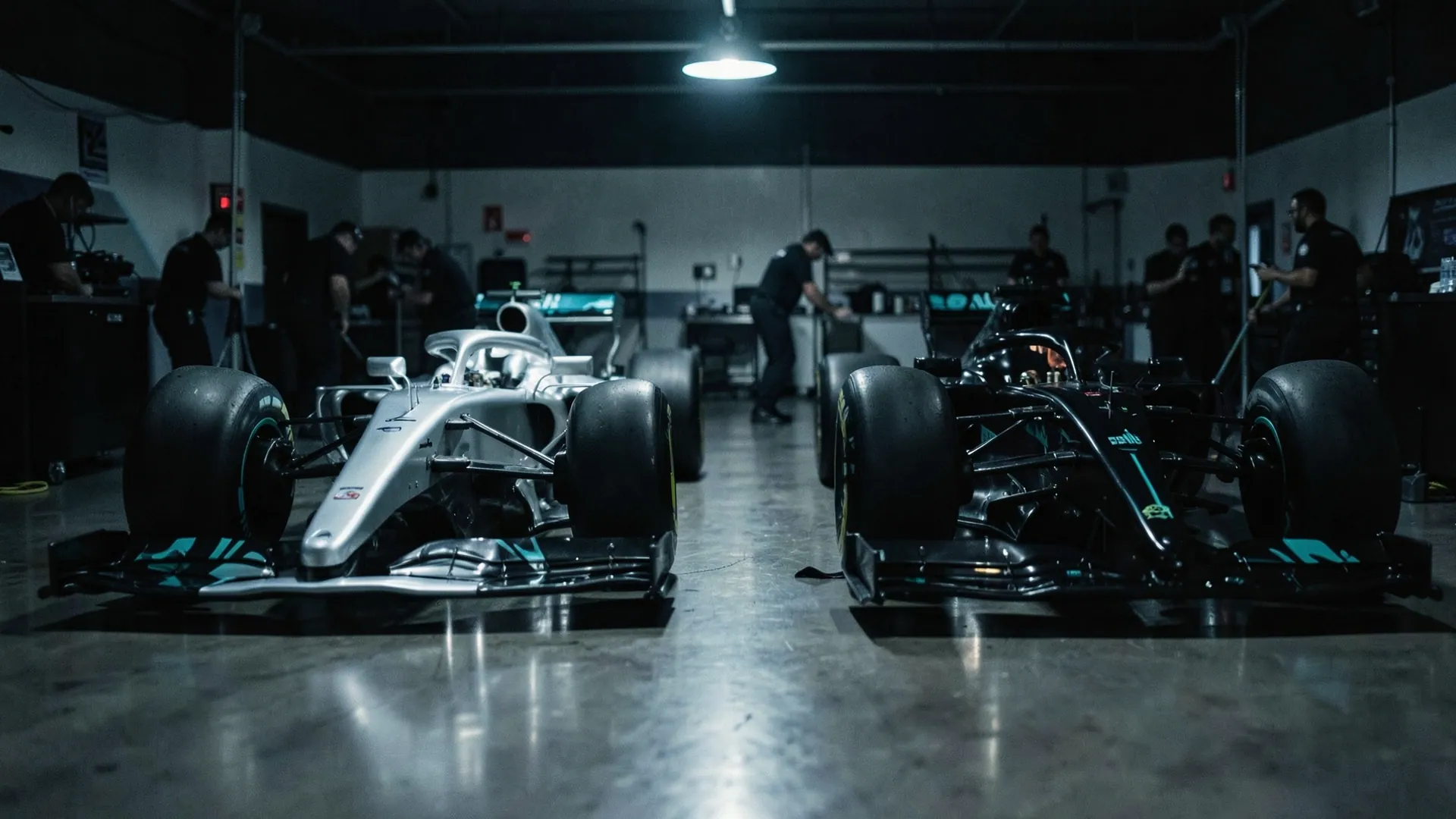
Christian Horner has said that Andrea Kimi Antonelli has earned the right to be Mercedes’ outright number-one driver, in comments reported by Motorsport.com. Antonelli, 20, leads team-mate George Russell by 102 points with six rounds of the 2026 season remaining. The former Red Bull team principal described him as Formula 1’s soon-to-be world champion, and on the numbers it is hard to argue.
Antonelli has won eight of the 17 grands prix so far. In Singapore nine days ago he finished third from fourth on the grid, while Russell recovered from 19th to ninth. That added another 13 points to the gap before this weekend’s United States Grand Prix in Austin.
What a 102-point lead is worth with six races left
The arithmetic is brutal for Russell. Counting grand prix points only, 150 remain. To overturn the deficit, Russell would have to outscore his team-mate by an average of 17 points a weekend, the difference between winning and finishing sixth, every time out until Abu Dhabi.
Even if Russell won all six races, Antonelli would need only 49 points to be sure of the title. A run of fifth and sixth places would be enough. He has not needed protecting from anyone this season, least of all the driver in the other Mercedes.
That is why Horner’s argument lands. Antonelli has 340 points to Russell’s 238, and eight wins to three. Between them, the Mercedes drivers have won 11 of 17 races, and the split is decisive. A driver in his second season has beaten a highly rated team-mate in his eighth year at the top level. He did it in the first year of a new set of regulations, when nobody knew in advance which car or driver would come out on top.
What Red Bull’s history says about Horner’s view
Consider who is making the case. Horner spent two decades running a team that built itself around one driver, first Sebastian Vettel and then Max Verstappen. That model brought titles, but it also produced some of the sport’s most famous intra-team ruptures. Red Bull gave Vettel Mark Webber’s new front wing at Silverstone in 2010. Vettel ignored the “Multi 21” instruction to hold station behind Webber in Malaysia in 2013. In the Verstappen era, the second seat passed from Pierre Gasly to Alexander Albon, Sergio Pérez, Liam Lawson and Yuki Tsunoda.
The weakness of a single-driver structure showed in 2024. Verstappen won the drivers’ title, but Red Bull slipped to third in the constructors’ standings as Pérez’s points dried up. The money and prestige of the teams’ championship went to McLaren and Ferrari, who had stronger pairings.
So when Horner says Antonelli has earned number-one status, he is describing the arrangement he believes championship-winning teams settle into. He has a point. His own record also shows the cost of applying it rigidly.
How Mercedes have handled hierarchy before
Mercedes under Toto Wolff have mostly resisted naming a lead driver, though not always comfortably. Between 2014 and 2016, Lewis Hamilton and Nico Rosberg were allowed to race, and the relationship deteriorated to the point of a first-lap collision in Barcelona in 2016. Rosberg won that year’s title and retired within days.
The Hamilton and Valtteri Bottas years were more pragmatic. Officially the two were equals, but Bottas was asked to move aside for Hamilton in Sochi in 2018, giving up a win that was his on merit. The team accepted the bad publicity because Hamilton’s title campaign came first. That is the model Mercedes would most likely follow now: no formal declaration, but clear priorities when the championship is at stake.
The warning from the other direction is McLaren in 2007. Fernando Alonso and Hamilton were given equal treatment in a season that turned bitter, and they finished level on points, one behind Kimi Räikkönen. Equal status can cost a team a title when its drivers are closely matched. Antonelli and Russell are not closely matched in 2026. That is the strongest argument both for Horner’s position and against needing to act on it.
Why Russell still matters to Mercedes this year
The case for formally subordinating Russell falls down when you look below the top of the table. He is second in the championship, but only just.
| Position | Driver | Points | Gap to Russell |
|---|---|---|---|
| 2 | George Russell (Mercedes) | 238 | — |
| 3 | Lewis Hamilton (Ferrari) | 229 | 9 |
| 4 | Max Verstappen (Red Bull) | 221 | 17 |
| 5 | Charles Leclerc (Ferrari) | 215 | 23 |
| 6 | Lando Norris (McLaren) | 201 | 37 |
Russell is one bad weekend away from fourth. Verstappen has just won in Singapore, and the Ferraris finished second and sixth there. A Mercedes one-two in the drivers’ standings would be the team’s first since Hamilton and Bottas in 2020. It would be a strong statement that the team has fully mastered the new rules, and they will not get it by asking Russell to give way.
The constructors’ race tells a similar story. Mercedes lead Ferrari by 134 points, which is comfortable but not yet secure. In Singapore, Ferrari’s two drivers outscored Mercedes 26 to 17. A team that told one of its drivers to settle for supporting the other would be giving up points it might still need.
Then there is 2027. Russell is 28, a grand prix winner three times this year, and the only benchmark Mercedes have for Antonelli. If the team formally ranks him second, it risks losing his motivation now and his commitment later. A team-mate who no longer believes he can win does not push the car’s development in the same way.
Where Mercedes should draw the line
There are two separate questions here, and Horner’s comments blur them.
The first is operational, and the answer is straightforward. If, over the next six weekends, a strategy call or track position comes down to one Mercedes or the other, the team should favour Antonelli. That would be ordinary championship management, of the kind Mercedes showed in Sochi in 2018, and Russell would understand it. With a 102-point lead, those situations should be rare, which is the point. Mercedes can protect Antonelli’s title without the damage that comes from saying so publicly.
The second question is structural: should Mercedes formally name Antonelli their lead driver from 2027? Here Horner is wrong, or at least premature. Antonelli has earned that status in every way that counts by beating Russell over 17 races, and he does not need a formal title to keep it. Making it official would cost Russell’s goodwill and gain nothing. It would also give a 20-year-old champion the sort of protection that the best drivers eventually find limiting. Verstappen became dominant at Red Bull by beating everyone in the other car before the team built around him. Antonelli is doing the same without help.
Austin offers Mercedes a simple test. If the two silver cars meet on track on Sunday, the team should let them race and let Antonelli win the fight himself. A title secured that way, with Russell still fighting for second, would make Antonelli’s position at Mercedes clearer than any announcement could.