
Cadillac Chief Admits Colton Herta's Formula 1 Dream Is Likely Over
Dan Towriss's admission that Colton Herta's route to a Cadillac race seat has probably closed shows a newcomer still without a point choosing hard-headed competitiveness over the American storyline it was built around.
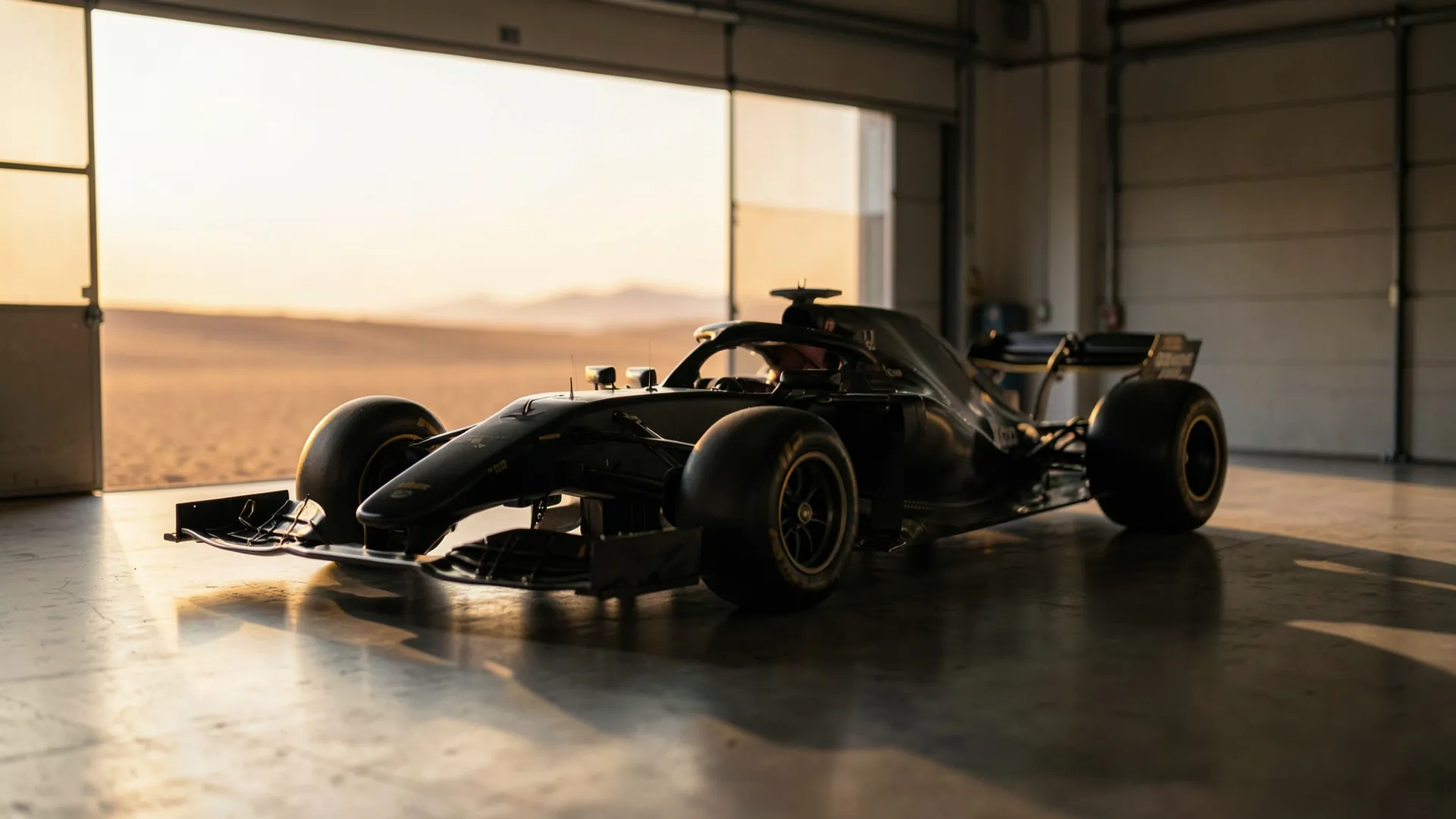
Cadillac F1 chief executive Dan Towriss has conceded that Colton Herta’s ambition of racing in Formula 1 is probably finished, following a major personnel decision at the team this week. According to GPfans, Towriss described himself as disappointed. The verdict comes as Cadillac heads to Qatar with two rounds remaining in its debut season and still without a point.
It is a striking admission from a team whose American identity was central to its case for joining the grid. Herta was meant to be the bridge between Cadillac’s IndyCar-rooted heritage and its Formula 1 future. Hearing the team’s most senior figure close that door, even softly, says a good deal about how 2026 has changed Cadillac’s priorities.
What Towriss conceded, and what he did not
The precise language matters. As reported, Towriss has not announced a formal end to Herta’s involvement. He has cast doubt on Herta’s future in the sport and accepted that the dream is likely over. Executives rarely say this kind of thing on the record about a driver they have invested in. When they do, it usually means the internal decision has already been taken and the public message is catching up.
The disappointment also seems genuine rather than diplomatic. Herta’s switch to Cadillac was not a marketing appointment in the usual sense. He gave up a front-running IndyCar career, in which he was a regular race winner, to accept a test role and a season in Formula 2. Few established drivers in their mid-twenties would take that step backwards. It was a calculated gamble that the superlicence system and the new team would eventually line up in his favour. Towriss’s comments suggest they have not.
Superlicence points and a door that kept narrowing
Herta’s Formula 1 story has been a series of near-misses, and each one has left the path a little tighter.
In 2022, Red Bull explored placing him at what was then AlphaTauri. The move stalled because Herta did not hold enough superlicence points, and the FIA declined to make an exception. The episode prompted a broader argument about how fairly the points system values IndyCar results. It also established something that has shaped his career ever since: talent and commercial appeal would not be enough on their own.
His later link with Andretti tied his prospects to that organisation’s entry bid. Formula 1 rejected the first version of the bid in early 2024, before the project returned with General Motors as Cadillac and was approved as the 11th team. Herta was always the obvious American candidate for a seat. But the team that finally reached the grid in 2026 was built for immediate credibility, and it chose experience for its race line-up.
That left the long route. Herta signed as a test driver and went to Formula 2 to collect the superlicence points that had eluded him four years earlier. It was a sensible plan on paper. In practice, it meant a driver born in 1999 competing on a ladder designed for teenagers, against rivals who had spent years learning Pirelli’s tyres, the cars and the circuits. Every month spent there was a month in which the team’s needs could move on without him. They appear to have done exactly that.
The arithmetic of a team on zero points
The standings explain why sentiment has lost out. Cadillac is 11th of 11 in the constructors’ championship on zero points. Aston Martin, the next team up, has seven and Williams has 16. Neither total is large, but both show how thin the margins are at the back. A single sixth place would be enough to lift Cadillac above Aston Martin.
Las Vegas captured Cadillac’s season well. Valtteri Bottas started 19th and finished 18th, ahead only of the retired Fernando Alonso and Arvid Lindblad. It was a tidy run that went unrewarded, and that pattern has defined the team’s debut year. Midfield finishes, rather than outright speed, are within reach on good days. On those days, what matters most is a driver who extracts every tenth, manages the tyres over a long stint and makes no mistakes in traffic.
New teams in recent decades have taught Formula 1 how hard that climb is. Lotus, Virgin and HRT, the entries of 2010, spent their lives at the back, scored very little between them and were gone within a few seasons. Haas, by contrast, scored points on its debut in 2016 because it arrived with a close technical partnership and experienced drivers. Cadillac’s management appears to have studied both examples. In that light, Herta was a risk the team could no longer afford in a race seat: he had no Formula 1 race starts, a reshaped CV and the expectations of a home audience.
There is a further point about timing. Teams in their first and second years still need reliable feedback from drivers who can benchmark a car against previous machinery. A driver with no Formula 1 reference points, however quick, cannot easily tell engineers whether a problem is unusual or merely typical of the category. Experience counts for more in a young team than in an established one.
Rebuilding the American pathway
Herta’s fading chances do not mean Cadillac’s driver pathway is dead. They have simply exposed how much it rested on one name, and that was always a weakness.
The established teams run deep junior programmes. Mercedes did not bet on a single driver for the future; it developed Andrea Kimi Antonelli through karting and the junior categories. Antonelli now leads the championship on 402 points with nine wins, 98 clear of Max Verstappen. Red Bull has promoted Isack Hadjar, Liam Lawson and Lindblad through its own system. Alpine has run Pierre Gasly and Franco Colapinto. Each of these pathways is a pipeline rather than a wager.
If Cadillac wants an American driver to win in its car, it needs the same structure:
- Identification at karting level. Funding should go to promising American teenagers in European karting rather than to adults already established in IndyCar.
- Placement in Formula 4 and regional series. Drivers need early exposure to European circuits and to the tyres they will use further up the ladder.
- Clear superlicence planning. Points should be collected steadily over a junior career, so that no driver ends up in Herta’s position of chasing them late.
- A realistic timeline. A home-grown American race driver is unlikely to emerge before the end of this decade.
None of this is quick, and none of it sells as easily as a well-known IndyCar winner. But Cadillac’s commercial case does not depend on putting an American in the car next season. It depends on the team becoming competitive. A Cadillac that regularly scores points will be a far stronger platform for an American driver later than a struggling one would be for a symbolic signing now.
A fair call, honestly made
Herta deserves credit. He took a bigger career risk than almost any driver of his standing would have, and he did so in good faith. Had the 2022 superlicence episode gone differently, the conversation about his Formula 1 credentials might look very different today. There is a real argument that the points system undervalued his IndyCar record, and it has been running for years without a satisfactory resolution.
Towriss deserves credit too, for his honesty. It would have been easy to keep Herta’s hopes alive in vague terms through the winter, as a useful story for the American market. Telling the truth, and admitting disappointment while doing so, is the more respectful course for a driver who has given up a great deal.
The test now is whether Cadillac matches its words with investment. Qatar on 29 November and the finale that follows offer two more chances to score a first point, and that remains the immediate priority. The bigger judgement will come over the winter. If Cadillac uses the close season to announce a structured junior programme with American drivers at its centre, this week will be remembered as the moment the team grew up. If it does not, the Herta episode will look less like a hard decision and more like an American project that lost its purpose before it had properly begun.