
Bottas's Cadillac Future in Doubt as Budkowski Leaves Door Open for 2027
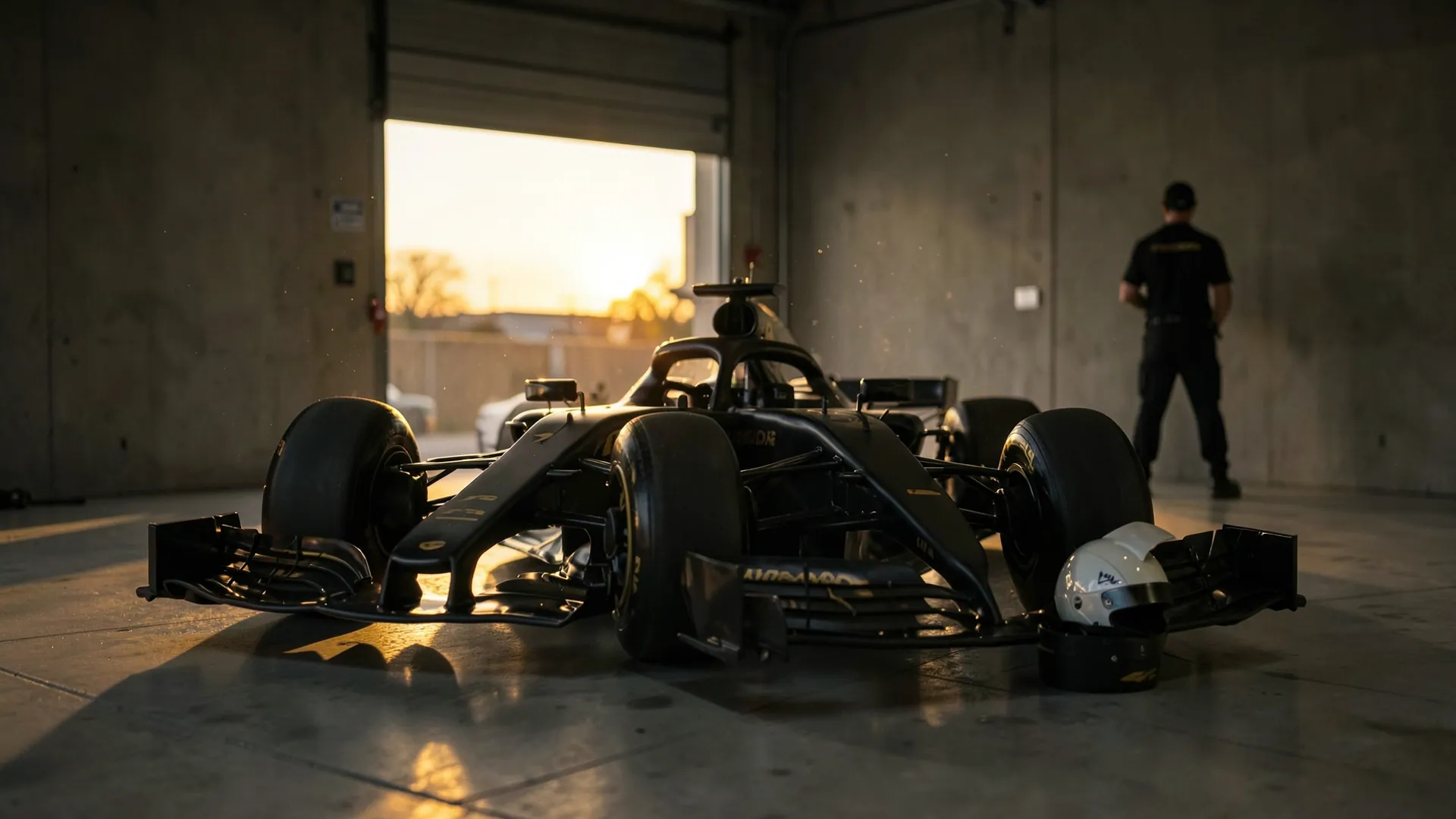
Cadillac team boss Marcin Budkowski has declined to guarantee Valtteri Bottas a place in the team’s 2027 line-up, leaving room for a driver change after a debut season in which the American squad has yet to score a point. PlanetF1 reported the comments, which drew a response from Bottas himself as Formula 1 arrived at the Circuit of the Americas for the United States Grand Prix. For a team backed by General Motors and racing on home soil this weekend, the timing could hardly be more awkward.
Budkowski’s careful non-answer
Team principals are asked about their driver line-ups constantly, and most keep a stock reply ready. For a driver the team intends to keep, the standard answer is a flat statement of confidence that closes the subject. Budkowski chose not to give it. When a team boss declines to rule out a change, it is rarely accidental. It tells the driver, the market and the team’s own board that the seat is under review.
That does not mean Bottas is finished at Cadillac. Uncommitted language can be leverage. It keeps options open while the team waits to see how the final six rounds unfold and who becomes available. But once a team boss has publicly declined to back a driver, the question follows both men to every remaining race. The longer the doubt lingers, the harder it becomes to dispel.
Seventeen rounds without a point
The numbers explain why Cadillac is asking the question. After 17 of 23 rounds, it is the only team on zero points in the constructors’ championship, sitting 11th behind Aston Martin on seven and Williams on 12. Neither of those teams is enjoying a vintage season, yet Cadillac has still been unable to reach them.
Singapore showed the problem clearly. Sergio Pérez started 17th and finished 17th, a lap down. Bottas started 18th and was classified 19th, also lapped, ahead only of the retired Lance Stroll. On the same evening, Isack Hadjar climbed from 22nd on the grid to score a point for Red Bull, and George Russell recovered from 19th to ninth for Mercedes. Both had started behind the two Cadillacs and both finished in the points, while Pérez and Bottas never threatened to make progress.
A pointless debut season is not unusual in itself. Lotus, Virgin and HRT all entered in 2010 and scored nothing that year. None of the three ever scored under its original name, and Marussia, the former Virgin team, had to wait until Monaco 2014 to register its first points. Haas set a very different benchmark in 2016, when Romain Grosjean finished sixth on the team’s debut in Australia.
Cadillac entered this season expecting to land somewhere between those two models. It arrived in the cost-cap era with a major manufacturer behind it, Ferrari customer power units and two drivers with more than 500 grand prix starts between them. Zero points with six rounds to go puts it much closer to the 2010 entrants than it would like.
Why Bottas was hired in the first place
The logic of the 2026 line-up was straightforward. A new team building a car under brand-new regulations needs drivers who can explain what the car is doing. It cannot afford to spend a year teaching rookies the job while also learning its own. Bottas and Pérez offered 16 grand prix wins between them, 10 for Bottas and six for Pérez, and years of experience inside front-running organisations.
Bottas brought something more specific. He spent five seasons as Lewis Hamilton’s team-mate at Mercedes, then returned to Brackley as reserve driver in 2025, the year the team prepared for the current rules. Mercedes now leads the constructors’ championship by 134 points over Ferrari, and Andrea Kimi Antonelli has won eight races on his way to a 102-point lead over Russell in the drivers’ standings. Experience inside the benchmark organisation of this rules cycle, even in a reserve capacity, was a large part of Bottas’s appeal.
His recent record cuts the other way, however. Bottas failed to score in his final season with Sauber in 2024, and he has not scored this year either. Some of that reflects the machinery he was given, but a team weighing its options will notice that he has gone without points in two of his last three seasons. Singapore, where he finished two places behind Pérez, will not have helped his case.
How the 2010 newcomers and Haas handled year two
New teams have approached their second-season driver decisions in very different ways, with mixed results:
- Haas (2016-17): Kept Grosjean as its reference driver and replaced Esteban Gutiérrez with Kevin Magnussen. The team finished fifth in the constructors’ championship within three seasons.
- Virgin (2010-11): Dropped Lucas di Grassi after one year and brought in Jérôme d’Ambrosio alongside Timo Glock. It remained at the back.
- Lotus (2010-11): Kept Jarno Trulli and Heikki Kovalainen together. The continuity brought stability but no points.
- HRT (2010-11): Cycled through four drivers in its first season and changed again for its second. It never scored a point.
Keeping experience does not guarantee results, as Lotus showed. The more useful lesson comes from Haas: keep one trusted reference driver, change the other if you must, and make sure the replacement adds something specific. A driver change that is mainly a reaction to the points table, rather than a fix for an identified weakness, tends to add instability to an organisation that already has plenty.
Cadillac needs a reference driver more than a reshuffle
Cadillac’s central problem is the car, and a new driver would not change that. In 2027 it will build the second car of this rules cycle, and the direction of that development depends heavily on reliable feedback from the cockpit. Replacing a driver who knows what Mercedes got right with someone still learning Formula 1 would trade insight for potential at exactly the moment the team most needs insight.
There are legitimate reasons to make a change. A younger driver might offer more long-term upside, and the commercial appeal of an American in an American car is obvious for a General Motors project. Cadillac also has to consider who it could actually sign; a vague promise of fresh blood is not a plan. If the season-long comparison between its drivers shows a clear gap, the team would be entitled to act on it.
What Cadillac should avoid is changing both seats, or making the decision on the strength of a single bad weekend. The squad needs at least one driver who can tell its engineers, with authority, whether next year’s car is moving in the right direction. Bottas remains the stronger candidate for that role, but he needs results to support the argument.
This weekend’s race in Austin opens the final six rounds of the season. Cadillac sits seven points behind Aston Martin without a single point of its own, and the first Cadillac driver to reach the top 10 will make a powerful argument for his 2027 seat. If Bottas wants to turn Budkowski’s careful silence into a firm commitment, he needs to be that driver.