
Sergio Pérez Confirms F1 Retirement as Cadillac's Scoreless Debut Season Nears Its End
Sergio Pérez's family-driven decision to retire leaves Cadillac planning a succession with three rounds of a scoreless first season remaining, while Colt Herta waits for his chance.
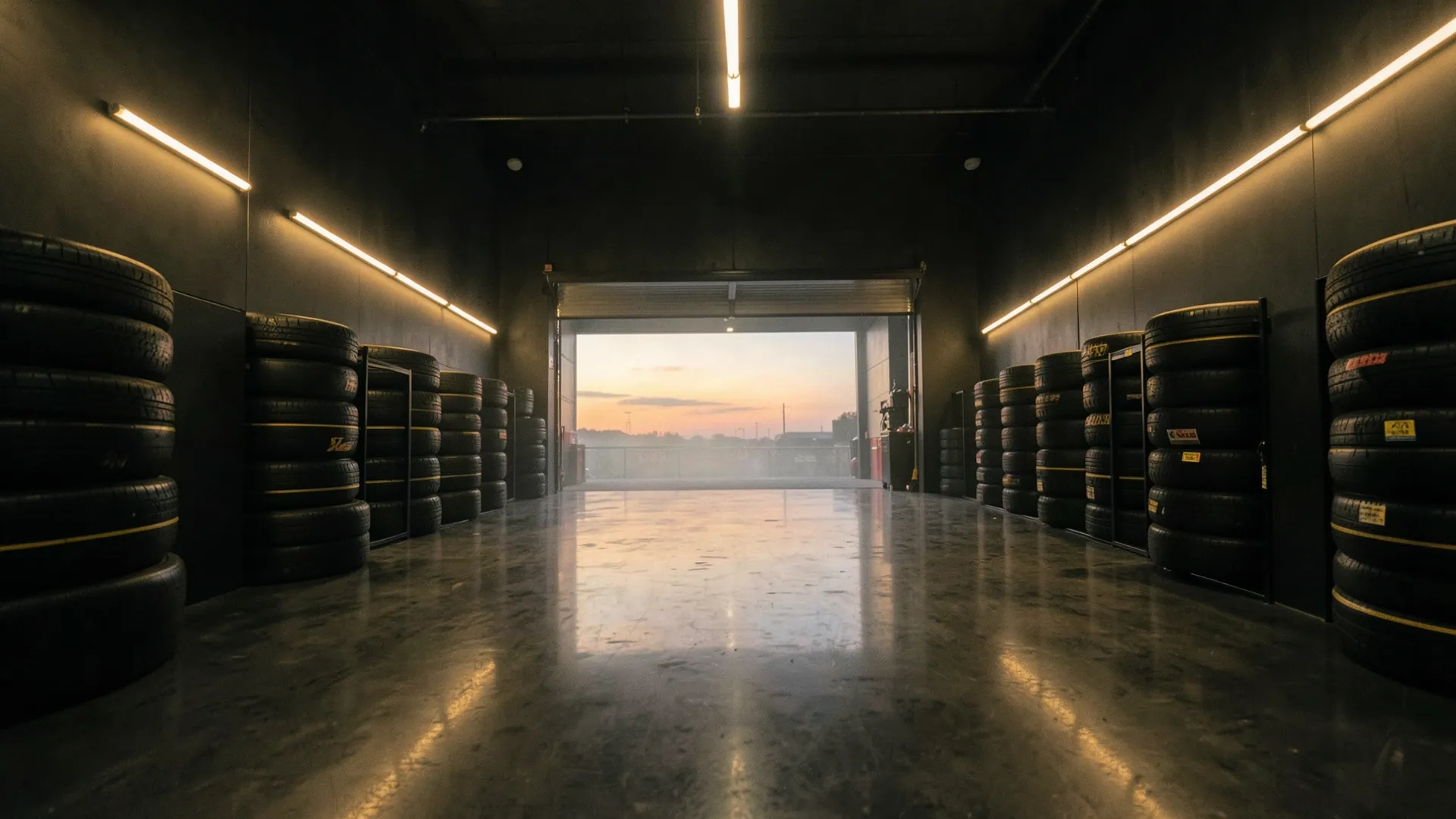
Sergio Pérez has confirmed he will retire from Formula 1, and the Cadillac driver has made clear that the decision rests on his four children. GPfans reports that Pérez described his family as the priority that now outweighs the sport. The announcement comes with three rounds of the 2026 season left and Cadillac, the grid’s newest team, still without a point.
The timing matters for Cadillac. A question the team might have put off for another year now has a deadline. It also arrives while Colt Herta, the American the team has been developing within its own programme, has made no secret of wanting a race seat.
A decision made at home, not in the paddock
Pérez is 36 and made his debut with Sauber in 2011. His career has had more chapters than most. There was the single, bruising season at McLaren in 2013, then the long and productive spell at Force India and Racing Point. His maiden win at Sakhir in 2020 came just as he appeared to be out of a drive. Four years as Max Verstappen’s team-mate at Red Bull followed, including second place in the 2023 championship. He has six grand prix wins, the last of them in Baku in 2023.
Red Bull released him after 2024, and he spent 2025 outside the sport before Cadillac brought him back. That year away shapes how this retirement should be read. Pérez has already lived without a 23-race calendar dictating his year, and he has chosen to set an endpoint with that experience behind him. He is not being squeezed out by results. He knows exactly what he is trading.
That distinction deserves to be made clearly. With Cadillac on zero points, it would be easy to treat the announcement as a verdict on a difficult season. It is not one. Drivers who are pushed rarely get to choose their date, and fewer still get to explain it in terms of school runs rather than lap times.
18th at Interlagos, 11th of 11
The Brazilian Grand Prix on 8 November summed up Cadillac’s year. Pérez started 22nd and last, and finished 18th and lapped, with only Carlos Sainz and Rafael Camara behind him among the classified finishers. On the same afternoon, Verstappen drove from 21st on the grid to second, and Lewis Hamilton climbed from 20th to ninth. Those comparisons say far more about the car than the driver. A start from the back can be recovered in a quick car, but not in one that lacks the pace to pass the cars in front.
The constructors’ table is blunt. Cadillac sit 11th of 11 with no points. Aston Martin have seven and Williams 12, which means even the teams Cadillac might have expected to fight have found a handful of scores on the right days.
None of this is unusual for a new entrant. When Lotus Racing, Virgin and HRT joined in 2010, under the same top-ten scoring system that applies today, none of them scored in their first season. Caterham and HRT never scored at all. Marussia’s only points arrived in 2014, through Jules Bianchi’s ninth place at Monaco. The obvious exception is Haas, whose Romain Grosjean finished sixth on the team’s debut in Melbourne in 2016 and who ended that season with 29 points. Haas built their model on buying every permitted component from Ferrari, and that approach gave them a head start no other recent newcomer has matched.
Cadillac have had a harder brief. They built a team from nothing in the year the technical regulations were rewritten. A reset year spares a newcomer from chasing rivals who have spent a decade refining the same concept. It also means the newcomer has to learn the new rules while learning how to run an F1 team at all.
Three chances remain, starting at Las Vegas on 22 November. Street circuits, with their safety cars and attrition, have historically been where backmarkers find their points, as Marussia’s Monaco result showed. A first point remains the realistic target, and Pérez’s final races will be measured against it.
What Cadillac hired Pérez to do
Cadillac’s driver choice was the clearest statement of intent the team made. In Pérez and Valtteri Bottas they signed two grand prix winners with well over 500 starts between them. The appeal was never that they would drag an uncompetitive car into the points. A new team, with new people and a new car under new rules, needed drivers whose feedback it could trust without question.
Experienced drivers give a young team calibration. They know what a good car feels like and can say whether an upgrade has worked. They can also tell a set-up problem from a design one. Pérez’s reputation for tyre management and race-day composure fitted that brief, and his standing in Mexico and across Latin America brought commercial reach no rookie could offer.
That value was always front-loaded. A reference driver matters most in the first two years, while the factory is still learning to read its own data. Seen that way, Pérez’s announcement does not break Cadillac’s plan. It marks the point at which the plan was always going to change.
Herta’s case, and the superlicence problem
Colt Herta is the obvious name in the conversation, and the case for him is easy to see. He is an IndyCar race winner and an American at a team backed by General Motors, and American talent has been part of the pitch since Michael Andretti’s original bid. A US driver in a Cadillac would do commercially what Pérez has done for the brand in Mexico.
His path has never been straightforward. In 2022, Red Bull’s attempt to place him at AlphaTauri fell apart because he did not hold enough superlicence points, and the FIA declined to make an exception. Cadillac’s answer was to make him their test driver and move him into Formula 2 this year, so that he could reach the 40-point threshold by the conventional route rather than through special pleading. That was the right approach. A seat obtained through an exemption would have attached an asterisk to everything Herta did afterwards.
The harder question is sporting. Putting a rookie into the slowest car on the grid creates a measurement problem. When the car is last, it is very hard to tell whether the driver is good, average or struggling. Herta’s IndyCar record suggests real ability, but F1 has a long history of capable drivers whose reputations stalled in uncompetitive machinery because nobody could separate their performance from the car’s.
The seat Cadillac should be filling
Cadillac’s priority should be continuity of judgement, not a marketing story. As long as Bottas remains with the team, pairing him with Herta is defensible: the experienced driver provides the benchmark, and the rookie is measured against it. A line-up with no seasoned voice, in a car that has yet to score, would throw away the main thing this first year was meant to build.
Herta should get the seat only if the stopwatch supports it, meaning he has earned his licence outright and has given Cadillac’s engineers evidence from the simulator and test running that he is fast enough. If those conditions are met, the commercial logic becomes a bonus rather than the reason.
Elsewhere, the season’s main story is settled. Andrea Kimi Antonelli’s 111-point lead over Verstappen with three rounds left is beyond reach, so Pérez’s farewell will run alongside a Mercedes coronation. His own stakes are smaller but real. The most fitting send-off he can give is a first point for the team that brought him back, and Las Vegas, unpredictable as it is, offers the best chance of the three. If he manages it, Cadillac will remember him as the driver who opened their account. Either way, the team should choose his successor on pace, not nationality.