
Pirelli Caps Qatar Stints Again as Losail Exposes a Recurring Tyre Weakness
For the third time in five years, Pirelli will cap stint lengths at the Qatar Grand Prix, a safety measure that increasingly reads as an admission that its tyres cannot cope with Losail.
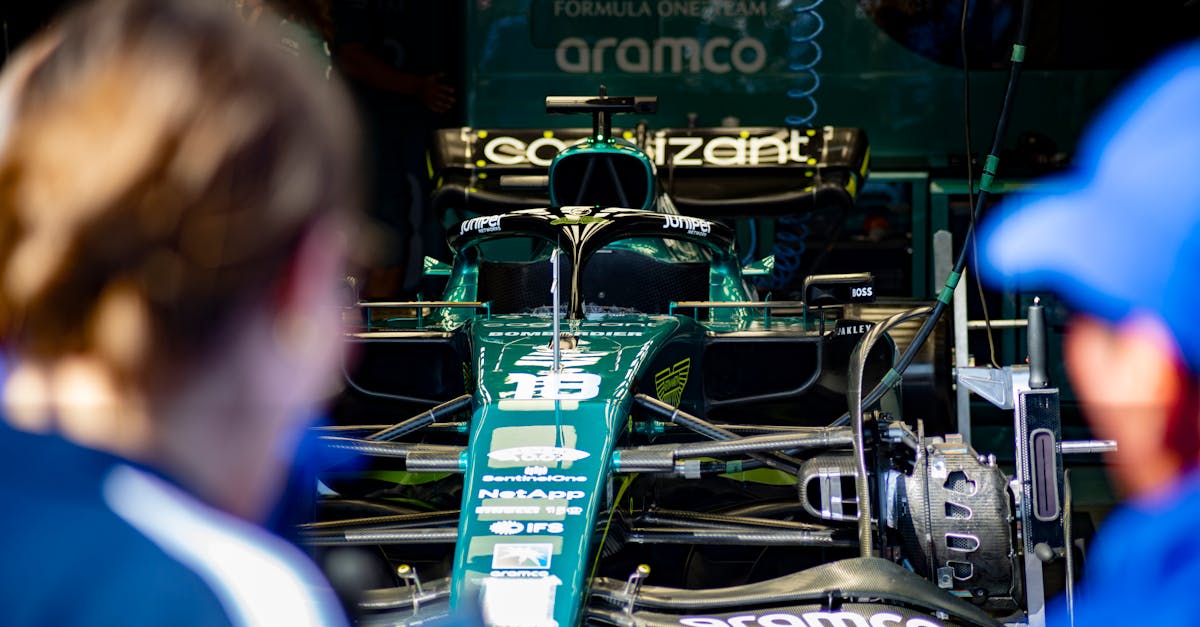
Pirelli has imposed maximum stint lengths for the Qatar Grand Prix. It is the third time in five years that Formula 1’s tyre supplier has limited how long a set can run at Losail because of concerns over tyre failures, and teams will arrive with part of their strategy already written for them. The announcement comes as the paddock heads to Las Vegas with three rounds of the 2026 season still to run, and it raises an uncomfortable question that Pirelli has had several years to answer.
Three caps in five years is a pattern, not an anomaly
A single intervention can be put down to circumstance. Losail joined the calendar at short notice in 2021, and that first race ended with a run of left-front failures late on, with Valtteri Bottas, George Russell and Nicholas Latifi among those affected. Pirelli pointed to the combination of long stints and punishing kerbs. Nobody could reasonably have expected the tyre supplier to have a bespoke answer for a circuit it had barely seen.
The 2023 race was different. Pirelli’s post-practice analysis found separation in the sidewall structure, linked to the pyramid-shaped kerbs, and the response was an 18-lap ceiling on every set. The race became a sequence of flat-out sprints in oppressive heat, and Logan Sargeant retired feeling unwell. In 2024 the race ran without a cap. Then, in 2025, the limits returned, this time as a pre-emptive measure rather than a mid-weekend reaction.
Now they are back again. Caps in 2023, 2025 and 2026 mean the restriction has become the default setting for this event rather than the exception. When a safety measure becomes routine, it stops being evidence of caution and starts being evidence of a product that does not meet the demands of the venue.
Why Losail punishes a tyre’s structure rather than its tread
The usual way to think about tyre trouble is wear: the rubber goes, grip falls away, the driver pits. Losail’s problem is subtler and more dangerous. The circuit is a sequence of fast, long-radius corners in which the car leans on its tyres for seconds at a time, with the left front carrying the heaviest share through the quick right-handers. The load is sustained rather than spiky, and the carcass flexes under it lap after lap.
That repeated flexing fatigues the tyre’s internal construction. A set can look healthy on the surface, with plenty of tread remaining, while the structure underneath is approaching its limit. This is why Pirelli talks about failures rather than degradation. A driver can manage wear by backing off. Nobody in the cockpit can feel the sidewall fatiguing until it gives way, often at speeds that make the consequences serious.
The kerbs add a second layer of stress, as 2023 showed. Every time a car rides them at speed, the tyre takes a sharp impact on top of the cornering load. A tyre built to cope with the circuit’s lateral forces may still struggle when those impacts are stacked on top.
Pirelli’s main tools are blunt. It can raise minimum pressures, which stiffens the tyre but costs grip and tends to make cars harder to follow. It can restrict camber. Or it can limit the number of laps each set does, which caps the fatigue directly. The stint limit is the most honest of the three, because it attacks the cause rather than masking it. It also carries the biggest sporting cost.
A cap that writes the strategy before the lights go out
Strategy is supposed to be a contest of judgement: when to stop, which compound to fit, whether to gamble on a long stint and a late charge on fresher rubber. A maximum stint length removes much of that. If the race distance divided by the cap forces a minimum number of stops, every team is solving the same arithmetic, and the scope for an alternative plan narrows sharply.
The 2025 race showed the cap’s sharper edge. An early safety car arrived when a stop was almost free, and because the stint limit meant everyone would have to stop at least twice anyway, almost the whole field pitted. McLaren kept both cars out. Max Verstappen won, and McLaren spent the following days explaining a call that might have been defensible in an unrestricted race but looked costly once the cap was factored in. The restriction largely decided that result.
That is the paradox of the stint cap. It can create drama, but drama born of a constraint that every engineer knows is artificial. Over a race, a safety car at the right moment can be worth more than a tenth of a second per lap of genuine pace, and the team that reads the regulation best can beat the team with the quicker car.
Qatar could settle the scramble behind Antonelli
The title fight is over. Andrea Kimi Antonelli leads the drivers’ championship on 390 points with nine wins, 111 clear of Verstappen. That margin exceeds what the three remaining rounds can deliver, even if every one of them carried a sprint. Mercedes, on 652 points to Ferrari’s 510, are in a similarly commanding position in the constructors’ standings.
Below that, the season is still live, and a race with a compressed strategy window could swing it. Second place in the drivers’ standings is a five-way scrap covered by 33 points:
| Position | Driver | Team | Points |
|---|---|---|---|
| 2 | Max Verstappen | Red Bull | 279 |
| 3 | George Russell | Mercedes | 262 |
| 4 | Lewis Hamilton | Ferrari | 261 |
| 5 | Charles Leclerc | Ferrari | 249 |
| 6 | Lando Norris | McLaren | 246 |
Verstappen arrives with momentum after climbing from 21st on the grid to second in Brazil, behind Norris, who converted pole into victory at Interlagos. Russell and Hamilton are separated by a single point. In a race where stops are effectively mandated, the gains come from timing and from track position after each stop, which favours whoever handles the safety car lottery best.
The constructors’ battle for third is just as tight. Red Bull lead McLaren by 17 points, 415 to 398. Isack Hadjar’s third place in Brazil gave Red Bull a double podium, but Norris’s win and Oscar Piastri’s sixth meant McLaren matched their 33-point haul, and one well-timed or badly timed pit call in Qatar could swing the place. Further down the order, Haas sit on 31 points and Audi on 28, a three-point gap for seventh that carries real prize-money consequences. For teams scoring sporadically, a cap that funnels the field into similar strategies removes one of the few routes to an upset: the bold one-stop that nobody else dares to try.
Pirelli’s problem is partly the brief F1 gave it
It would be easy to lay all of this at Pirelli’s door, and the company deserves pointed questions. This is the first season of a new generation of cars, with narrower tyres designed around different loads, and Losail has still exposed a limit. Pirelli has had years of Qatar data, and the result is another cap.
But the supplier works to a specification that pulls in opposite directions. F1 wants tyres that degrade enough to create strategy, that suit street circuits and high-speed tracks alike, and that are developed under tight testing restrictions. A construction robust enough to shrug off Losail’s sustained loads would be heavier and stiffer everywhere else on the calendar. A Qatar-specific structure would solve the problem but cost money and testing time that the current framework does not easily allow. The sport has, in effect, chosen a single family of tyres for 23 very different venues and then expressed surprise when the most extreme of them breaks the compromise.
Seen that way, the stint cap is a rational decision taken within an irrational brief. It keeps drivers safe, and that must come first. It should not, however, become a permanent fixture that the sport accepts with a shrug every year.
The sensible step is for Pirelli and the FIA to treat Losail as the design case for the next construction rather than an outlier to be managed around. If next season’s tyre cannot run a normal stint in Qatar, the circuit’s kerbs and layout deserve the same scrutiny as the rubber. A fourth cap would confirm that F1 has decided to live with the problem rather than fix it, and that would be the wrong choice.