
From Expecting No Wins to Eight Straight Podiums: Verstappen's Red Bull Recovery
Max Verstappen admits he thought Red Bull would go winless in 2026, yet he reaches Las Vegas second in the standings with three wins and eight consecutive podiums.
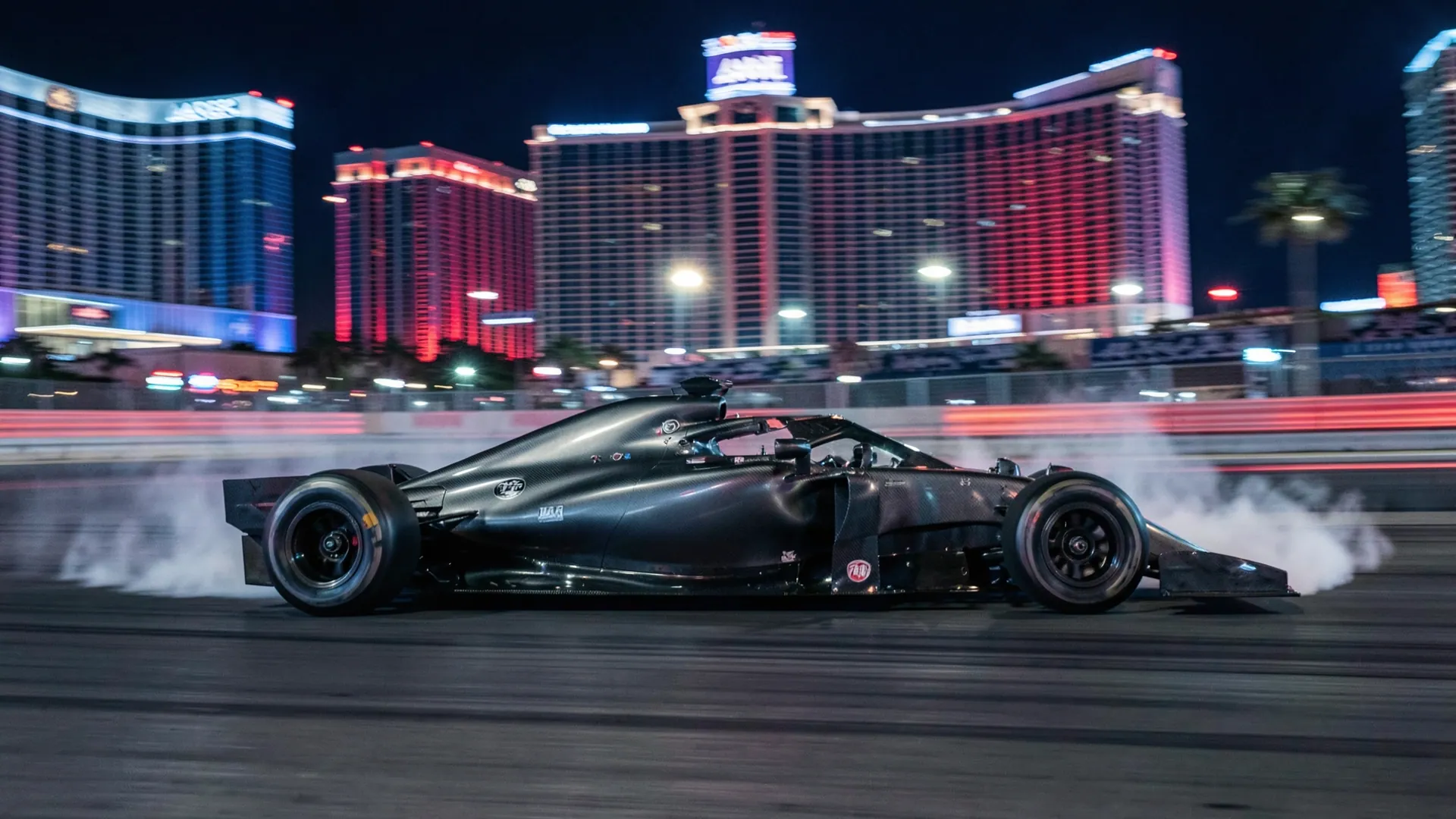
Max Verstappen arrives at this weekend’s Las Vegas Grand Prix on a run of eight consecutive podiums, the latest a drive from 21st on the grid to second place in Brazil. The streak has carried him to second in the drivers’ championship. He has also admitted to Motorsport.com that in March he “really thought that we would not win a race this year”. He has won three.
That admission deserves to be taken seriously, because it was not false modesty. It was a reasonable reading of where Red Bull stood at the start of the most demanding regulation change in a decade. The recovery since then says a good deal about the team, and even more about the driver.
Why Verstappen’s March pessimism made sense
The 2026 rules reset the sport twice over. Chassis and aerodynamic regulations were rewritten, and the power unit changed fundamentally, with a far larger share of output now coming from electrical energy. Red Bull faced that change while building their own engine for the first time, in partnership with Ford, against manufacturers with more than a decade of hybrid-era experience. They did so having lost Adrian Newey to Aston Martin and, in the summer of 2025, Christian Horner as team principal.
Regulation resets tend to reward whoever reads the rules best at the outset, and history says the advantage can persist. Mercedes’ run from 2014 rested on getting the power unit right before anyone else, and the current table suggests they have again started from the front. Mercedes have won 12 of the 20 Grands Prix so far and lead the constructors’ championship on 652 points, 142 clear of Ferrari. Andrea Kimi Antonelli has nine wins and a 111-point lead, more than the three remaining rounds can overturn.
Against that backdrop, a new engine programme in its debut season would normally be judged on reliability and regular scoring, not on wins. Verstappen’s forecast was the sober one.
Twenty-first to second at Interlagos
Brazil showed how far that picture has shifted. Verstappen started 21st, with only Sergio Pérez’s Cadillac behind him, and finished second behind Lando Norris, who converted pole into victory. On the way he finished ahead of both Mercedes: George Russell climbed from seventh to fourth, while Antonelli dropped from second to fifth.
The most useful comparison is the driver who started one place ahead of him. Lewis Hamilton lined up 20th and finished ninth, a lap down. That is no indictment of Hamilton, whose Ferrari had little to offer on the day. It shows how rarely a car buried at the back of a 22-car grid gets anywhere near the podium, let alone second.
Interlagos has a history with Verstappen. He won from 17th in the wet in 2024, a result that ended a 10-race winless run and effectively sealed his fourth title. This year’s drive was less theatrical but arguably more telling. It came in a car still maturing under new rules, and it earned him 18 points on a weekend when his nearest rivals for second place, Russell and Hamilton, took 12 and two.
Isack Hadjar’s third place from fifth on the grid matters too. It confirms that the Red Bull is now a genuinely quick car in its own right rather than a vehicle for Verstappen’s talent. Yet the season totals show how much the lead driver still adds. Verstappen has 279 points to Hadjar’s 122, and he has scored about two thirds of Red Bull’s 415. Red Bull’s recovery has been real, and Verstappen has made it look bigger than it is.
Why McLaren cannot discount him from anywhere
Zak Brown’s comments, reported by RacingNews365, put into words what rival pit walls have treated as a working assumption for years. The McLaren chief says the team always has to worry about Verstappen, wherever he starts a Grand Prix.
That is a compliment, but it is also an operational problem. A rival who can be ignored from the back of the grid lets you build your strategy around the drivers near you. A rival who can arrive in your mirrors from 21st forces you to protect against an undercut or a late-race tyre offset from someone who, on paper, should be nowhere near you. That narrows your options, and McLaren saw it first-hand in Brazil, where Norris won but Verstappen was the driver who finished closest to him.
McLaren also have more than pride at stake. In the constructors’ championship they sit fourth on 398 points, 17 behind Red Bull, a gap that could change hands in a single weekend. Norris is sixth in the drivers’ standings on 246, 33 points behind Verstappen. Oscar Piastri, sixth in Brazil, is seventh on 152 and still without a win this season. If Red Bull hold on to third, the difference will come largely from Verstappen’s car.
Brown’s caution also reflects a broader truth about Verstappen in difficult machinery. His best seasons are usually remembered for dominance, but 2024 showed his range more clearly. When the RB20 lost its edge, he kept scoring heavily enough to win the title from a weaker position. This season follows the same pattern from a lower starting point: limit the damage while the car is poor, then take everything once it improves.
A five-way fight for runner-up
Antonelli’s title is the season’s headline story, and deservedly so: nine wins in his second season is an extraordinary return. Behind him, though, the battle for second has become one of the tightest in years.
| Pos | Driver | Team | Points | Gap to 2nd |
|---|---|---|---|---|
| 2 | Max Verstappen | Red Bull | 279 | – |
| 3 | George Russell | Mercedes | 262 | 17 |
| 4 | Lewis Hamilton | Ferrari | 261 | 18 |
| 5 | Charles Leclerc | Ferrari | 249 | 30 |
| 6 | Lando Norris | McLaren | 246 | 33 |
Five drivers from four teams are covered by 33 points, with 75 available from Grands Prix alone. Verstappen leads that group because his form has been the most consistent. Eight consecutive podiums means he has not finished lower than third since the summer, while his rivals have had uneven weekends. Russell, with three wins in the best car, is the most dangerous of them. On machinery alone he ought to be favourite, and the fact that he is not says plenty about the man ahead of him.
For Red Bull, second place would be the best measure of how the season has gone. A team that expected to win nothing would have a driver finish ahead of one of the two drivers in the championship-winning car. It would also be the clearest evidence that the in-house power unit, the project with the most riding on it, can support a front-running car in its first year.
Las Vegas and the season’s last word
Las Vegas suits a driver in form. The long straights reward low drag and power-unit efficiency, while cold night-time track temperatures make tyre warm-up a constant headache. Verstappen won here in 2023 and again last year, while Mercedes took a one-two in 2024. Those results cut both ways: this is a circuit where the championship leaders have been very strong before, and also one where Verstappen has twice found a way to beat them.
Verstappen’s own forecast for 2026 was wrong in the best possible way for Red Bull. The more important prediction concerns 2027. Mercedes have built a large lead under these rules, but the gap at the front has narrowed through the second half of the season, and the team narrowing it is the one that had the most to learn. If Verstappen extends his streak in Las Vegas and secures second over the final three rounds, Mercedes will start next year knowing the threat has not gone away. It has spent eight races getting closer.