
Zak Brown's Decade at McLaren: From Backmarker to Billion-Pound Champion
Zak Brown marks 10 years at McLaren on Las Vegas race day, having turned a ninth-placed team into a double constructors' champion, though the 2026 rules reset has left it fourth.
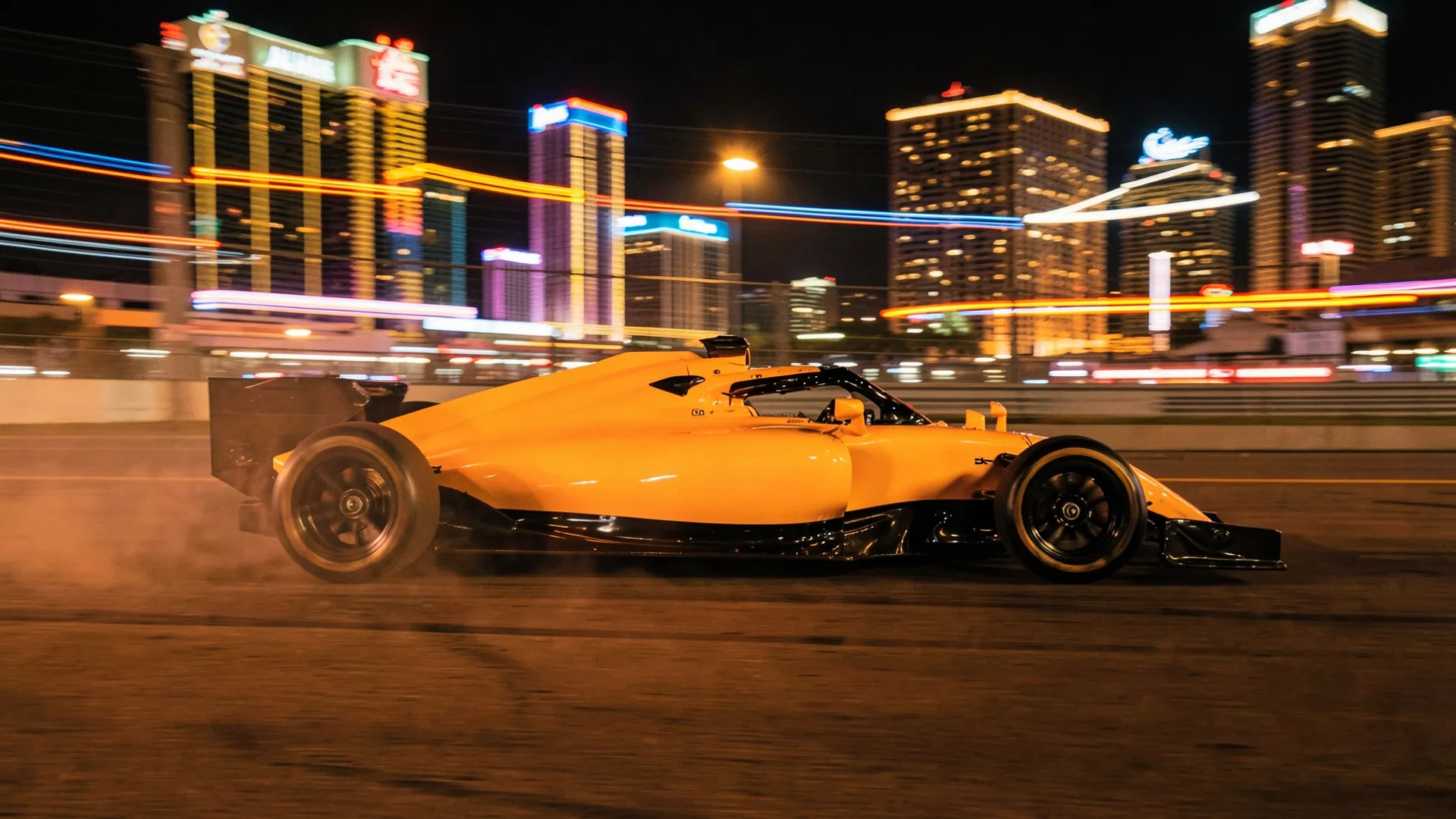
Zak Brown completes 10 years at McLaren on Sunday, the day of the Las Vegas Grand Prix. When he arrived in November 2016, the team was near the bottom of Formula 1 and mired in a boardroom war. Now it is a two-time reigning constructors’ champion that RacingNews365 values at around £3 billion. Few executives in the sport’s history have overseen a turnaround of that scale, and fewer still have done it while being so loudly themselves.
The anniversary arrives at an awkward moment. McLaren sits fourth in the 2026 constructors’ standings, behind a rampant Mercedes. That makes this a fair time to ask what Brown actually built, and whether it is built to last.
The Woking team Brown walked into
It is easy to forget how bleak McLaren was in late 2016. Ron Dennis, the man who had shaped the team for more than three decades, was being forced out after a shareholder dispute. The Honda reunion, sold as a return to the glory of the Senna-Prost years, had produced an underpowered and unreliable car. In 2017 McLaren scored 30 points and finished ninth of 10 teams.
Brown was not an engineer or a racing lifer in the Dennis mould. He was a marketing man, the founder of the sponsorship agency Just Marketing International, brought in as executive director of the wider McLaren Technology Group. The early scepticism was understandable. Formula 1 had seen plenty of commercial figures take charge of teams and lose them.
His first major decision was a sporting one: ending the Honda partnership after 2017 and taking Renault customer engines from 2018. It cost McLaren works-team status and a large financial contribution. It was also correct. A team that cannot finish races cannot sell itself, and Brown understood earlier than most that credibility had to come before revenue.
Survival first: the bank, the investors and the cost cap
Brown became chief executive of McLaren Racing in 2018. The real crisis came two years later. The pandemic left the McLaren Group severely exposed, with around 1,200 roles cut across the business in 2020. The group took a loan from the National Bank of Bahrain and later agreed a sale and leaseback of the McLaren Technology Centre itself. The racing team brought in MSP Sports Capital as a minority investor.
None of that is glamorous, and it rarely features in the highlight reels. But it is the foundation of everything since. A team that had been at genuine risk emerged with fresh capital and a clearer structure, at precisely the moment the sport’s economics were changing.
That change was the budget cap, introduced in 2021. Brown had been one of its most vocal advocates, arguing that unlimited spending had locked the midfield out of contention permanently. Critics saw self-interest, and there was some. McLaren could no longer outspend Mercedes, Red Bull or Ferrari, so it needed a rule stopping them from outspending McLaren. But the argument was also right on its merits. The cap is the single biggest reason a team that finished ninth in 2017 could win titles seven years later. Brown’s hard line on Red Bull’s 2021 cap breach, which he described as cheating, reflected how central the cap was to his whole plan.
Seidl, Stella and the slow build to 2024
Brown’s most important skill as a team boss has been knowing what he is not. He hired Andreas Seidl from Porsche as team principal in 2019 and let him run the technical side. After switching to Mercedes engines in 2021, McLaren also committed to infrastructure it had lacked for years, including its own wind tunnel and a new simulator. These investments took years to pay off, which is exactly why owners and chief executives so often baulk at them.
The driver choices were just as deliberate. Lando Norris was promoted in 2019 alongside Carlos Sainz, who took the team’s first podium in six years at Interlagos that season. The Daniel Ricciardo signing did not work out, despite the 1-2 at Monza in 2021. McLaren’s response was to pay to end that deal early and to win a contract dispute with Alpine to sign Oscar Piastri.
When Seidl left at the end of 2022, Brown promoted Andrea Stella rather than shopping for a big name. It was the best decision of his tenure. McLaren began 2023 at the back of the field. Stella reorganised the technical department, and a mid-season upgrade turned the car into a regular podium contender. By 2024 Norris had his first win, in Miami, and McLaren took the constructors’ title, its first since 1998. In 2025 it retained that crown, and Norris won the drivers’ championship in Abu Dhabi.
The culture Brown will not compromise on
Brown’s public persona is genial. His management style is less so. Speaking to RacingNews365 ahead of the anniversary, he made it clear that behaviour he dismisses as “BS” is “just not welcome” at McLaren. That is consistent with how the team has worked under him. Internal politics are treated as a performance problem, not a fact of life.
The clearest example is the “papaya rules” policy of equal treatment for both drivers. It has drawn ridicule, notably over the team-orders tangle in Hungary in 2024 and the pit-stop swap at Monza in 2025. Rivals and pundits have called it naive, arguing that title-winning teams pick a lead driver.
That criticism misreads the trade-off. Brown and Stella chose short-term friction, and the occasional lost points, over a team divided into two camps. McLaren’s history includes the Senna-Prost feud and the Hamilton-Alonso civil war of 2007. A team that has paid that price twice has good reason to prefer awkward fairness. The policy has also kept two contracted drivers motivated and committed. In an era when top-line drivers move teams freely, that has real value.
Brown is less restrained outside his own garage. He has been a persistent critic of joint ownership of two teams, an argument aimed squarely at Red Bull. He has also clashed often with rival bosses and, at times, with the FIA. Some of that is theatre. Most of it comes from a commercial chief who understands that McLaren’s model only works if the rules stay fair for independent teams.
Fourth place, and the customer problem
The 2026 season has been a reminder of the limits of that model. The new power-unit rules have favoured the manufacturer that builds the engine. Mercedes has won 12 of the 20 rounds so far. Andrea Kimi Antonelli leads the drivers’ championship on 390 points with nine wins, and his 111-point lead over Max Verstappen is beyond what the final three rounds can overturn. McLaren uses the same Mercedes engine but not the same integrated design process. It has three wins and sits fourth on 398 points, 17 behind Red Bull and 254 behind Mercedes.
| Constructors’ standings after Brazil | Points | Wins |
|---|---|---|
| 1. Mercedes | 652 | 12 |
| 2. Ferrari | 510 | 2 |
| 3. Red Bull | 415 | 3 |
| 4. McLaren | 398 | 3 |
Norris remains a front-runner. His win from pole at Interlagos was his third of the season and lifted him to 246 points, sixth overall but within three points of Charles Leclerc in fifth. Piastri’s year has been harder. He has 152 points and no wins, though he recovered from 10th on the grid to sixth in Brazil. The gap between the two drivers is the most obvious sporting problem Brown and Stella face in the off-season.
There is no disgrace in a reigning champion slipping at a regulation reset. Mercedes, Ferrari and Red Bull have all done it before. The real test is the one Brown has faced since the Renault deal of 2018: whether a customer team can consistently beat the works outfit supplying its engine. In 2024 and 2025 McLaren proved that it could. The 2026 season suggests that the advantage depends on the rules settling down, and on McLaren’s engineering staff closing the gap faster than Mercedes can widen it.
The narrower test of a second decade
Brown has turned a near-collapse into a business worth billions and a team that knows how to win. His second decade will be judged on something narrower and harder: whether McLaren can lead the field again under rules written around manufacturers. Beating Red Bull to third across Las Vegas, Qatar and Abu Dhabi would be a useful start. The stronger signal will come in early 2027, when it becomes clear whether McLaren’s development rate can match that of the works team it buys its engines from.