
Russell Has No Regrets, but Overturning Antonelli at Mercedes Will Demand Real Change
George Russell says he would change nothing about a 2026 season in which team-mate Andrea Kimi Antonelli won the title, but the numbers suggest overturning Mercedes' new order will require more than conviction.
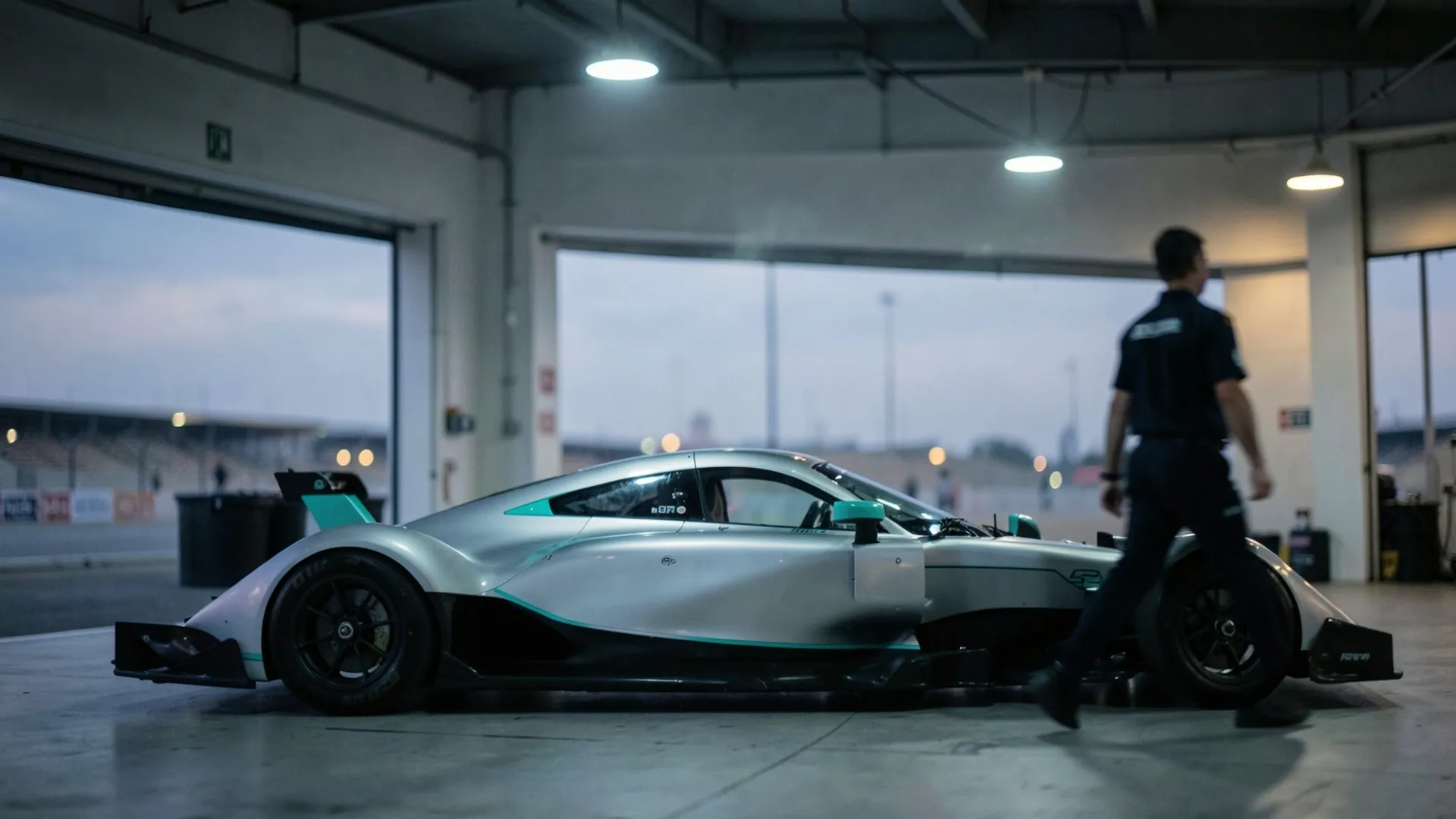
George Russell has insisted he would do nothing differently if he could relive a 2026 season in which his Mercedes team-mate, Andrea Kimi Antonelli, became world champion. RacingNews365 reports that Russell also set out how he intends to take the fight back to Antonelli after a year GPfans described as chastening. It is a defiant stance from a driver who arrived at this season as Mercedes’ established leader and leaves it as the number two.
Defiance is understandable. Whether it is enough is a harder question, and the scale of what Russell must overturn makes it a pressing one.
A title decided inside the Mercedes garage
The 2026 regulations gave Mercedes the best car on the grid, and the results show it. The team has won 12 of the 20 Grands Prix held so far and leads the constructors’ championship on 652 points, 142 clear of Ferrari. When one team holds that kind of advantage, the drivers’ title becomes an internal contest, and Antonelli has won it decisively.
He has 390 points and nine victories. Max Verstappen, second in the standings, is 111 points behind with only three rounds remaining, so Antonelli’s lead is beyond reach. Russell has 262 points and three wins. In equal machinery, Antonelli has taken three-quarters of Mercedes’ victories.
The table below shows what makes Russell’s position so uncomfortable:
| Position | Driver | Team | Points | Gap to Russell |
|---|---|---|---|---|
| 3 | George Russell | Mercedes | 262 | n/a |
| 4 | Lewis Hamilton | Ferrari | 261 | -1 |
| 5 | Charles Leclerc | Ferrari | 249 | -13 |
| 6 | Lando Norris | McLaren | 246 | -16 |
Russell has the same car as the champion, yet he holds third place by a single point from Lewis Hamilton, whose Ferrari has been clearly slower over the season. Charles Leclerc and Norris are within a good weekend of him. With Verstappen 17 points ahead and Norris 16 behind, Russell could still finish anywhere from second to sixth, and sixth in the dominant car would be a poor return.
The 128-point gap to Antonelli averages out at 6.4 points per round. That is only just short of the seven points separating first and second in a single race, conceded at every round of the season. Bad luck and the odd strategic misstep account for some of a gap like that. They do not account for all of it.
The case for ‘no regrets’, and its danger
Russell’s refusal to second-guess himself makes sense up to a point. A driver who publicly picks apart his own season hands his team-mate a psychological edge and invites the team to rethink who deserves priority. Saying he would change nothing tells Mercedes, and Antonelli, that Russell still believes in his method and his speed. Drivers who start doubting themselves after losing to a younger team-mate rarely recover their standing.
There is also a reasonable argument that Russell’s process was sound and that the margin came largely from Antonelli’s development. A year earlier, Russell had comfortably beaten Antonelli in the Italian’s rookie season. The 2026 rules reset the cars, the power units and the way drivers have to manage energy and grip, and Antonelli adapted faster and more completely. If Russell believes he made the right decisions with what he knew, his statement is honest rather than stubborn.
The risk lies in how the message is heard. “I would do nothing differently” can easily become “I need to do nothing differently”, and the evidence does not support that. Antonelli did not edge the title on reliability or a lucky streak. Nine wins to three is a performance gap. If Russell’s internal review reaches the same conclusion as his public comments, he will start 2027 with the same approach that produced this year’s result.
The most productive reading is that Russell regrets nothing about his effort but accepts that his output fell short. That distinction will matter far more in the Brackley debriefs than in any interview.
Russell has been on both sides of this before
Russell knows better than most that team-mate hierarchies can move in either direction. In 2022, his first season at Mercedes, he outscored Hamilton, a seven-time world champion, in a difficult car. In 2023 Hamilton finished ahead of him, before Russell regained the upper hand in 2024. That back-and-forth is one reason Russell can reasonably say a single season does not settle anything.
The wider history of the sport is less encouraging. When a younger driver beats an established team leader on equal terms, the leader rarely reverses it. Sebastian Vettel never re-established himself over Daniel Ricciardo at Red Bull in 2014, and he left at the end of that season. At Ferrari, Leclerc’s emergence in 2019 changed the team’s direction for good. Mark Webber spent years trying to beat Vettel in the same car and never managed it over a full season. The pattern is not inevitable, but it is strong: once a team sees its future in one driver, the advantage tends to build on itself.
Antonelli is 20. He is now Mercedes’ champion and long-term project. Russell, at 28, is in his prime rather than near the end of his career, which separates his situation from several of those precedents. Even so, the team’s priorities will naturally lean towards the driver with the number one on his car.
Three things Russell needs from 2027
Russell needs three things to change, and only one of them is fully in his control.
The first is his own performance. Russell’s reputation is built on qualifying speed and precision over a single lap. Over a season, though, the title depends on converting strong positions into wins, and Antonelli has done that far more often. Brazil offered a small sign of what Russell needs to do more consistently. He started seventh and finished fourth, while Antonelli dropped from second on the grid to fifth. Russell needs to make results like that the norm rather than the exception.
The second is the car’s development. In 2027, the second year of these regulations, the field should converge, as it usually does once rival teams understand new rules. That cuts both ways. A smaller Mercedes advantage means fewer straightforward one-two weekends and more races decided by racecraft, tyre management and strategy, areas where an experienced driver can make a difference. It also means the drivers’ title may no longer be a contest only Mercedes drivers can win. Verstappen already sits second, ahead of Russell, in a Red Bull that has won only three races, which shows how quickly the opportunity can slip away from a Mercedes driver once the car is less dominant.
The third is how Mercedes manages its drivers. The team has generally allowed them to race, and Russell will need that to continue. In close strategic calls, such as the timing of a pit stop or which car stops first under a safety car, the team’s preference rarely shows publicly. It still decides points over a season. Russell’s best protection is to give the team no reason to choose, by being ahead on the road from the opening rounds.
Las Vegas is the first test
The reversal will not happen in 2027 unless it starts now. Las Vegas on 22 November is the first of the three remaining rounds, and Russell has strong form there, having won the race from pole in 2024. Antonelli has nothing left to win in the championship. Russell has third place to protect against Hamilton, Leclerc and Norris, and a point to make.
Beating Antonelli in all three remaining races would not change the 2026 result, but it would give Russell’s argument more weight inside the team than anything he can say in an interview. His claim that he would change nothing will be judged by whether he can outperform a champion who has every reason to relax. If Russell finishes the year behind Antonelli again and loses third place to a Ferrari, Mercedes will have every reason to treat the new order as permanent.