
Verstappen's Brazil Charge Makes Red Bull a Real Threat, Not Yet the 2027 Favourite
Max Verstappen's drive from 21st to second at Interlagos caps Red Bull's recovery, but Mercedes' title-winning platform and F1's history of misleading autumn form argue against making him the 2027 favourite just yet.
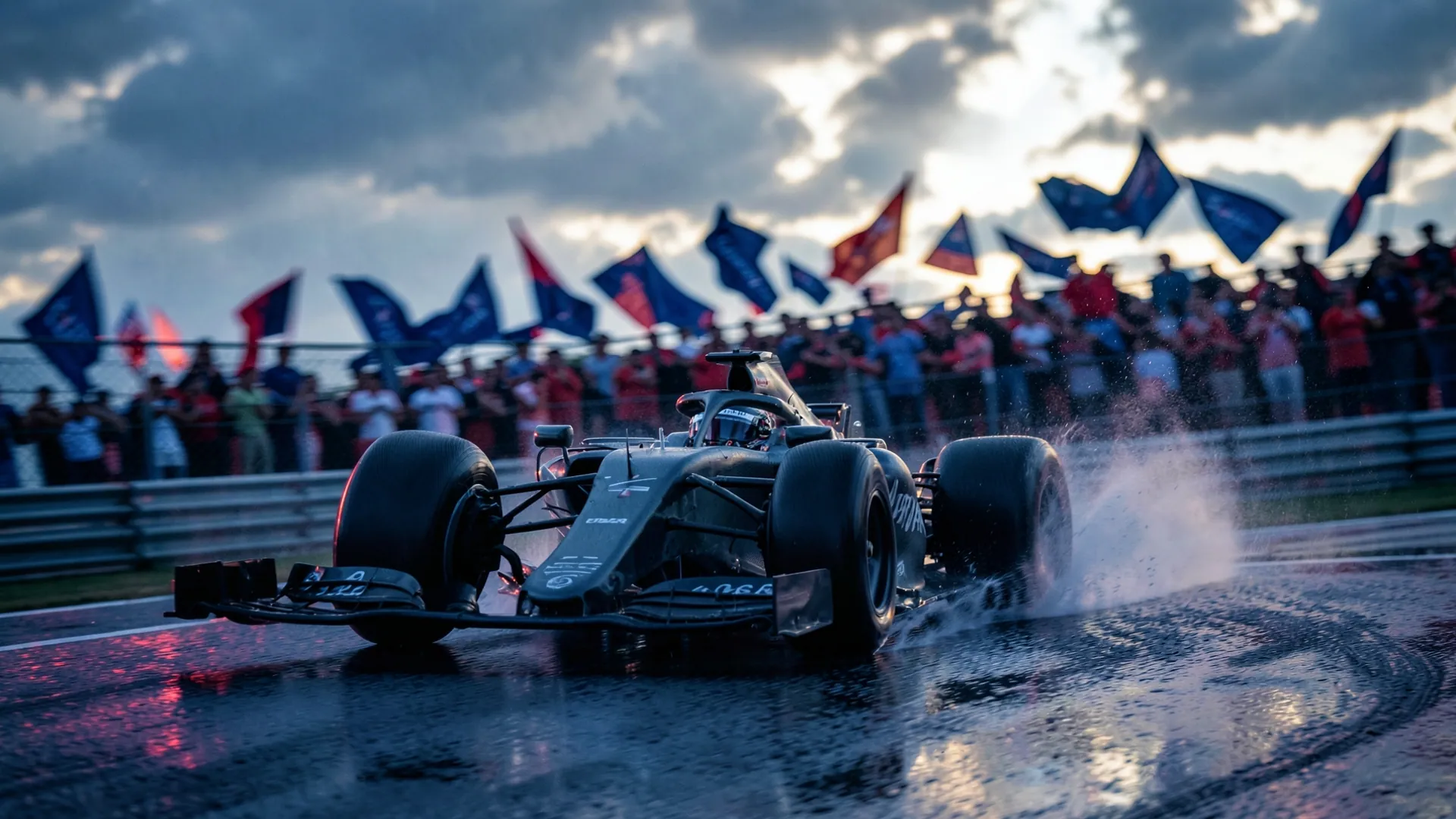
Max Verstappen finished second in the Brazilian Grand Prix on 8 November after starting 21st, beaten only by pole-sitter Lando Norris. Isack Hadjar completed a double Red Bull podium in third, giving the team 33 points from the weekend against Mercedes’ 22. With Verstappen in what RacingNews365 has called ferocious form in the closing stages of the season, the obvious question is whether Red Bull, rather than champion Mercedes, now heads into 2027 as the team to beat.
It is a fair question. The answer, for now, is no. Red Bull has earned the right to be called the most credible challenger, but favouritism belongs to the team that has won 12 of the 20 races so far.
From 21st to second at Interlagos
The grid in São Paulo was unusual. Liam Lawson lined up third, Nico Hülkenberg fourth and Oliver Bearman sixth, while Verstappen started 21st and Lewis Hamilton 20th. The race restored the natural order with some force. Lawson dropped to seventh, Hülkenberg to 10th and Bearman to 17th, and only eight cars finished on the lead lap.
Verstappen’s run to second is best measured against Hamilton’s. Both started near the back, at a circuit that has always rewarded overtaking. Hamilton, driving for a Ferrari team second in the constructors’ championship, recovered 11 places to ninth and was lapped. Verstappen gained 19 places and finished ahead of both Mercedes. Andrea Kimi Antonelli started second and finished fifth, while George Russell climbed from seventh to fourth. No single result proves a car is the quickest, but finishing ahead of both silver cars from that grid slot shows pace that was not confined to one stint.
Hadjar’s part matters as much as Verstappen’s. Red Bull’s second seat has been a chronic weakness for years. Sergio Pérez’s form fell away in 2024, and in 2025 Lawson was replaced after two rounds. Hadjar is eighth in the standings on 122 points, well short of his team-mate’s 279. A podium from fifth on the grid is the kind of supporting result Red Bull has rarely had, and it is what turns a fast car into a constructors’ threat.
Antonelli’s title is settled, but the fight for second is not
None of this touches the championship. Antonelli leads on 390 points with nine wins, 111 clear of Verstappen. With three rounds left and 75 points available to any one driver, the title is his, in only his second season. Mercedes is similarly beyond reach in the constructors’ standings: its 652 points leave Ferrari 142 behind, more than the 129 a two-car team can score in three races.
Behind Antonelli, the standings are far more tightly packed:
| Pos | Driver | Team | Points | Wins |
|---|---|---|---|---|
| 2 | Max Verstappen | Red Bull | 279 | 3 |
| 3 | George Russell | Mercedes | 262 | 3 |
| 4 | Lewis Hamilton | Ferrari | 261 | 1 |
| 5 | Charles Leclerc | Ferrari | 249 | 1 |
| 6 | Lando Norris | McLaren | 246 | 3 |
Five drivers from four teams are covered by 33 points. That spread explains both sides of the argument. Verstappen sits second with three wins, 17 points ahead of Russell, who has the same number of victories in the championship-winning car. That says a great deal about how much Verstappen has extracted from his machinery. Even so, the 111-point gap to Antonelli reflects how large Mercedes’ advantage was across the year. A strong autumn has not undone a dominant spring and summer.
In the constructors’ table, Red Bull is third on 415 points, 95 behind Ferrari and 17 ahead of McLaren. Second place is still mathematically possible, but it would need Ferrari’s Brazil collapse, in which it scored just six points, to become a pattern.
Brazil has flattered before
Interlagos has a history of sending misleading signals into the winter.
In 2022, Mercedes took a one-two in Brazil, Russell winning ahead of Hamilton, and the result was widely read as proof that its troubled first-year car had come good. In 2023, Red Bull won 21 of the 22 races and Mercedes did not win at all. The late-season gain was real, but it came from a concept the team then abandoned.
Red Bull supporters will point to the opposite precedent. In 2009, Brawn won both titles, but Red Bull won three of the last four races and went on to take both championships in 2010. That comparison, however, flatters the present situation. Brawn’s advantage was built on a double-diffuser interpretation that rivals had copied by mid-season, and the team was operating on a shoestring. Mercedes in 2026 is a fully resourced works operation that has won both titles in the first year of a new ruleset, with a power unit good enough to carry Norris’s customer McLaren to victory from pole in Brazil.
The more relevant precedent concerns year two of a regulation cycle, and 2027 will be the second season under the current rules rather than a fresh start. The team that cracked the rules first has usually extended its lead. Mercedes went from dominant in 2014 to dominant again in 2015. Red Bull turned a winning 2022 into an almost perfect 2023. Stable regulations do compress the field eventually, but historically not by the second winter. The early leader understands its car best and develops from the strongest baseline.
Where Red Bull can close the gap
The case for Red Bull is not empty. Three mechanisms work in its favour.
First, aerodynamic testing allowances are distributed on a sliding scale by championship position. As champion, Mercedes will have the smallest allocation of wind tunnel and CFD time for the early part of next year, and Red Bull a larger one. Over a winter this is a modest handicap, but a real one, and it grows if the chasing team has already found the right direction.
Second, Red Bull’s recovery has come during its first season building its own power unit with Ford. Under rules designed to limit power unit development, engine deficits are the slowest thing in the sport to fix. Running this close to Mercedes with an engine built from a cold start suggests the chassis side is very strong. The power unit is the variable most likely to decide whether the team can move from close to clearly quicker.
Third, there is Verstappen himself. When cars are separated by a tenth, the driver who converts most consistently wins titles, and over the past several seasons no one has converted more consistently than he has. Antonelli has nine wins this year and the best car to defend with. He has not yet had to defend a title against Verstappen in an equal car, and neither has anyone else at Mercedes.
Why Mercedes still starts 2027 in front
The honest reading of the 2026 season is that Mercedes built the best car under the new rules and Red Bull built the best recovery. Those are different achievements, and only the first has a strong record of carrying into the following year. A Red Bull that sits third in the constructors’ championship, 237 points behind Mercedes with three rounds left, has momentum. It does not yet have proof.
That proof can come over the final three rounds. Las Vegas on 22 November, with its long straights and low-downforce demands, is as clear a test of power unit strength as the calendar offers. If Verstappen can beat both Mercedes on merit there, on a circuit that should favour the champion team’s engine, the argument changes. If he cannot, his Brazil drive will be remembered for what it was: an outstanding recovery by an exceptional driver in a car that is closing on Mercedes but has not caught it.
Our judgement for now is that Red Bull is the strongest challenger for 2027 and Verstappen the most dangerous individual, but Mercedes remains the favourite. Red Bull needs to win races on circuits that suit Mercedes before anyone can say the balance has shifted.