
Norris Defends McLaren's 2026 Sacrifice as Brazil Victory Shows What It Cost
Lando Norris has explained McLaren's choice to trade away 2026 for a 2027 title push, but his Interlagos win shows how much the reigning constructors' champions have given up.
Lando Norris has explained why McLaren chose to trade off its 2026 season in pursuit of a championship in 2027, days after converting pole position into victory at the Brazilian Grand Prix. His comments, reported by RacingNews365, present McLaren’s year as a deliberate decision rather than an accidental slump. With the team fourth in the constructors’ standings on 398 points and three rounds left, the real question is whether McLaren has paid a sensible price for its ambition or an excessive one.
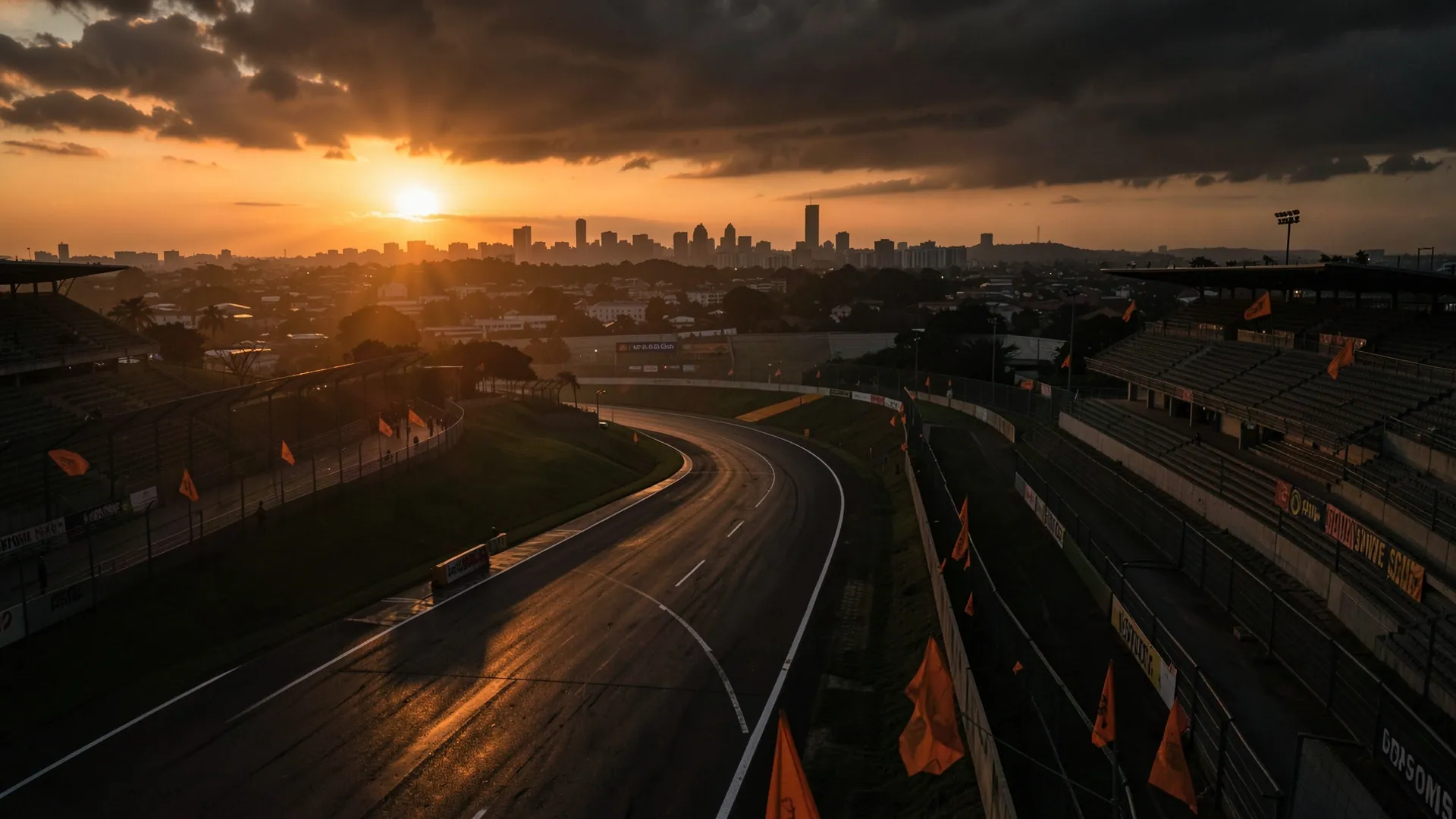
Interlagos showed what McLaren set aside
Norris’s win in São Paulo on 8 November was McLaren’s third of the season, and all three belong to him. He started from pole and kept Andrea Kimi Antonelli, who lined up alongside him, at bay. Antonelli faded to fifth. Oscar Piastri recovered from 10th on the grid to sixth, giving McLaren 33 points for the afternoon.
That haul matched Red Bull’s exactly. Max Verstappen came through from 21st to second and Isack Hadjar took third from fifth, so the 17-point gap between the two teams in the table did not move. On a weekend when McLaren had its lead driver on pole, it could not gain ground on a rival that had started one of its cars 21st.
Brazil makes the shape of McLaren’s season easy to see. The car can win on the right day, but not often enough to trouble Mercedes. Mercedes has won 12 of the 20 rounds so far. Antonelli has nine victories and 390 points, and his 111-point lead over Verstappen cannot be overturned in the three rounds that remain. In that context, an occasional McLaren victory is a pleasant reminder of the team’s quality rather than evidence of a missed title.
Norris is still in a live contest, though. He sits sixth on 246 points, and the race for second place behind Antonelli is the tightest fight left in the championship.
| Pos | Driver | Team | Points | Gap to P2 |
|---|---|---|---|---|
| 2 | Max Verstappen | Red Bull | 279 | – |
| 3 | George Russell | Mercedes | 262 | 17 |
| 4 | Lewis Hamilton | Ferrari | 261 | 18 |
| 5 | Charles Leclerc | Ferrari | 249 | 30 |
| 6 | Lando Norris | McLaren | 246 | 33 |
Five drivers are covered by 33 points. If a car developed with one eye on next year can still put Norris in range of runner-up, that reflects well on McLaren’s starting point.
The logic behind writing off a season
The appeal of the “impossible dream” framing is that it is honest about the odds. Catching a Mercedes team that settled into this rulebook faster than anyone else would have meant committing staff, wind-tunnel time and budget to a chase with no guaranteed finish line. Under the cost cap, those resources are finite. Every pound and every tunnel run spent bolting upgrades onto the 2026 car is unavailable for its successor.
The timing matters too. The 2026 regulations brought new chassis and power unit rules at once, and the first seasons of any rule set are when the development curve is steepest. Teams learn more, and faster, in years one and two than they ever will in years four and five. A team that concludes its first-year concept has a ceiling can choose between two paths. It can keep refining that concept and accept small gains, or it can move its effort early to the car that will define the next phase of the cycle. McLaren chose the second path.
The regulations offer a small consolation as well. Aerodynamic testing allowances are set on a sliding scale, and teams lower in the constructors’ table receive more wind-tunnel and CFD time. Fourth place is not a prize in itself, but it brings slightly more development time than a top-three finish in the table would have.
The decision also costs the drivers, and the cost is not shared equally. Norris’s three wins have kept his season respectable. Piastri has 152 points and no victories, 94 behind his team-mate. For a driver who spent much of 2025 leading the championship, a year spent as a bystander in his own team’s long-term plan is a significant personal sacrifice.
Fourth place and the points that remain
The constructors’ table shows how far McLaren has fallen as reigning champions. Mercedes leads on 652 points. Ferrari is second on 510, Red Bull third on 415 and McLaren fourth on 398. Ferrari is 112 points clear of McLaren, a margin that is effectively out of reach with three Grands Prix left.
Red Bull is a different matter. Seventeen points is less than one strong weekend’s difference, and Brazil showed that McLaren can match Red Bull’s scoring, even if it gained nothing there. Third place is worth more prize money than fourth, so McLaren has a direct incentive to keep fighting. Finishing higher would also slightly reduce its testing allocation for next year, an awkward side effect of a well-intentioned rule.
Fourth is probably the price McLaren expected to pay, and its stance has been consistent with that. Las Vegas on 22 November and the two rounds after it will show whether the team tries to recover third or quietly accepts fourth.
Brawn, Mercedes and the teams whose bets failed
Formula 1 has seen this gamble before, with very different results.
- Honda in 2008: the team effectively gave up its season to pour resources into the 2009 regulations. It finished near the bottom of the table, was sold, raced as Brawn GP and won both championships. It remains the classic example of a deliberate sacrifice that paid off.
- Mercedes in 2013: the team was already looking towards the 2014 hybrid rules while racing a competitive car. It then began the most dominant run of the modern era.
- Ferrari in 2021: Ferrari stopped developing its 2021 car early to focus on 2022. It won races the following year, then fell away as Red Bull out-developed it, proof that a strong start to a new rule set can still fall short of a title.
- Williams in 2025: Williams moved its focus to 2026 early last season. It is ninth this year with 12 points, which shows that early commitment to a new rule set guarantees nothing on its own.
The pattern is clear. Sacrificing a season is often necessary for a team that wants to leap ahead, but it is never enough by itself. The teams that benefited had better ideas, and the timing of the sacrifice only gave those ideas room to develop. The others simply lost a year.
McLaren’s position is more encouraging than Williams’ was. A team that can still put a car on pole and win in Brazil has sound foundations. Its engineers are not starting from a car that does not work; they are trying to replace one that works, but not well enough.
What 2027 now has to deliver
The bar for success is high, and McLaren set it there by choice. Finishing as Mercedes’ closest challenger next year will not justify writing off this one. Ferrari and Red Bull have stayed ahead of McLaren in 2026 without making similar announcements, and both will carry their own lessons into next season. Mercedes already has a title-winning car and a champion driver who is not yet 21.
So the judgement is straightforward. The trade-off was rational, and Norris’s willingness to explain it publicly suggests the drivers believe in it. Chasing Mercedes all year for third place would have been a weaker plan. The plan only proves itself if McLaren begins 2027 as the benchmark, or close enough to fight Antonelli for the title from the first races. A merely competitive car would not be enough, because a fourth-placed team can produce one of those without sacrificing anything.
Norris’s immediate task is to turn the speed he showed at Interlagos into second place in the championship over the next three rounds. McLaren’s task is greater. If this year’s sacrifice has not produced a car that leads the field by spring, 2026 will be remembered as a wasted season rather than a well-planned investment.