
Horner's Budget Cap Plea Meets Mercedes' £633m Revenue and £125m Dividend
Christian Horner says teams spend up to $600m a year and wants the $215m cap raised, but Mercedes' latest accounts suggest the cap is doing exactly what it was designed to do.
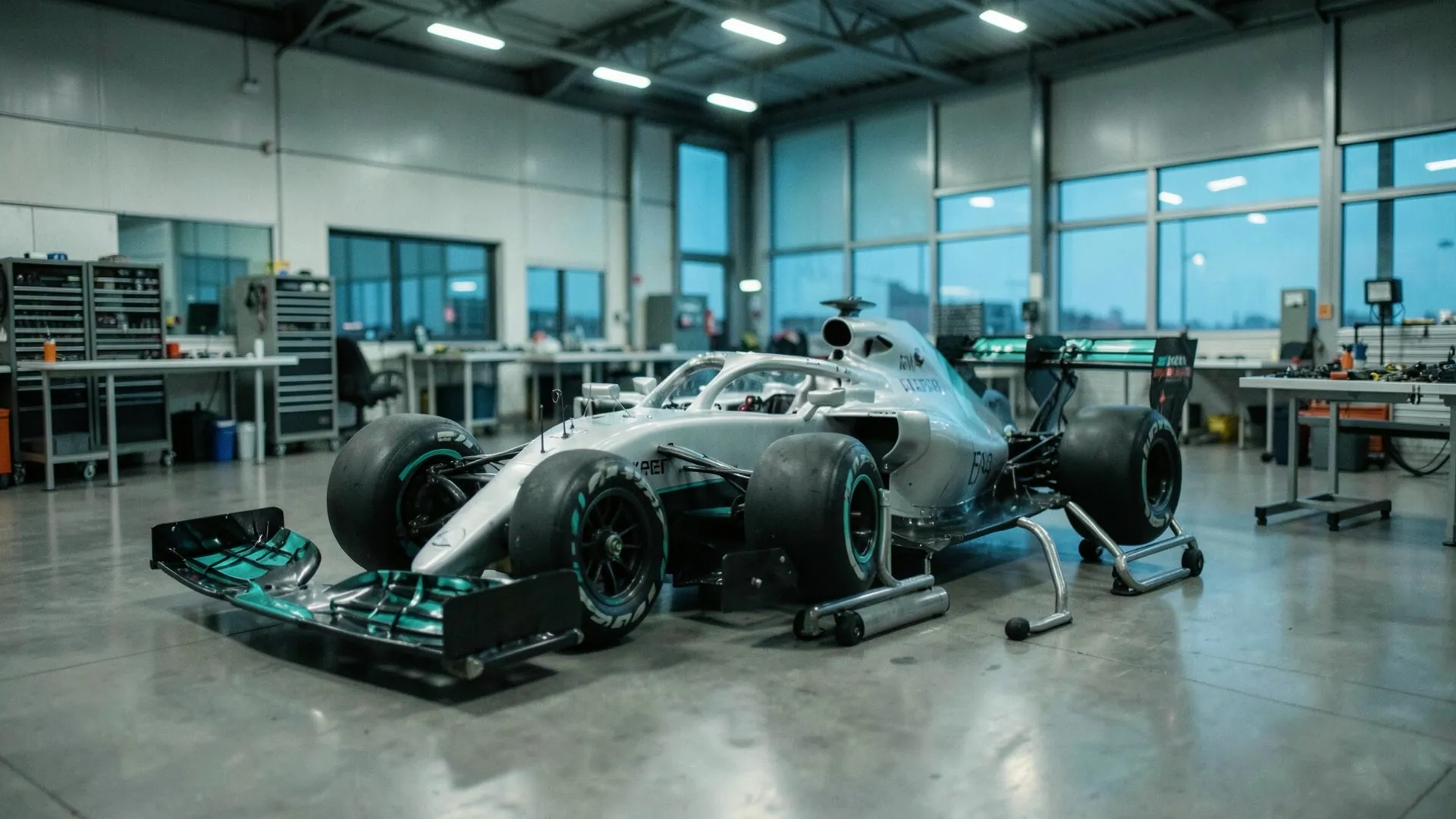
Christian Horner has called on Formula 1 to raise its $215m budget cap, claiming that teams are spending “$500 or $600 million” a year. His demand coincides with the filing of Mercedes’ annual accounts at Companies House, which show the team took £633.4m in revenue in 2025 and paid £125m in dividends to its shareholders. Taken together, the two numbers seem to tell one story: the cap is a fiction and the big teams are awash with cash. Read properly, they tell almost the opposite.
What £633m does and does not tell you
Revenue is not spending, and spending is not cap-relevant spending. Those distinctions are the whole argument.
Mercedes’ £633.4m is well over $800m at current exchange rates. It comes from prize money, sponsorship and commercial deals. These are group accounts, covering a business wider than the operation that builds the W17. The figure does not measure what Brackley spent on making the car faster, which is the only thing the cap was ever meant to limit.
The more revealing number is the dividend. A team paying £125m to its owners is a team generating more money than it is permitted to put into performance. Mercedes is owned in equal thirds by Mercedes-Benz, Ineos and Toto Wolff, and all three have now seen a return that would have been unthinkable in the early years of the hybrid era. Back then, the leading teams poured their surplus revenue straight into headcount, wind tunnel hours and parts that might be worth a tenth of a second.
That money now leaves the sport as profit. The cap has stopped it being spent on lap time, which is precisely what it was introduced to do.
Horner’s arithmetic and the exclusions
Horner’s figure is not plucked from thin air. The cap has always been porous by design. Driver salaries sit outside it, as do the salaries of a team’s three highest-paid employees, marketing costs and a range of other items. Capital expenditure is governed by a separate allowance, and manufacturers’ power-unit programmes have a cost cap of their own. Add all of that together for a top team and a total of $500m to $600m becomes plausible.
The question is what follows from that. If a team pays its lead driver a fortune and spends heavily on hospitality, its car is no quicker for it. The excluded categories were carved out because they are either hard to police across different corporate structures or largely irrelevant to performance. The headline total can be enormous while competitive spending remains tightly bounded.
Horner’s case would be stronger if he could show that exempt spending is leaking into performance: engineering talent dressed up as something else, or development work routed through sister companies. That is a genuine risk, and the FIA’s cost cap department exists to chase it. Raising the ceiling, however, does nothing to close a loophole. It simply lets everyone spend more within the rules, and the teams best placed to use that headroom are the ones with £633m coming through the door.
There is some history here, too. Red Bull, under Horner, was found to have committed a minor overspend breach of the 2021 cap. The FIA fined the team $7m and cut its aerodynamic testing allowance by 10%. Aston Martin and Williams were penalised for procedural breaches that same year. That episode showed the cap had teeth. It also showed that the teams pushing hardest at its edges were the ones with the most to gain from loosening it.
A cap that has made teams worth owning
The commercial transformation since 2021 is the cap’s most visible legacy. Before it, a midfield team was a liability that needed a wealthy backer to cover its losses. Now franchise values have soared, investors queue for stakes, and the grid has expanded to 11 teams with Cadillac’s arrival this season.
That expansion matters in this debate. Cadillac has yet to score a point in 17 rounds. Williams has 12 and Aston Martin seven, the latter despite heavy investment in its Silverstone campus and the recruitment of Adrian Newey. These teams are already climbing a steep curve under a $215m ceiling. Lift it towards Horner’s numbers and the climb becomes a cliff. The newcomer’s business plan is built on a spending limit that keeps the gap to the front bridgeable, and moving the goalposts would punish exactly the investment F1 spent years courting.
The dividend argument cuts the same way. If teams can pay out nine-figure sums to shareholders, the sport is not short of money. The issue is where that money goes. A higher cap would recycle profit into an arms race that, on all the evidence of the pre-2021 era, concentrates success among the richest three or four outfits.
Mercedes’ 2026 lead sharpens the argument
The timing gives Horner’s intervention its force. The new regulations have produced the kind of dominance the cap was supposed to make harder to sustain. Mercedes has won 11 of the 17 Grands Prix so far and leads the constructors’ championship with 578 points, 134 clear of Ferrari. Andrea Kimi Antonelli has eight wins and 340 points, and he leads team-mate George Russell by 102 with six rounds remaining.
| Constructor | Points | Wins |
|---|---|---|
| Mercedes | 578 | 11 |
| Ferrari | 444 | 2 |
| McLaren | 339 | 2 |
| Red Bull | 332 | 2 |
Under the old system, a rival facing a deficit like that would have thrown money at it. Red Bull did so in the hybrid era and eventually got there. Today nobody can outspend their way back, and that is the source of the frustration. A cap locks in the order established at the start of a rules cycle unless the trailing teams out-think the leader.
Yet the picture is less fixed than the table suggests. Max Verstappen won in Singapore from pole, with Charles Leclerc second and Antonelli only third. Russell recovered from 19th on the grid to ninth. Red Bull and McLaren are separated by seven points in the fight for third. Four teams have won races this season. Mercedes has the best package, but it has not been untouchable at every circuit.
The sliding scale of aerodynamic testing also continues to give the teams furthest behind more wind tunnel and simulation time. That is the cap system’s built-in mechanism for convergence. It works slowly, but it works without allowing anyone to spend more.
Fix the enforcement, keep the ceiling
Horner is right about one thing: the gap between what teams spend and what the cap measures has grown large enough to invite suspicion. A sport in which total outlay is two or three times the headline limit needs credible auditing of the boundaries. That means clear rules on staff moving between capped and uncapped entities, scrutiny of work done by affiliated companies, and penalties that make a breach unprofitable. Rivals criticised the 2021 sanction against Red Bull as too light for the advantage it might have bought. Sharper consequences would do more for fairness than any change to the number.
What the Mercedes accounts show is a team that is commercially strong, competitively dominant and still unable to spend its way further ahead. In 2013, some of that £125m dividend would have gone into the car. In 2025 it went to the owners. The cap was meant to produce that outcome, and it should not be rolled back because one team built the best car for a new formula.
The test comes next year. If Ferrari, McLaren and Red Bull close the gap through development within the existing ceiling, Horner’s case collapses on its own terms. If Mercedes extends its advantage into 2027, the pressure will build, but the right response will be tighter policing of the exemptions rather than a bigger budget for the teams that already have the most.