
F1 today: the stories everyone's talking about — 24 Sept 2026
GP Headlines' round-up and analysis of the biggest Formula 1 storylines making news right now.
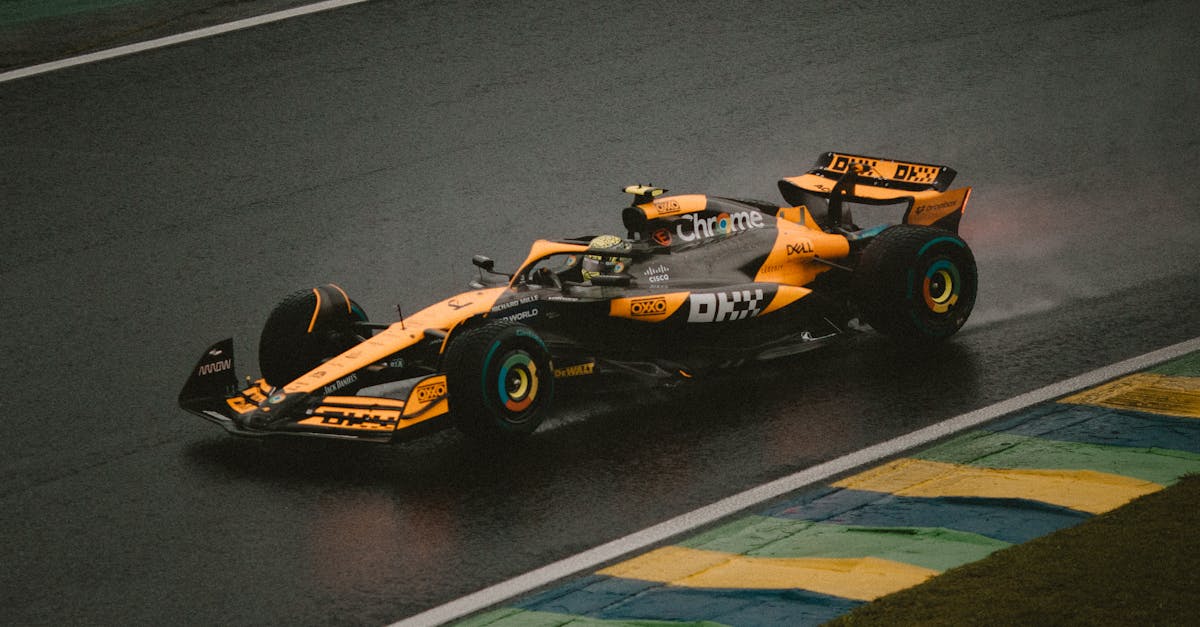
Baku has a habit of delivering theatre before the cars even reach the grid on Sunday, and Thursday’s practice sessions for the Azerbaijan Grand Prix followed the script to the letter: a dominant Mercedes did the talking on pace, while Lewis Hamilton did the talking everyone will remember once the stewards’ verdict landed. Add in a wall-lined street circuit claiming an early victim, a rookie’s injury update, and a genuinely significant technical breakthrough at Williams, and you have the makings of a weekend that already feels bigger than a routine mid-pack shuffle before qualifying.
Mercedes look ominous, and that should worry the field
George Russell topped both Thursday sessions in Baku, with Kimi Antonelli close enough in FP2 to make it a genuine Mercedes one-two rather than a one-man show. That’s not a trivial result on this circuit. Baku’s long straights, heavy braking zones and low-grip surface reward a car that can be both efficient in a straight line and stable enough under braking to attack the walls with confidence — a combination that has flattered different teams in different eras of this track’s history.
The fact Mercedes look strong in both disciplines simultaneously is the detail worth dwelling on. Practice pace, especially on a Thursday programme with mixed fuel loads and varying tyre strategies, is never gospel. But a comfortable topping of both sessions, with the reigning championship leader in the sister car right behind, is the kind of signal teams down the pitlane can’t simply wave away as sandbagging. If Mercedes convert this into a genuine qualifying and race threat, it reshapes the pecking order at exactly the sort of venue — high risk, high safety-car probability — where results can swing hard in one direction.
Why Baku amplifies this story
Street circuits with Baku’s characteristics have a tendency to expose whichever car is most drag-efficient on the straights while still being planted enough for the low-speed castle-section corners. A team that nails that trade-off doesn’t just look fast in isolation — they look fast in a way that’s hard for rivals to claw back through setup tweaks overnight. Antonelli, now the championship leader, will take real encouragement from being competitive rather than simply present behind his teammate. For a young driver under scrutiny in a title fight, being in the mix on raw pace at a circuit this unforgiving is arguably more valuable than the lap time itself.
Hamilton under investigation: a practice incident with real weight
The story dominating the paddock conversation, though, isn’t about lap times at all. Lewis Hamilton has been summoned by the stewards after impeding Liam Lawson during FP2, an incident strong enough in the immediate aftermath to draw a blunt, expletive-laden characterisation from a rival as “dangerous.” That’s not the sort of language drivers reach for lightly, even in the adrenaline-charged moments after a near-miss on a street circuit where the margin between a hairy moment and a genuine accident is measured in centimetres.
It’s worth being careful here about what we know and don’t. This is a practice session impeding investigation, not a race incident, and the stewards’ process exists precisely to establish intent, context and consequence before any penalty is applied — Baku’s blind corners and short sighting lines mean unsighted drivers can find themselves in these situations even when trying to stay out of the way. But the fact this has become a genuine talking point, rather than a footnote buried in the “notes from the stewards” section, tells you plenty about where Hamilton’s reputation currently sits in the eyes of his rivals. Drivers don’t reach for “dangerous” over routine blocking; that word choice suggests genuine fright in the cockpit, not just frustration at lost lap time.
What’s actually at stake
- Grid impact: An impeding penalty during practice typically results in a grid drop for qualifying, which at a circuit as difficult to overtake on as Baku can be the difference between a points finish and a damage-limitation weekend.
- Reputational cost: For a driver of Hamilton’s stature, incidents like this tend to generate outsized scrutiny — fair or not, the bar of expectation is different for a seven-time champion than for a rookie finding his feet.
- Pattern recognition: One incident is an incident. If this becomes a recurring theme through a season, it starts to look like a driver pushing operational limits rather than misfortune.
GP Headlines’ view: judgement should wait for the stewards’ full reasoning, but the strength of feeling from a rival driver — and the fact the FIA felt this warranted a summons rather than a quiet word — suggests this wasn’t a marginal case. It’s a storyline worth watching through to Saturday, because how Hamilton and Ferrari respond to any sanction, and how it affects his qualifying approach on a circuit that punishes even small compromises in track position, will tell us plenty about the temperature in that garage right now.
Bottas cleared: a footnote that still matters
Amid the Hamilton furore, the stewards also worked through a separate investigation involving Valtteri Bottas, with the FIA confirming their decision after reviewing the Azerbaijan Grand Prix incident. Details of the specific case aren’t the headline here so much as the broader point: Baku’s practice sessions generated enough incidents to keep the stewards’ room busy through Thursday evening, which is itself a useful data point about how drivers are approaching this circuit under 2026-era machinery. New technical regulations tend to produce cars with different braking characteristics and different tolerances for late-braking overtakes, and a flurry of investigatory activity on day one is often an early symptom of a grid still calibrating exactly how hard these cars can be pushed on a track that offers zero forgiveness for miscalculation.
Lindblad’s crash and the wider rookie reality of Baku
Arvid Lindblad’s practice shunt is a reminder that Baku doesn’t discriminate by reputation — walls here have claimed veterans and rookies alike over the years, often in sessions that otherwise look processional on the timing screen. For a driver still building his understanding of what an F1 car can do at this level, a crash in practice isn’t necessarily a red flag on ability; it’s often simply the cost of finding the limit on a circuit where the limit is defined by a concrete barrier rather than a gradual loss of grip.
The more practical concern is the knock-on effect on his weekend. Damage assessment, chassis checks and potential parts changes eat into preparation time that a rookie can ill afford to lose at a track this specialised, where knowledge of exact braking points and kerb usage compounds session by session. If Lindblad’s team can get him back out with a clean car and minimal setup disruption, this becomes a minor blip. If it costs him meaningful track time, it could genuinely compromise his qualifying weekend, given how little margin for error Baku’s Turns 8-15 castle section leaves for anyone still building confidence.
Hadjar’s lingering injury: a reminder that recovery isn’t linear
Isack Hadjar’s admission that his wrist injury will continue to bother him “for a while” is a useful corrective to the assumption that once a driver is passed fit to return, the issue is resolved. Missing the final three races of last season through injury is a significant chunk of track time and championship opportunity to lose, and wrist injuries in particular are notoriously stubborn in a sport where the physical demands of steering input, kerb strikes and high-frequency vibration through the wheel don’t let up for a second across a race distance.
This matters for how we read Hadjar’s performances through the opening stretch of this season. A driver managing discomfort, even manageable discomfort, is rarely operating at 100% of his own baseline, and it’s worth building in some allowance for that when judging his form relative to teammates who haven’t had to work back from a lengthy injury lay-off. It’s not an excuse to be deployed indefinitely, but it is context that deserves to be remembered before drawing hard conclusions from any underwhelming results in the coming weeks.
Williams’ weight breakthrough: the unglamorous gain that actually counts
Buried among the more dramatic storylines is arguably the most substantively important piece of technical news from the build-up to Baku: Williams has apparently found a way to get the FW47 down to the sport’s minimum weight limit. James Hinchcliffe’s framing of this as “free lap time” is exactly right, and it’s a phrase worth taking seriously rather than treating as pundit hyperbole.
Weight is the purest form of performance gain in Formula 1 because it comes with none of the usual trade-offs. Downforce upgrades often carry a drag penalty; power unit gains can affect reliability margins; aggressive setup choices sacrifice race pace for qualifying speed. Shedding excess mass, by contrast, improves everything simultaneously — acceleration, braking distances, tyre degradation and cornering speed — without asking the team to compromise anywhere else on the car. For a team like Williams, which has spent recent seasons fighting an uphill battle against a chassis that historically ran overweight, finally hitting the limit is a genuine structural improvement rather than a one-weekend trick.
Baku, with its long braking zones and heavy demands on tyre management through the low-speed section, is as good a venue as any to see this translate into visible pace. If Williams can back up this technical claim with a competitive result, it’s a story that deserves to run well beyond this single weekend, because it signals a team that has fixed a foundational problem rather than papered over it with clever aero.
On the radar
- Jamie Chadwick’s Williams test: Her Testing of Previous Cars outing in the FW47 at Portimao keeps her name firmly in the conversation around female representation in F1 machinery — worth watching whether this leads to a more substantive role.
- Stewards’ final reasoning on Hamilton: The specifics of the FIA’s verdict will matter more than the headline itself for judging fairness and any resulting grid penalty.
- Lindblad’s FP3 recovery: Whether his team can fully repair the damage and restore lost track time will shape his entire qualifying approach.
- Antonelli’s championship pressure: A strong Baku from the points leader would go a long way to answering questions about consistency under title-fight scrutiny.
- Hadjar’s race pace through the wrist recovery period: Watch how his performances compare across the coming rounds as the injury (hopefully) fades further into the background.
- Whether Mercedes’ Thursday pace holds through qualifying: Baku has a history of practice form not always translating cleanly into Saturday’s grid order.