
Antonelli Crowned in Mexico as Hamilton-Leclerc Clash Costs Ferrari Victory
Andrea Kimi Antonelli sealed the 2026 title in Mexico City, but Ferrari's first-lap infighting, Haas's mid-weekend driver change and Bottas's high-speed failure made it a turbulent weekend before Mercedes' constructors' shot in Brazil.
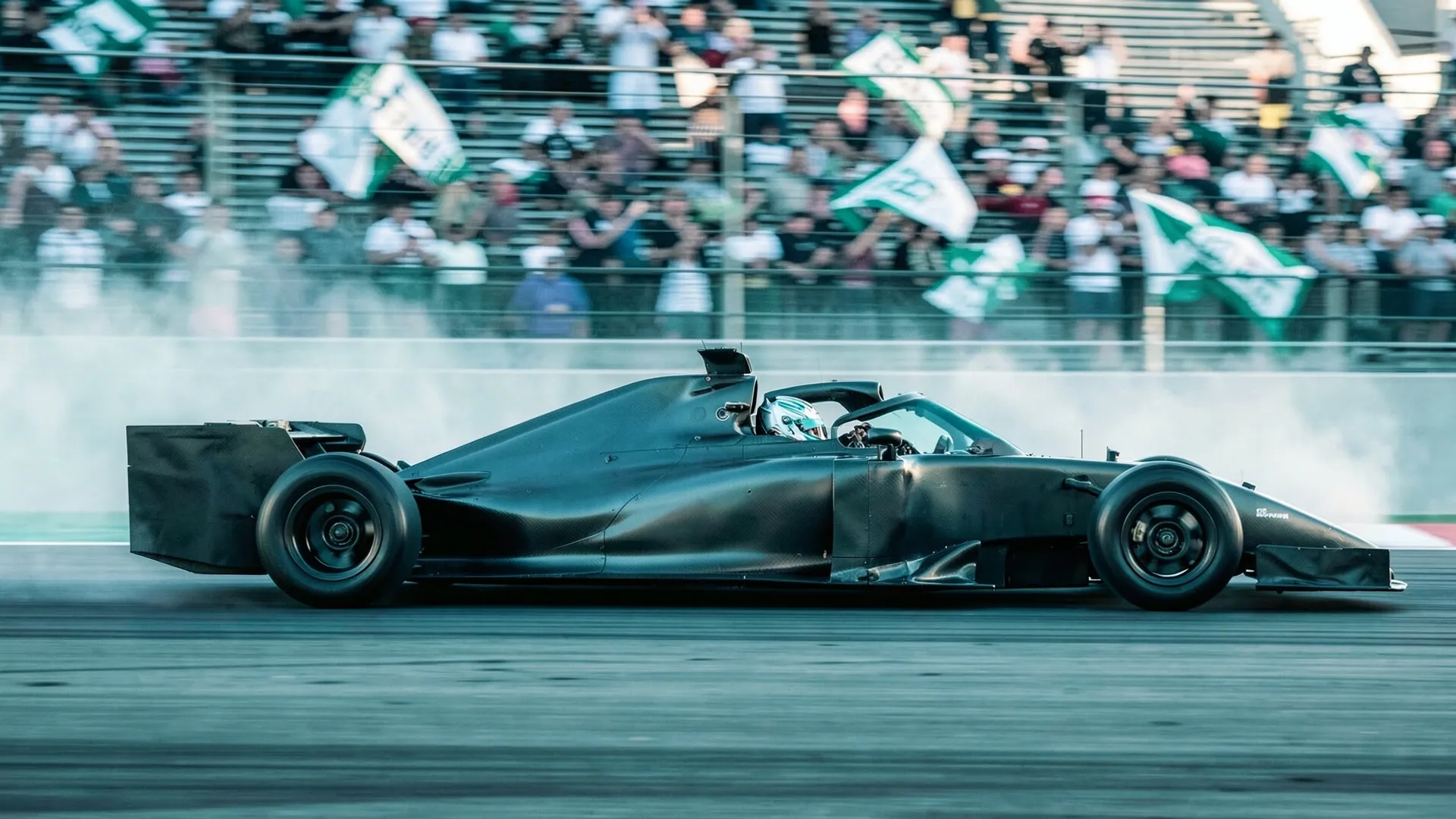
Andrea Kimi Antonelli clinched the 2026 Formula 1 world championship at the Mexico City Grand Prix on Sunday, finishing third behind Max Verstappen and Lewis Hamilton with four rounds still to run. He arrives in São Paulo on 380 points, 119 clear of Verstappen, having won nine of the 19 grands prix. On almost any other weekend that would be the whole story. Mexico, however, also produced a Ferrari team at odds with itself, a driver removed from his car partway through the event and a frightening failure for Cadillac.
Antonelli’s crown and the gamble behind it
Antonelli’s title has been building for months, so its arrival in Mexico was a coronation rather than a surprise. Third place from fourth on the grid was enough, and it was typical of his season: no heroics required, just points banked while his nearest challengers took them off one another.
The numbers explain why the margin is so large. Nine wins is three times the tally of anyone else on the grid. Verstappen and George Russell have three each, and nobody else has more than two. At 20, Antonelli becomes the youngest world champion in the sport’s history, taking that distinction from Sebastian Vettel, who was 23 when he won in 2010.
The more revealing story is how he got here. Toto Wolff has disclosed that two sponsors left Mercedes after the team chose to promote Antonelli, then 18, straight into a race seat for 2025. That detail matters. It shows the decision was a commercial risk as well as a sporting one, and that it was not universally popular among the team’s backers. Mercedes took a teenager with no Formula 2 title to his name and gave him the seat vacated by a seven-time champion.
There is a pleasing symmetry in that. The driver Antonelli replaced, Hamilton, also took his first title in his second season, in 2008. The difference lies in the manner. Hamilton won by a single point at the last corner; Antonelli has done it with a month to spare.
What the title tells us about Mercedes
- The pipeline works. Mercedes backed its own junior over an established name, and the bet has paid off within two seasons.
- The car is the class of 2026. Twelve wins from 19 rounds is a team statistic, not a driver one.
- The pressure now shifts to Russell. More on that below.
Antonelli’s best drive of the year will be debated all winter, and it says something that there are several genuine candidates. A champion who wins this often, this young, has rarely stopped at one.
The first lap that cost Ferrari a win
Ferrari had Mexico set up. Hamilton started from pole and Charles Leclerc from third, with Verstappen back in fifth. Ferrari left with second and fourth, and with an argument that will follow them to Brazil.
The two Ferrari drivers fought hard over the opening lap, and the consensus across the coverage is that the scrap handed Verstappen the opening he needed. Juan Pablo Montoya, speaking as an F1 TV pundit, argued there must be “consequences” for both drivers. Hamilton, for his part, criticised what he called Leclerc’s “do or die” mentality. Opinion on where the blame lies is divided, and some verdicts have pointed at Hamilton rather than his team-mate. At Crash.net, Lewis Larkam argued that Ferrari’s leadership has been too passive and risks open conflict between its drivers if it does not act.
Why Ferrari’s management must step in
There is precedent here, and Ferrari should study it. Mercedes faced the same dilemma with Hamilton and Nico Rosberg, most memorably when both cars went out on the first lap in Spain in 2016. Mercedes responded by tightening its rules of engagement and making clear that the team’s result came first. Red Bull went through something similar after Daniel Ricciardo and Verstappen collided in Baku in 2018. In both cases the team principal stepped in early, publicly and even-handedly.
The uncomfortable point for Ferrari is that the stakes are now personal rather than collective. Second in the constructors’ standings looks secure, with Ferrari on 504 points and Red Bull 124 behind on 380. What remains in play for the Ferrari drivers is the runner-up spot in the drivers’ championship, where Hamilton is third and Leclerc fifth, separated by 14 points. That is precisely the situation in which drivers stop thinking about the team, and precisely when a team needs to set clear rules for the start.
A pole position and a front-row car should have produced a third Ferrari win of the season. Instead it produced a public row. The fix is not complicated: agree how the opening lap will be run, say so plainly and apply it to both cars. Ferrari’s difficulty has never been knowing what to do. It has been doing it.
Verstappen profits while Russell slips back
Verstappen’s win from fifth was his third of the year, and it moves him to second in the championship on 261 points. He has been the sharpest opportunist of 2026 in a car that has not always deserved it, and Mexico was another example. When the cars ahead hand him a chance, Verstappen rarely fails to take it.
The battle for second place is now the most competitive fight left in the drivers’ standings:
| Position | Driver | Points | Gap to 2nd |
|---|---|---|---|
| 2 | Max Verstappen (Red Bull) | 261 | – |
| 3 | Lewis Hamilton (Ferrari) | 259 | 2 |
| 4 | George Russell (Mercedes) | 250 | 11 |
| 5 | Charles Leclerc (Ferrari) | 245 | 16 |
Four drivers are covered by 16 points with four rounds to go. Lando Norris, sixth on 221, is not out of it either.
Russell’s weekend deserves closer scrutiny. He started on the front row and finished sixth, losing four places on the day his team-mate was crowned. In the reaction to the race, some voices said Russell needs to get “nasty”. That is a blunt way of describing a real issue. Russell has three wins in what is plainly the best car on the grid, while the driver alongside him has nine. Being out-scored by a champion is no disgrace, but finishing 130 points behind Antonelli in the same machinery will shape how Russell is viewed for 2027 and beyond. The remaining races are a chance to finish ahead of both Ferraris and Verstappen, and second place would be a respectable answer to his critics.
Mercedes can complete the double in São Paulo
With the drivers’ title settled, Mercedes turns to the constructors’ crown, and it can wrap that up in Brazil next Sunday. The team leads on 630 points, 126 ahead of Ferrari, and as Motorsport.com sets out, a solid weekend at Interlagos would leave Ferrari without enough points remaining to close the gap.
The equation favours Mercedes for a simple reason. Ferrari must outscore Mercedes by a large margin in almost every remaining round. On the evidence of Mexico, where the two Ferraris spent the opening lap fighting each other, that sort of sustained, disciplined points haul looks unlikely.
Interlagos is an unpredictable venue, with changeable weather and a short lap that compresses the field. But Mercedes does not need a perfect weekend, only a competent one. Two cars finishing in the points and ahead of at least one Ferrari should go most of the way. A team that has won 12 of 19 races ought to manage that.
Haas, Ocon and a debut nobody planned
The strangest story of the weekend came from Haas. Esteban Ocon was replaced during the Mexico event by Ryo Hirakawa, who arrived expecting to drive only in first practice and left with a grand prix start to his name.
Hirakawa did not look out of place. He started 18th and finished 13th, ahead of both Williams cars, Nico Hülkenberg’s Audi and Sergio Pérez’s Cadillac. For a driver who had not expected to race, that was a tidy, mistake-free afternoon. Toyota, Haas’s technical partner and Hirakawa’s long-standing backer, marked the occasion with a heartfelt letter describing the debut as unforgettable. It is easy to see why. Japanese drivers in Formula 1 have been rare in recent years, and the link with Toyota gives this one added weight.
The other side of the story is less comfortable. Peter Windsor has predicted that Ocon will take legal action against Haas over his removal. That is only a prediction, and whether it comes to anything will depend on the terms of Ocon’s contract. Mid-season driver changes are common enough, and Red Bull’s frequent swaps between its two teams have made them almost routine. A change in the middle of a race weekend is a different matter, and it is the sort of decision that tends to end up with lawyers if the paperwork is not watertight.
For Haas, the sporting stakes are modest but real. The team sits seventh in the constructors’ standings on 30 points, seven ahead of Audi. Oliver Bearman retired in Mexico, so the team’s driver situation for the final four rounds matters more than its position suggests.
Cadillac’s failure at top speed
Cadillac’s debut season has been a hard education, and Mexico brought its most alarming moment yet. Valtteri Bottas suffered a failure at full speed on the approach to Turn 1 on lap 46, ending his race, and his reaction afterwards made his anger plain. The team has promised an investigation and said it will ensure such accidents do not happen again.
The location makes this more serious than an ordinary retirement. The run to Turn 1 in Mexico City is among the longest flat-out stretches on the calendar, and the thin air at altitude produces some of the year’s highest top speeds. A failure there leaves the driver with very little margin.
Cadillac’s response is the right one: take ownership quickly and publicly. The team is still waiting for its first point, with Pérez finishing 17th in Mexico, and points will come in time. Trust between a team and its drivers is harder to rebuild. Bottas has nothing left to prove in Formula 1, and a veteran who no longer has faith in his car is a problem no new team can afford. Before Brazil, Cadillac needs to understand the cause and be able to explain it to him.
Vesti, Lawson and the midfield fights
- Frederik Vesti’s next step. The Mercedes reserve driver has confirmed he is in talks over a full-time race seat for 2027. With Mercedes’ current pairing settled, his future is likely to lie elsewhere.
- McLaren against Red Bull for third. Red Bull leads McLaren by nine points, 380 to 371. Norris’s fifth place and Oscar Piastri’s recovery from 12th to seventh kept McLaren close, while Isack Hadjar fell from seventh on the grid to 12th without scoring.
- Lawson’s charge. Liam Lawson went from 22nd on the grid to ninth, and talk of sabotage linked to his race has been firmly denied. RB F1 Team’s 30-point cushion over Alpine for fifth looks solid.
- Alpine’s double score. Franco Colapinto (eighth) and Pierre Gasly (10th) both scored, a useful haul for a team fighting to finish best of the midfield.
- Lindblad’s lost opportunity. Arvid Lindblad started eighth but retired, a missed chance for a rookie who has shown real speed this season.
Brazil brings the final title of the year within Mercedes’ reach, and the most likely outcome is that Mercedes completes the double at Interlagos. The more open question is whether Ferrari arrives with a clear plan for its drivers. If it does not, the fight for second could be settled by which Ferrari driver gives way first rather than by who is quickest.